Infrared Roof Moisture Survey in Yuma, AZ
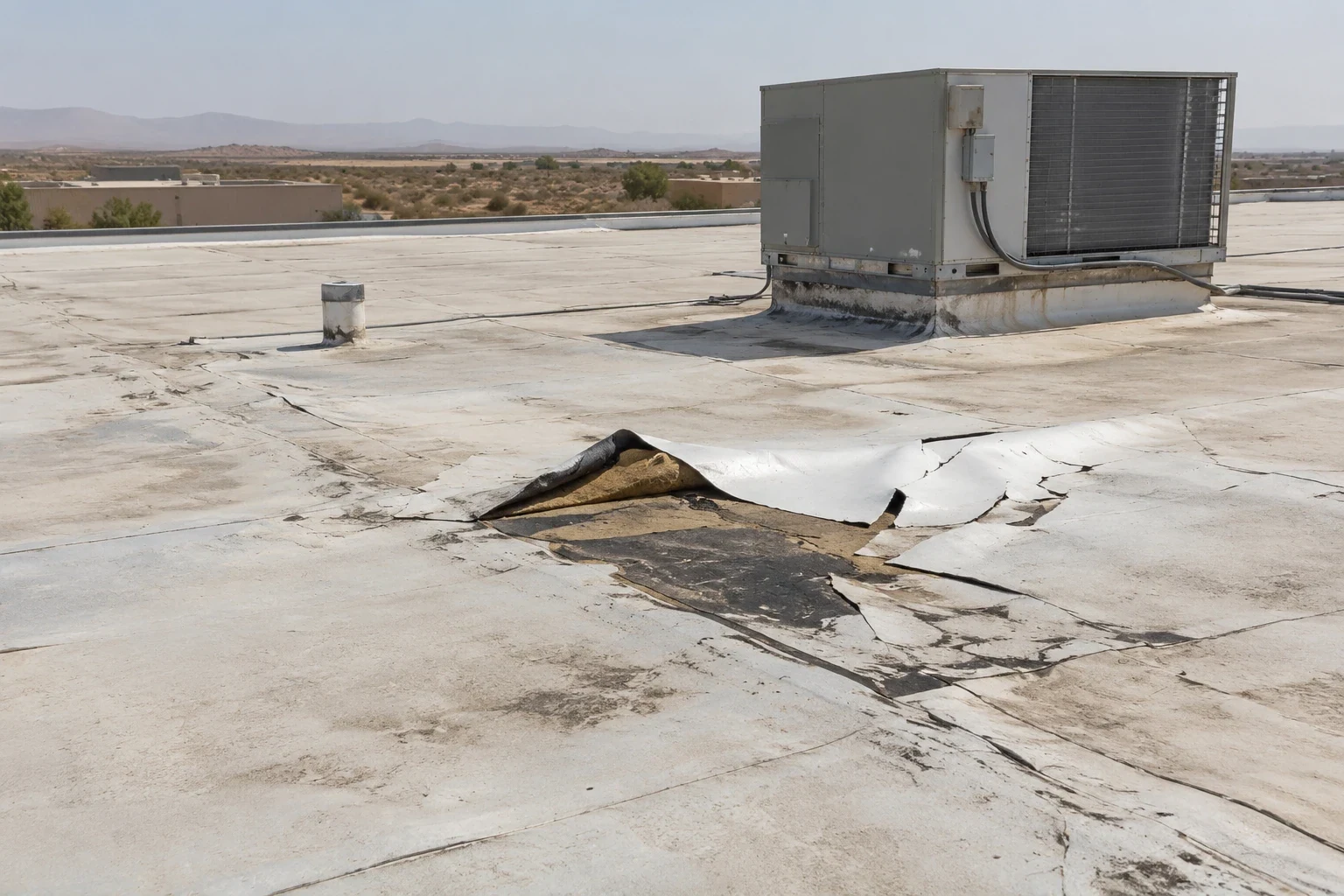
Wet insulation is the single finding that most often reverses a roof budget, and in Yuma, AZ it is also the one most easily overlooked, because the climate leads owners to assume that a roof that sees about 3.3 inches of rain a year must be dry. A small leak at a drain or curb, repeated through a few monsoon seasons, can soak a section of insulation that no one sees from above. The membrane looks intact, the ceiling shows nothing and the roof passes a casual walk. Then a replacement bid arrives, a recover is proposed over it, or a buyer asks for a report, and the wet section changes the scope. A moisture survey puts the finding on a plan before those decisions are made, with the numbers an owner needs to compare repair, recover and replacement.
Roof leaking now? Call 555-555-5555 for a site visit and estimate.
How does infrared show water under a membrane?
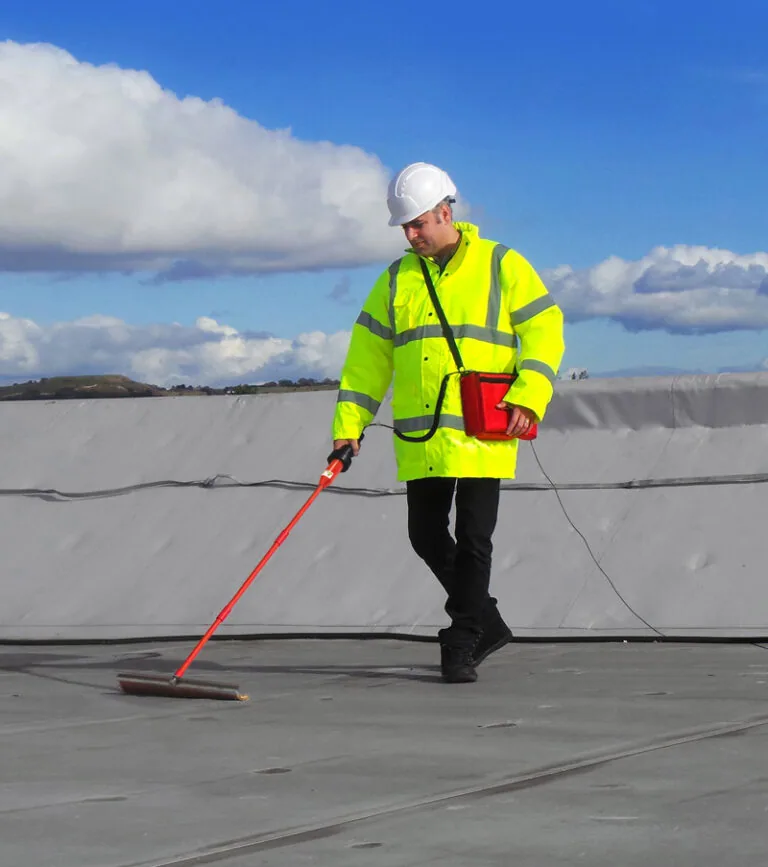
Water holds heat longer than dry insulation does. After a sunny day, a roof is warm throughout, and as evening comes the surface cools, but wet areas stay warmer for longer because the water in them stores heat. A thermal camera, flown by drone or carried on foot, records those warm patches as bright areas against cooler dry material. The method works best in the first hours after sunset on a clear, calm day following sun exposure, and Yuma has about 175 sunny days a year, which gives ample opportunity. We then mark every warm area on the roof with paint or tape, and we confirm the findings with a moisture meter and with core cuts. The imaging shows where to look, and the cores show what is actually there.
Related Roofing Work
Other pages that cover parts of the same roof question.
Roof Recover and Overlay
Commercial Roof Replacement
Yuma Palms and the I-8 Retail Corridor
Downtown Yuma
Due Diligence Roof Surveys
Commercial Roof Inspection
Why do core cuts matter as much as the image?
A thermal image is an indicator, not a measurement. A warm patch can be wet insulation, but it can also be a thicker section of insulation, a rooftop unit's heat or the shadow of a parapet. A core cut settles the question. We cut a small circle through the membrane and insulation, examine each layer, record its thickness and condition, and measure moisture content. Then we patch the cut with a temporary or permanent plug, and photograph the sample. Core cuts also tell us how many layers the roof has, what the deck is made of and whether fasteners show corrosion, all of which are needed before a recover or replacement can be priced. We place cores at the warm patches and at several dry control points, so the report compares wet and dry conditions on the same roof. We also record the deck type and the fastener condition at each core, since a deck that has been exposed to moisture for years may show rust that changes the replacement scope, and an owner is better served learning that now than during tear-off. Cores are placed away from seams and flashings whenever the thermal image allows.
What decisions does the moisture map change?
The map changes three decisions. First, whether a recover over the existing roof is allowed at all, since a recover over saturated insulation traps the problem. Second, how much of a replacement budget should be set aside for insulation removal, which is a major cost driver. Third, whether localized repair is cheaper: if only a few small areas are wet, cutting out and replacing them can restore the roof for far less than a full tear-off. The map shows the wet area as a percentage of the field and as a square-foot figure on the plan, so the manager can compare options in capital terms. Without it, those decisions rest on assumptions that tend to be wrong in one direction, toward spending too much or too little.
When is the best time to survey a Yuma roof?
The best conditions are a clear, calm evening after a hot day, which describes much of the year. A survey soon after a monsoon storm is also useful, since water that entered during the storm is still present and shows brightly. Surveys during or immediately after rain are not reliable, because wet surfaces cool unevenly and confuse the image. We schedule by weather and by the owner's decision calendar: ahead of a budget cycle, before a sale, or after a storm that raised concerns. The 1992 monsoon season at Yuma Proving Ground north of the city delivered six inches in one burst, which is a reminder that a desert roof can take a soaking in a week, whatever the annual average says. A survey after a heavy season gives the owner a fresh baseline for the next one.
Which Yuma roofs deserve a survey first?
Surveys are most valuable on roofs with a history of leaks, repeated patches around drains and equipment, or an age at which insulation commonly fails. Retail roofs in the Yuma Palms corridor, a development of more than a million square feet, deserve one before any recover is proposed. Roofs in downtown Yuma, which sits inside a 149-acre historic district, benefit from a survey before replacement planning begins, since the layer count must be known first. A hospital such as the 406-bed teaching facility run by Onvida Health has roofs where hidden moisture would threaten sensitive interiors, so the survey and the follow-up are scheduled around patient areas. Property managers with a portfolio can survey the oldest or leakiest roofs first and rank the rest.
Questions About Infrared Roof Moisture Survey
Can infrared be done in the daytime?
Daytime scans are less reliable, because the sun heats the whole surface unevenly. The best images come in the hours after sunset, when wet insulation still holds heat.
Will the core cuts damage the roof?
Each cut is small and is sealed on the same day, with the patch photographed. A properly closed core is not a weak point, and the information it gives is worth the repair.
How accurate is the moisture map?
It is accurate where cores confirm it. We cut at warm patches and at dry controls, and we adjust the outlines based on the readings, so the map reflects measurement and not just imagery.
Does a dry result mean the roof is in good condition?
It means the insulation is dry on the survey date. Seams, flashings and the surface can still need work, which is why the survey pairs well with a hands-on inspection.
How big a wet area is too big to repair?
When repair of the wet areas costs close to a replacement, or when moisture is spread through most of the field, replacement is the lower cost over time. The map gives that comparison directly.
What does the survey report give the owner?
The report contains the roof plan with the wet areas outlined, the thermal and visible images side by side, the core log with photographs and moisture readings, and a written finding that states the share of the roof affected. It gives a recommendation for each area: leave, cut out and repair, or include in a replacement scope. It includes a budget range for each recommendation and an estimate of how long the repairs will last. The file is formatted to be attached to a due diligence package, a lender review or an insurance claim. If the survey finds the roof dry, the report says so and states the date, which is a useful baseline for the next survey and for any later dispute about when moisture entered. When wet areas are found, the report also notes the likely entry point, such as a drain, a curb or a failed seam, so the repair addresses the source and the wet insulation does not return.
Book the survey before the decision
Send us the roof plan, the age of the roof and any leak history, and we will schedule an evening scan and the core cuts. You will have the map before the repair, recover or replacement decision is made.
Call 555-555-5555 or email [email protected].