
TPO Roofing in Yuma, AZ
A white TPO membrane is the first line item to price when a low-slope roof in Yuma, AZ comes due, and it earns the place only if its seams survive the same heat that retired the roof before it. A town where the mercury reaches 100 degrees F on 117 days a year does not test a membrane with water; it tests the hot-air welds, the flashing terminations and the fastening pattern, one thermal cycle at a time. We install and repair thermoplastic polyolefin as a single-ply system, the close cousin of PVC roofing, and we record what went down: the welded seam width, the fastener spacing, the insulation beneath it and the date each stage closed. That record is what a lender, a board or the next owner reads when they ask why the capital line for this roof was set where it was.
Roof leaking now? Call 555-555-5555 for a site visit and estimate.
What does a TPO line item actually buy?
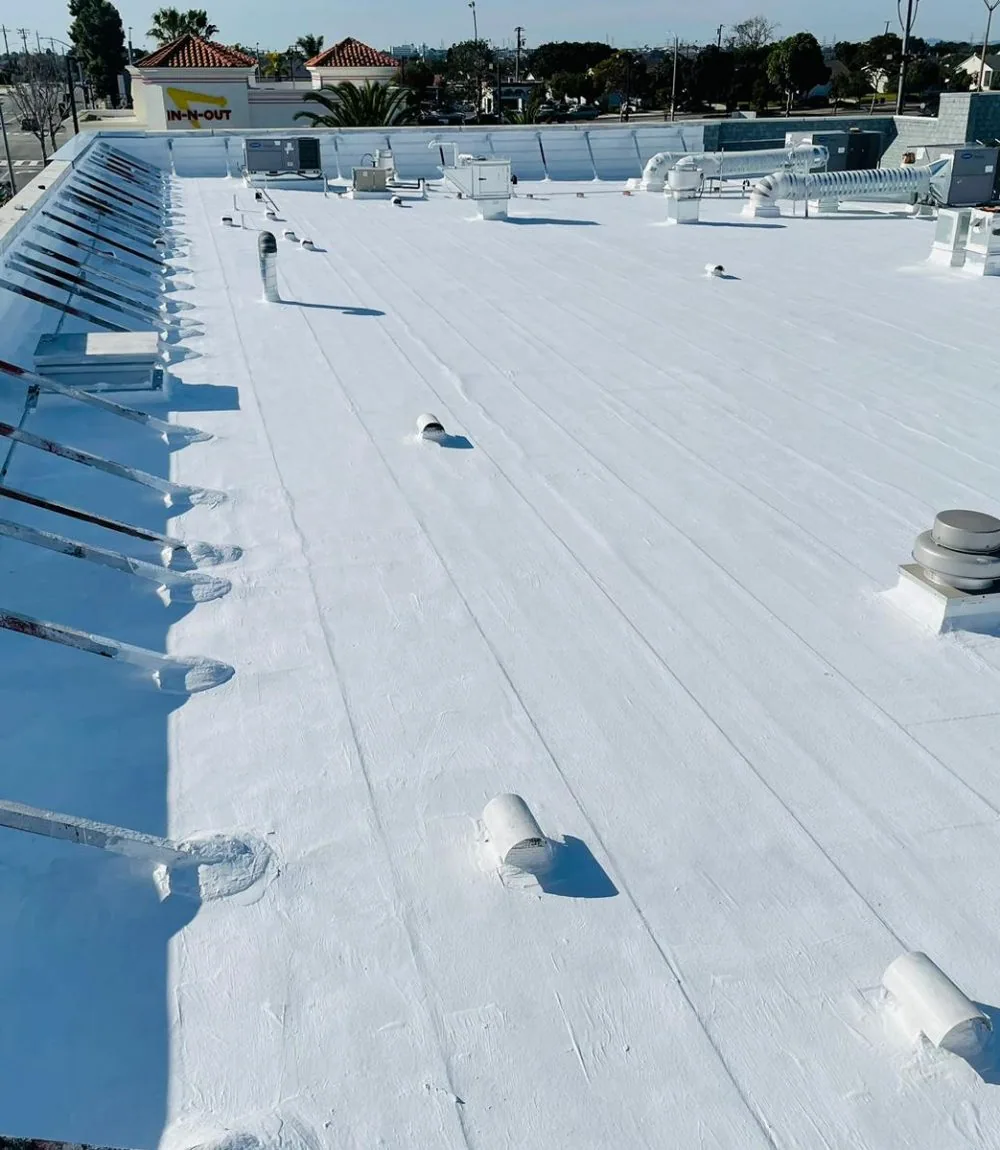
A TPO roof is a thin reflective sheet, a layer of insulation under it and a set of details at every edge and penetration, and the price is spread across all three. The sheet is the visible part (a price comparison with EPDM rubber sheet should always be made on all three lines, not the sheet alone), but a manager who budgets only for the sheet will be surprised by the tear-off of a failed roof, the cover board that protects the new membrane from old fasteners, and the edge metal that terminates it. Panels arrive in wide rolls and are joined by hot-air welding, so the seam is fused material rather than an adhesive joint, and a properly welded seam is as strong as the sheet beside it. We write the scope in separate lines for deck repair, insulation, membrane, flashings and edge metal, which lets an owner move a line between budget years without losing the roof's integrity.
The distinction matters at a site such as the Yuma Palms retail corridor, where Best Buy, Ross and Harkins Theatre are neighbors and the owner wants to know which dollars belong to the common structure and which to a single storefront.
Related Roofing Work
Other pages that cover parts of the same roof question.
PVC Roofing
EPDM Roofing
Commercial Roof Replacement
Yuma Palms and the I-8 Retail Corridor
Heat and UV Roof Damage Repair
Cool Roof Installation
How does Yuma heat treat a white membrane?
Reflectance is the reason TPO sells in a sunny market, since a white surface returns much of the sunlight that a dark roof would absorb, and that lowers both the surface temperature of the membrane and the load on the rooftop units beneath it. In Yuma the same sun is also the slow enemy: ultraviolet exposure and a nightly drop from afternoon heat make the sheet expand and contract against its fasteners and its flashings. We take surface temperature readings and reflectance readings when we survey an existing roof, and we photograph the seams on a dated set so that a membrane that has chalked, dulled or begun to shrink at a wall is documented before it becomes a leak. With only about 3.3 inches of rain a year, the failure a manager first meets is usually an opened seam or a pulled flashing, not a stain, and the heat and UV damage that opens seams is what we document first.
When does the heat-season window open for TPO work?
Welding a single-ply membrane is done with heat, and it is a surprise to many owners that very hot afternoons are not the best time to do it. Hot decking, sweating crews and sheet that softens in the sun make a clean weld harder to probe and verify, so we plan the long runs for the early hours and the shoulder months, then leave the details that need more care for the cooler part of the day. Autumn and spring give the widest window, and a cool roof installation on a retail or office building fits that timing well. The August and September monsoon is the complication, because the haboob dust and the 60 to 70 mph outflow winds that precede a storm can stop a half-laid roof, and a monsoon-week hold is a schedule cost the bid should show in plain terms. We tell the manager where the hold risk sits so it is priced rather than discovered.
Where do TPO roofs on industrial and airport buildings differ?
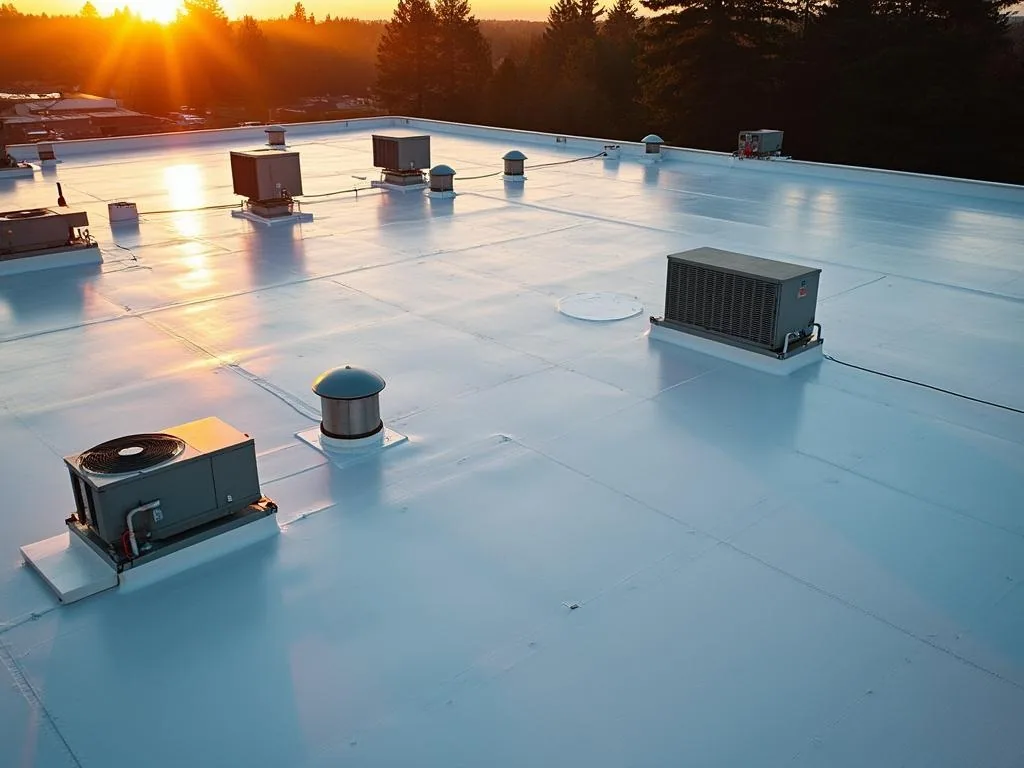
A distribution building along Highway 195, where the Panattoni industrial mega site is going up under five miles from the interstate, is the kind of building that typically carries a wide roof field with a modest number of penetrations, and that favors a mechanically attached or fully adhered sheet laid in long welded runs. A cold storage or produce packing shed near the airport has a harder problem: vapor drive from the refrigerated side, and condensation risk in the insulation. We look at the deck, the vapor control and the number of rooftop units before recommending the attachment method, because the right answer changes with the building, and the wrong one shows up as wet insulation years later. The scope names the method and the reason, so the file can be defended if it is questioned.
What goes into the binder when the roof is finished?
The last deliverable on a TPO project is paper, and it is as valuable as the sheet. We assemble an inspection binder with the dated photographs of the substrate, the insulation and the completed seams, the drain and scupper tally before and after, the fastening pattern, the flashing details and the record of any probe tests on the welds. A warranty file sits beside it, kept current, so a claim or a transfer of ownership does not start with a hunt for documents. We then propose a short inspection rhythm tied to the reserve schedule: a look once the storms are over, another before the hot months return, and a note on what the roof will likely need in the following budget year.
For an owner holding a portfolio, the binder lets one roof be compared with another on the same terms, which is what a reserve study needs.
Questions About TPO Roofing
Does TPO suit a roof that ponds water after the rare Yuma storm?
Standing water is a drainage and deck problem first and a membrane problem second. A TPO sheet tolerates occasional ponding better than it tolerates a pond that stays for days, so we map the low areas, count the drains and scuppers, and fix slope with tapered insulation or added drains where the water lingers after a December or monsoon rain.
Can an old roof be recovered with TPO rather than torn off?
Sometimes, when the existing deck and insulation test dry. We run an infrared moisture survey across the surface first, because laying a new sheet over wet insulation seals the water in. A dry roof can take a cover board and a new sheet as an overlay, which saves tear-off cost and shortens the time the building is exposed.
How are seams checked once the membrane is down?
Each weld is probed along its edge by hand during the work, and the crew photographs completed seams and corners on the dated set. Any weld that fails the probe is reworked the same day. Those photographs go into the binder the owner keeps.
What happens to the reflectance after several years of dust?
Dust from haboobs and dry ground dulls any white surface, and reflectance drifts down until it is washed. We recommend a rinse after the monsoon and again in the cooler months, and we repeat the reflectance reading at inspection so the manager sees the real figure instead of the day-one value.
Is TPO the right choice for a hospital or medical campus?
A building such as a teaching hospital has strict infection control, rooftop air handling and constant operations, so the questions are noise, fumes and phasing. Hot-air welded TPO produces little odor, which helps near air intakes, and we sequence work in zones with the facilities team so the intakes are protected.
Send the roof plan and the budget year
Share the roof plan, the last inspection record and the year the roof is expected to come due, and we will return a dated TPO scope with a capital line before the heat season closes the work window. Call to set a walk.
Call 555-555-5555 or email [email protected].