Roofing for Property Management Companies in Yuma, AZ
A property manager with six Yuma, AZ buildings carries six roof line items, and the ones that surprise an owner are the ones nobody dated. The climate here gives a manager very little rain to react to, so a roof can look sound at every walk-through while its membrane thins through roughly 117 days a year of 100-degree heat. By the time a seam opens or a drain backs up in a December storm, the repair has become a budget variance that must be explained to people who never saw the roof. We work for managers who need that explanation to be short: a measured condition, a dated photo set, a priced scope and a calendar that respects the heat season and the monsoon.
That is the reason we treat a portfolio as a ledger first and a set of ladders second. Every building gets the same fields, and every field can be compared to the one next to it.
Roof leaking now? Call 555-555-5555 for a site visit and estimate.
What does a multi-building roof ledger actually contain?
Each building gets one entry that a new manager could pick up cold. The entry names the roof system, the approximate age if the owner has it, the drains and scuppers that serve it, and the surface temperature and moisture readings taken on the last visit. We attach a dated photo set of every seam run, penetration and perimeter edge, so a change between visits is visible without anyone trusting a memory.
The entry also carries the deferred cost, which is the line a manager most often wants and least often has. If a retail strip needs flashing resealed this year and coating in three years, both numbers sit on the same page with the reason for each. Our written roof condition reports use this layout, and they feed straight into the capital planning a manager presents each budget cycle.
A ledger that mixes an aging built-up roof and a recent single-ply roof without saying so misleads an owner, so we keep the roof type in the first column. Investors who hold the same buildings through REIT and fund ownership read the same entry in a different order, starting with the reserve schedule.
Related Roofing Work
Other pages that cover parts of the same roof question.
Roof Condition Reports
Roof Capital Planning
Investors and REITs
Health Systems and Clinics
Fortuna Foothills
Shopping Center Roofing
How do retail, medical and seasonal buildings change the plan?
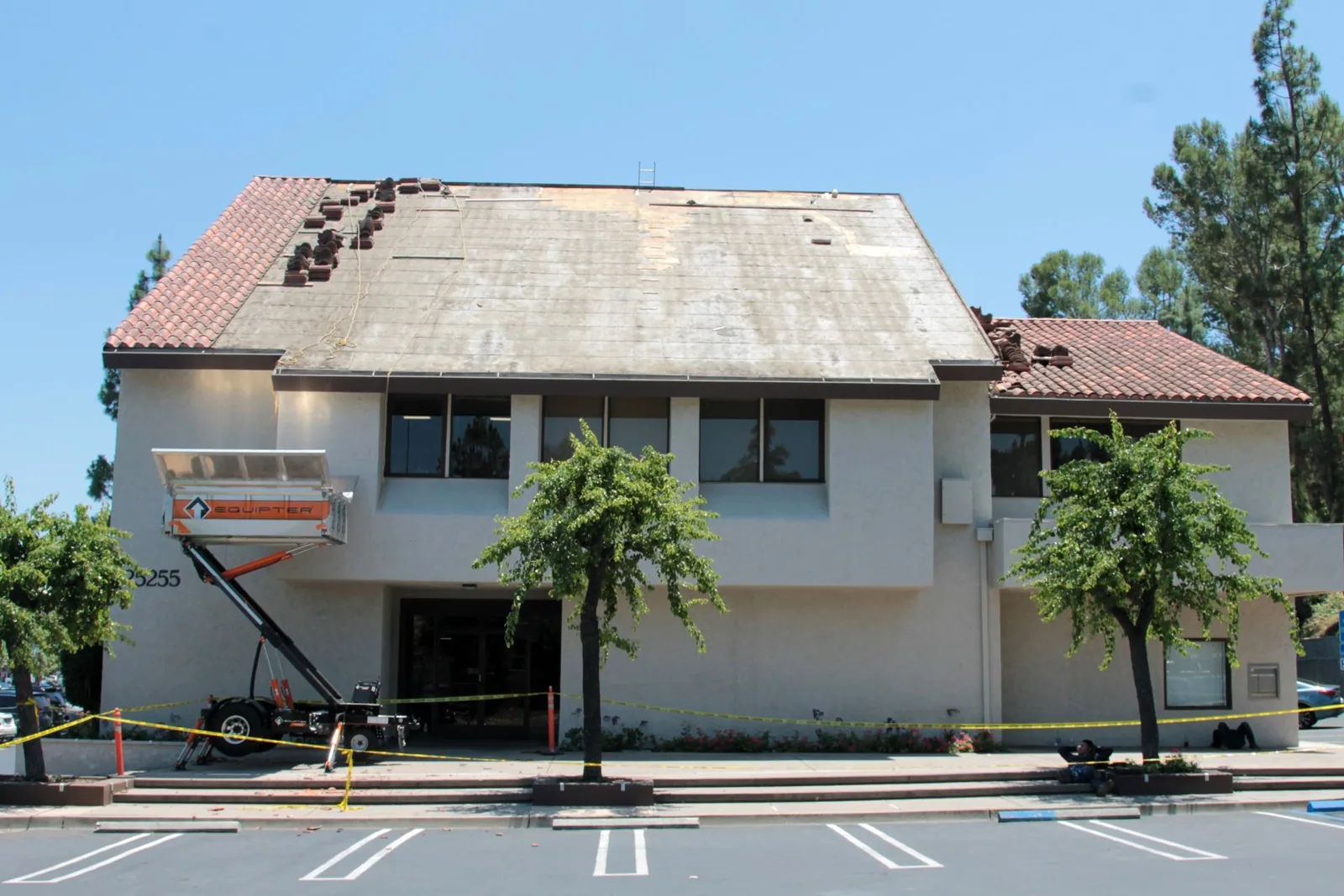
A manager rarely holds one kind of asset. A retail plaza with many leases turns a leak into a tenant relationship problem before it is a roofing problem, and Yuma Palms Regional Center, with 49 tenants in its sold portion alone, is the local picture of that exposure. Medical tenants, including those tied to health system operators, cannot tolerate open decks or dust over occupied suites, which pushes work toward phased sections and tight daily dry-in.
Fortuna Foothills is a different case. Many of its homes counted as vacant in 2020 because the owners are seasonal residents, and a large share of residents are 65 or older, so a senior or seasonal property there may have nobody inside to notice a stain. For those buildings the visit rhythm is set by the calendar and does not depend on a tenant calling in, which separates a Fortuna Foothills schedule from the one used for a shopping center roof with staff on site every day.
When can we actually work without a storm week holding the crew?
The window question decides most of the cost. Yuma is dry for most of the year, but August and September are the wettest months, December brings scattered heavy rain, and monsoon outflow arrives with dust and gusts that test edges and drains in a few hours. A scope that straddles the monsoon can be paused by one storm week, and that pause is a schedule cost that belongs in the bid.
Roof work in July and August also has a heat limit on the crew itself, which affects how many square feet a day can be torn off and dried in. We split large portfolios into two groups: buildings that can be done in the shoulder months and buildings that can wait for a controlled window. A manager who sees that split in March can place the work in the right fiscal quarter and avoid emergency pricing in September.
For occupied sites we mark the days the lot is busiest and avoid staging near entries on those days.
Is a maintenance program worth the line item for a manager?
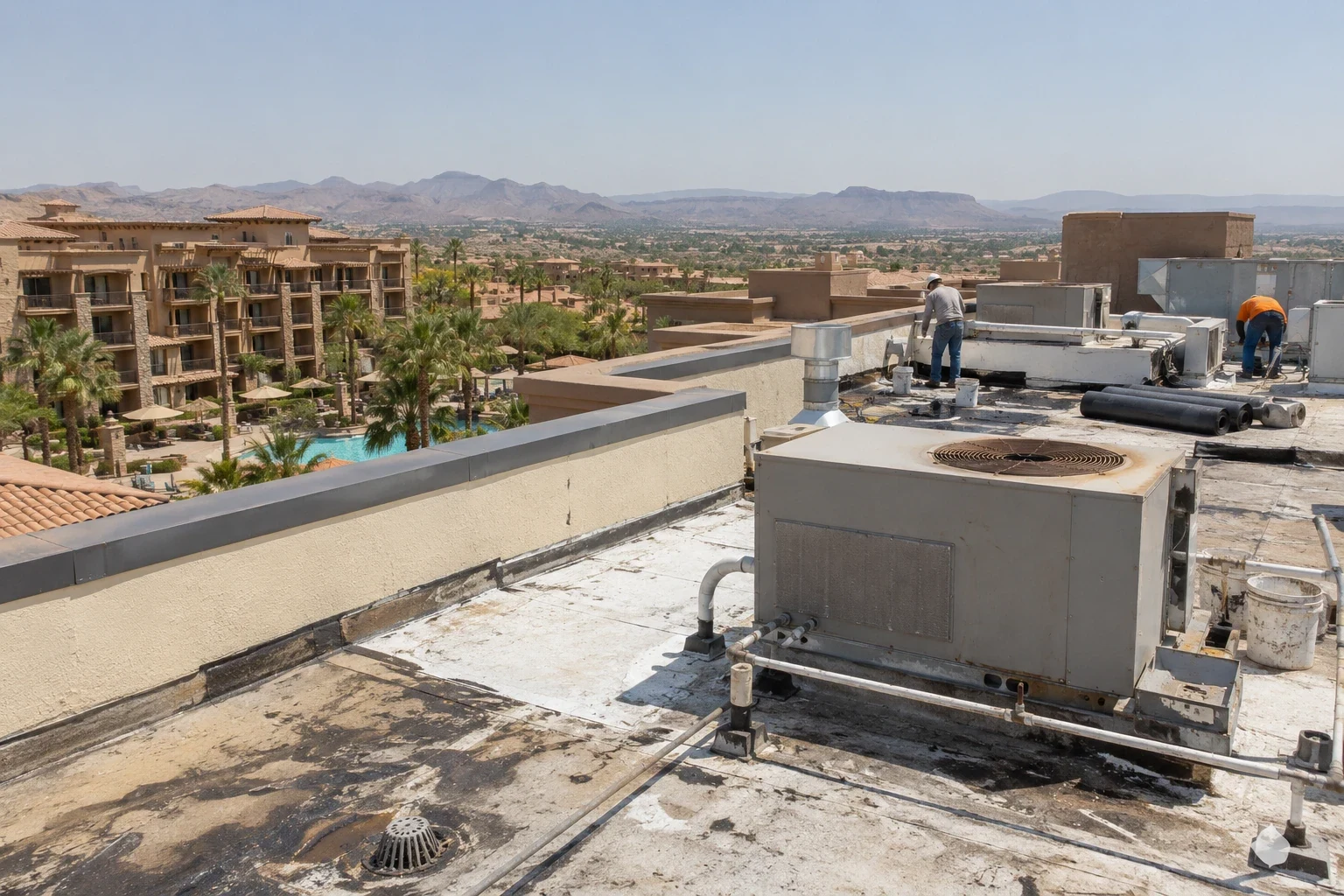
For a manager, the useful comparison is between a small recurring visit and an unplanned repair that arrives with a tenant complaint attached. A preventive maintenance visit clears drains and scuppers, which dust storms fill quickly, reseals the details that thermal swing opens, and logs what changed since the last set of photos. Because Yuma gets so little water, drains can sit blocked for months with no sign until a storm tests them, and a tally of drains cleaned and scuppers checked is something a manager can show an owner.
The program also protects the warranty file. A manufacturer warranty is easier to defend when the building has dated visit records showing that routine care was done on schedule. We keep that file organized by building so a sale, a refinance or a change of management does not leave the roof history in someone's email.
What happens when a roof fails on a weekend?
Emergency calls reach us every hour of every day, holidays included, and a manager should not have to hunt for a number or a name. The first visit stops water, protects interiors and photographs the damage before anything is moved, and the temporary work is priced as temporary work so the permanent scope can be separated cleanly. Our emergency roof repair arrives with the same record structure as a planned visit, so a weekend event is not a gap in the file.
Afterward we help the manager sort what is a maintenance item, what is a capital item and what belongs in an insurance claim, because the three go to different people. An adjuster, an owner and a lender each want a different cut of the same set of photos.
Questions About Property Management Companies
How many buildings should one maintenance visit cover?
As many as the crew can log properly in a day. We prefer to group buildings by roof type and by distance, so drains, seams and penetrations are read in the same order each time and the photo sets stay comparable from visit to visit.
Can a tenant complaint be handled without a full roof inspection?
A targeted leak visit comes first, with a moisture reading and photos tied to the ceiling location. If the cause points to a wider issue, such as a failed seam run, we say so in the scope and price the larger repair separately so the manager can decide, with the wider repair's timing tied to the heat season and the monsoon.
Do you keep records after the work is finished?
Each building receives a closing set of dated photos, material notes and any warranty paperwork the manufacturer requires. Managers use that file when an owner asks what was spent and why, or when a new manager takes over.
What if two buildings need work and the budget covers one?
We rank them by what waiting costs. A roof with open seams and a rainy season ahead usually outranks one with sound seams and an aging coating, and the ranking is written out so the manager can defend the order to an owner.
How do you handle roof work near Yuma Palms shoppers?
Staging is kept away from entries and fire lanes, noisy tear-off is scheduled for the quietest hours of the retail day, and sections are dried in before the crew leaves so a late afternoon storm cannot reach open deck.
Send the building list and the budget year
Send the roof plans, the last inspection record you have and the budget year for each property, and we will return a dated scope and a ranked line item list before the heat season closes the work window.
Call 555-555-5555 or email [email protected].