
Commercial Roof Inspection in Yuma, AZ
An inspection report earns its fee when it changes a number in a budget, and the number it should change most often in Yuma, AZ is the remaining life of the membrane. A roof here ages through exposure, through the 117 days a year that reach 100 degrees F and a record high of 124 degrees F set in 1995, so two buildings of the same age can stand in very different condition depending on color, drainage, equipment loads and past repairs. We walk the roof on foot, record surface readings and photograph each seam, flashing and drain on a dated set, then give the asset manager a written finding for each area: sound, watch or act. The report is built to be read by a lender, a board or a buyer who has never seen the building, and to survive that reading without a phone call to explain it.
Roof leaking now? Call 555-555-5555 for a site visit and estimate.
What does the hands-on walk cover?
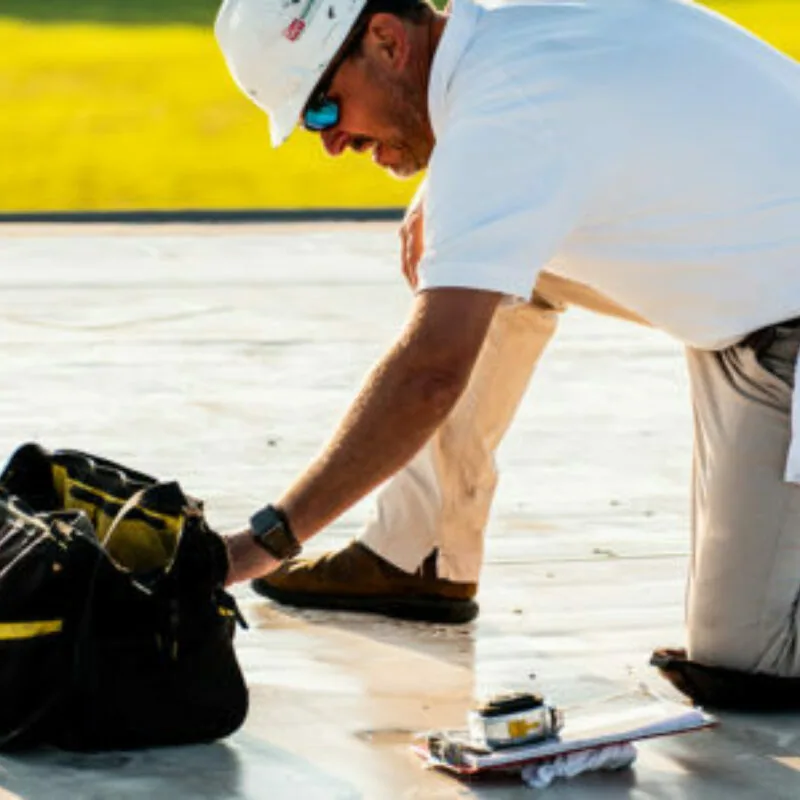
The walk follows a fixed order so that nothing is skipped on a large roof. We begin at the access point and record the roof plan, the number of layers visible at edges, and the membrane type. Then we move through the field, probing seams and laps by hand, checking for blisters, ridges, punctures and shrinkage. At each penetration and curb, we check flashing height, termination and sealant. At each wall, parapet and expansion joint, we check the base flashing and the metal above it. At each drain and scupper, we check slope, debris and any evidence of ponding. We take surface temperature readings at several spots, since a membrane that runs well above its neighbors may be losing reflectance. Every finding is marked on the plan and photographed with the location visible, which makes the report traceable. Where equipment sits on the roof, we note how it is supported, whether the curbs are sealed and whether foot paths have worn the membrane between the access hatch and the units, since service traffic is one of the most common sources of wear on a roof that otherwise looks sound. If any area cannot be reached safely, the report says so and names the access needed to finish it.
Related Roofing Work
Other pages that cover parts of the same roof question.
Roof Condition Reports
Yuma Palms and the I-8 Retail Corridor
South Yuma Airport and Industrial Area
Multi-Site Roof Programs
Roof Coating Restoration
Drone Roof Inspection
What does heat leave behind that a manager can miss?
Heat leaves slow evidence. Membranes lose plasticizer and become brittle, so a seam that looks closed may crack under a boot. Reflective surfaces chalk and dull, which raises the roof temperature and speeds the aging that caused the chalking. Sealants dry and pull back from their edges, leaving hairline gaps that do not leak until a heavy rain. Flashings shrink on walls and curbs, tugging away from their terminations by small distances that add up. None of these is dramatic, and none appears in a casual look from the ground. They explain why a roof can pass a quick look and fail in its first monsoon storm. We record each of them with a photograph and a note on how fast it is progressing, which lets the manager decide whether to repair now or plan for restoration within a year or two.
When should the inspection be scheduled in a Yuma year?
Two inspections a year serve most buildings: one in late spring, ahead of the monsoon, and one after the August and September storms. The spring visit finds weakness and clears drains while repairs are inexpensive and weather is predictable. The post-storm visit finds what the wind and rain did, such as lifted edge metal or ponded areas, at a time when it is still part of one claim period. The gauge at Yuma Proving Ground north of the city once logged about 70 mph in an August storm, and outflow of that strength is why the second visit follows the monsoon and does not wait for the next budget cycle. Between those visits, any roof that has a known problem area should be checked after major storms. We place the inspection dates in the owner's calendar at the time of the first report so they are not forgotten.
What does the written condition report contain?
The condition report includes a roof plan, a photograph for each finding, a rating for each roof area, and a priced action for every item marked watch or act. It states the membrane type, estimated remaining service life and the principal causes of wear. It separates items that are repairs from items that are replacements, and it gives a rough capital timeline so that a reserve schedule can be written from it. Our condition reports are formatted to be attached to a lender package or an insurance file without editing. If the roof is sound, the report says so and describes the maintenance needed to keep it that way, which is a result a manager can use as readily as a repair list.
Which Yuma buildings should be inspected first?
Start with the roofs that carry the highest cost of failure. Hospital and clinic roofs, such as those over the 406-bed Onvida Health campus, sit above patients and equipment that cannot be moved, so their drains and flashings are first on the list. Retail centers at Yuma Palms carry many tenants, and one leak can interrupt several businesses. Warehouse and flex buildings in the airport industrial area, where a 290-acre industrial site is under development beside Highway 195, hold inventory that a leak can damage. School and college roofs follow, including the three residence halls at Arizona Western College, particularly before the fall term. Roofs more than ten years old, roofs with repeated repairs and roofs that have not been inspected since a storm fall next. A portfolio owner can use this order to plan a multi-building program, and our multi-site programs are built on the same ranking.
Questions About Commercial Roof Inspection
How long does a roof inspection take?
A typical roof takes a few hours on site, with larger roofs needing a full day. The written report follows within a few working days, with photographs and priced actions.
Do you inspect roofs that you did not install?
Yes. A roof put in by another contractor is walked, probed and rated by the same method as one we installed.
Is a drone inspection enough?
A drone is useful for a large or steep roof and for images, but it does not replace probing a seam by hand. We use drone imaging alongside the walk, not in place of it.
What does an inspection cost compared with the repairs it finds?
The fee scales with roof size and access, and we quote it after a short conversation about the building. The repair list that comes out of the walk is priced item by item, so the two figures can be set side by side.
Can the report be used for a refinance or sale?
Yes. It is written for that audience, with dated photographs, a rating for each area and a capital timeline, so a lender or buyer can read it on its own.
How does the inspection feed the capital plan?
The report becomes the first page of the roof's file. From it, the manager can set a reserve for each roof, schedule repairs in order of urgency and time a replacement or restoration for the year when it costs least. A roof with a long remaining life and a few minor defects needs a modest repair budget and an annual visit. A roof near the end of its life needs a replacement line in the next capital cycle, with the repair spending held to what keeps it dry until then. In both cases, the inspection makes the decision defensible. When the owner asks why a roof is in the plan for next year, the manager can point to the photographs, the readings and the rating rather than to an opinion. A dated, rated record also shows an insurer that the owner kept the roof under watch, which helps when a claim turns on the question of sudden damage against long-term neglect.
Book the pre-monsoon walk
Send the roof plan or the building address, the roof age and any recent repair invoices, and we will schedule a hands-on inspection ahead of the August storms. The written report will follow with photographs, ratings and a capital timeline.
Call 555-555-5555 or email [email protected].