
Roofing for Manufacturing Companies in Yuma, AZ
A plant in Yuma, AZ carries its roof as a production risk long before it appears as a capital item, because water over a line, a panel room or finished stock costs more than the repair that would have prevented it. Bose, Dole Fresh Vegetables and Shaw Industries are among the employers operating in the area, and any plant of that kind sets its own tolerance for a shutdown, for dust and for interruptions to air handling. The climate they share rarely tests a roof with water and constantly tests it with heat: the thermometer passes 100 degrees on roughly 117 days a year, and the surface of a dark membrane runs far above the air temperature on those afternoons.
We write the roof plan for a plant the way a controller writes a maintenance reserve: dated, priced and tied to the production calendar.
Roof leaking now? Call 555-555-5555 for a site visit and estimate.
How is roof work planned around a production schedule?
Production calendars dictate the work window more than weather does. A plant that ships through the trucking corridor between California, Arizona and Mexico, or that processes produce for the winter growing season, has peaks of its own, and a roof project placed on top of a peak is a poor decision however good the forecast looks. We ask for the shutdown dates, the shift pattern and the areas where wet work cannot happen, then map the roof into zones that match those constraints.
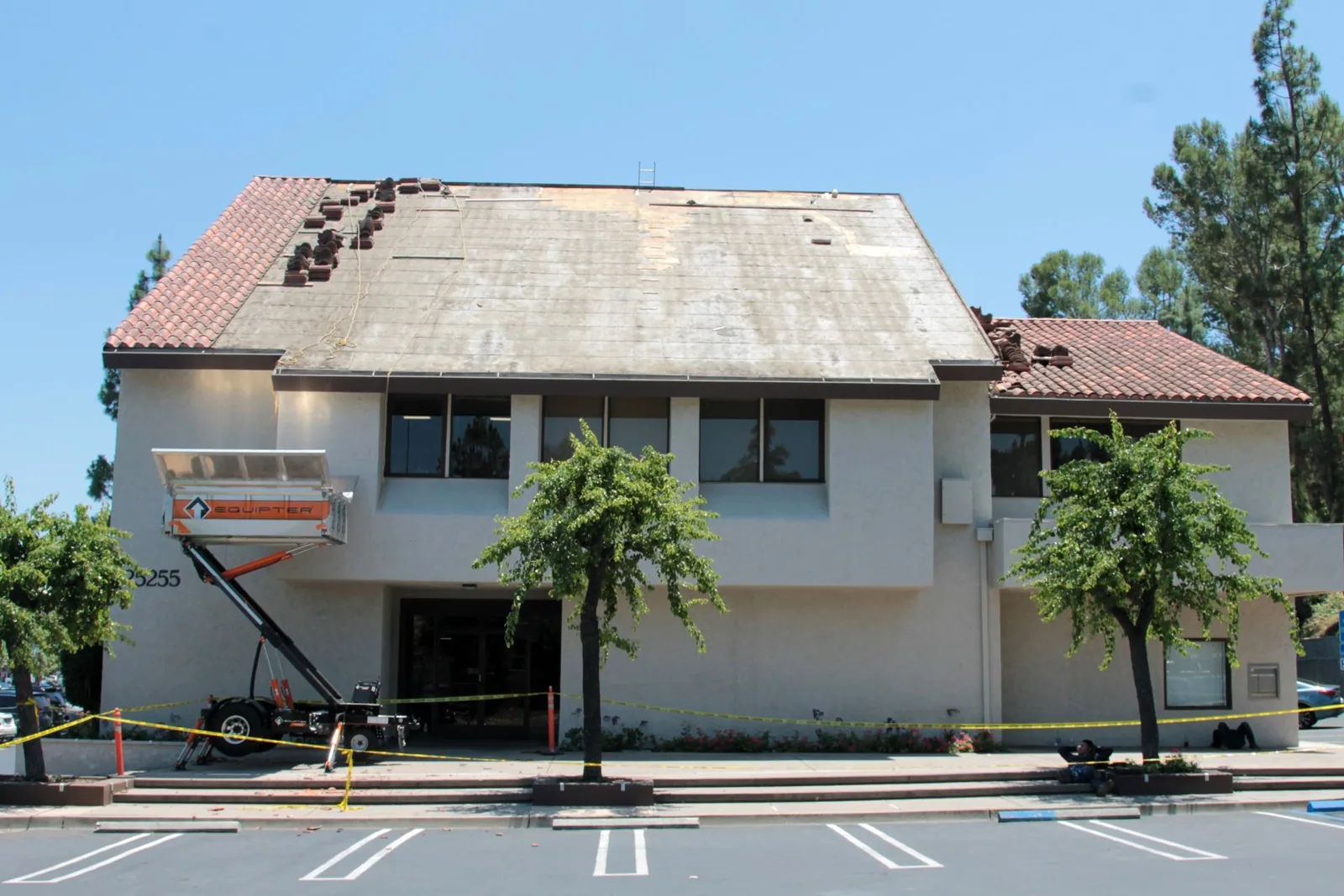
Zones that sit over clean areas or finished goods go first, in the slowest part of the production year, with temporary protection and a same-day dry-in rule for every opened section. Zones over storage or utility space can follow when crews are free. The sequence is written down and attached to the bid, so a plant manager can approve it as a plan and not as a promise.
Related Roofing Work
Other pages that cover parts of the same roof question.
Rooftop Equipment Curbs and Supports
Cool Roof Installation
Roof Coating Restoration
TPO Roofing
Multi-Location Retail and Restaurant Brands
South Yuma Airport and Industrial Area
What do rooftop equipment curbs cost a plant over time?
Manufacturing roofs carry more equipment than most other building types: exhaust fans, make-up air units, dust collectors, process piping and condensate lines. Each penetration is a place where thermal movement works against the flashing, and each time a unit is serviced, the flashing is disturbed. We inventory every curb and support on the plan, record the condition of its flashing and note which ones are likely to be touched by planned equipment changes.
That inventory feeds equipment curb and support work that can be done once, ahead of a membrane replacement, rather than torn up and redone later. It also lets the plant coordinate roof access with the mechanical contractor, since two crews on the same roof without a plan is how membranes get punctured. For dust-heavy operations, we add scupper and drain clearing to the visit schedule so wind-blown debris does not turn a minor storm into ponding.
Does a hot roof change what the plant pays to cool the building?
It can. A dark membrane on a hot afternoon sends heat into the space below, and in a plant with process cooling the added load is a recurring cost. A cool roof installation or a reflective coating lowers surface temperature, and we take reflectance readings before and after so the effect is measured on the actual building.
Whether the savings justify the project depends on the existing membrane. A sound base can take a restoration through roof coating restoration, which delays a full replacement and adds reflectance in one step. A saturated or failed base cannot, and the scope then moves to replacement. The moisture survey decides which path the plant takes, and the plant sees both costs before choosing. For plants that expect to add equipment in the next few years, we coordinate the coating timeline with the equipment schedule to avoid cutting into new film.
Which membrane systems suit a Yuma plant roof?
Plants choose among single-ply, built-up, modified bitumen and metal, and the right answer depends on foot traffic, chemical exposure, the number of penetrations and the existing deck. A plant with grease or chemical exhaust needs a membrane that tolerates those deposits, which usually points toward TPO or PVC, depending on what is vented. A plant supplying retail and restaurant chains may face a supplier audit that reaches the roof, and a dated membrane survey is the document that answers it. A plant with heavy rooftop service needs walkway protection and a thicker wear surface.
We describe each option by how it handles heat cycling, how it is repaired and what it costs to maintain, rather than by brand. The decision is made once, and the maintenance program follows from it.
In the airport and industrial area, where Panattoni is developing a 290-acre site beside Highway 195 close to Yuma International Airport and Interstate 8, we check drainage routes first, because flat roofs shed storm water quickly and undersized drains can be overwhelmed in an August monsoon week.
A plant that can show a dated roof file has an easier conversation with a lender, an insurer or a customer auditing suppliers than one that cannot, even when the roofs are of similar age, and that file costs little next to the questions an unrecorded roof invites.
What records help a plant defend its roof budget?
Plants with more than one site see the pattern twice. A plant manager defends the roof line to a finance team that sees it only when something breaks. The dated photo set, the moisture scan, the drain tally and the priced scope give the manager something to hold up in that conversation. Our roof asset management file also tracks warranty status, which matters if a plant sells to a new owner or refinances equipment.
Plants that operate several sites can compare roofs across the system with the same fields, and a neighboring logistics operator can be read from the same report format. A single report format lets a corporate engineer rank sites by risk instead of by who called most recently.
Questions About Manufacturing Companies
Can a plant keep running while the roof above it is replaced?
Usually, with zone-by-zone work and protection above sensitive equipment. The plan names which areas need covers, which need overnight watches and which can be left open for the day, and the plant approves each zone before work starts. We also agree where forklifts and trucks may pass beneath the work, since the loading side of a plant often shares an edge with the roof being repaired.
What is the first sign of a failing membrane over a plant floor?
Often it is a drip at a penetration after a rare rain, or a hot spot a thermal scan picks up before anyone sees a stain. We read both and trace them to a curb, a seam or a drain before recommending anything.
Do plants need a different inspection frequency from offices?
Plants with heavy rooftop equipment, heat-producing processes or dust loads benefit from a shorter cycle. We set the interval from observed wear on the first survey and adjust it after the second.
How is hot work handled on a manufacturing roof?
A torch or heat-welded seam needs a fire watch, a clear zone and a plan that covers combustible insulation and exhaust streams. The permit and the watch period are listed in the scope, not decided on the day.
Will a coating change what the roof looks like to the plant's customers?
A reflective coating is visible from above and can be a different color from the old membrane, but it rarely changes what a visitor sees from the ground. We confirm any visual requirement with the plant before ordering material.
Send the roof plan and the shutdown calendar
Send the roof plan, the equipment list and the dates when wet work cannot happen, and we will return a zoned scope with a priced sequence that fits the production year.
Call 555-555-5555 or email [email protected].