Rooftop Equipment Curbs and Supports in Yuma, AZ
Cooling equipment is the heaviest and busiest thing on a Yuma roof, and the roof around it pays for that in foot traffic, vibration and heat. With air conditioning running hard through the 100-degree F afternoons that Yuma logs on about 117 days a year, rooftop units are serviced often, replaced on their own cycle and sometimes added by tenants who never speak to the roofer. Each unit sits on a curb or a support, and each curb is a flashing detail that has to stay watertight while the equipment above it is lifted, swapped and wired. We treat curbs and supports as a roof scope with its own count, photographs and replacement schedule, so a unit change does not become a leak.
Roof leaking now? Call 555-555-5555 for a site visit and estimate.
What is the difference between a curb and a support?
A curb is a raised frame, usually steel or wood, built into the roof deck so that a unit sits above the membrane and the membrane flashes up its sides. The curb height creates room for the flashing to rise above standing water, and the curb itself must be insulated and sealed to the deck. An equipment support is a stand or rail that holds equipment above the roof surface without penetrating it, often with a pad or sleeper that spreads the load. Pipe supports do the same for refrigerant lines, conduit and gas piping, carrying them across the membrane on rollers or blocks.
The distinction matters for repair. A leaking curb needs flashing rebuilt, often to the full height and with new corners. A failing support needs a pad replaced or relocated and the membrane under it inspected for wear. Pipe supports are the most overlooked, because a block that sits in one place for years grinds a hole in the sheet below it.
Every curb and support is a penetration in the roofing sense, which is why the count joins the register kept for skylights and other penetrations. A single numbered register lets the manager see all the openings in one place and decide which to rebuild first.
Related Roofing Work
Other pages that cover parts of the same roof question.
Skylight and Penetration Flashing
Roof Drains, Scuppers and Ponding Correction
Flashing Failure Repair
Edge Metal, Coping and Gutters
Yuma Palms and the I-8 Retail Corridor
Hospital Roofing
What happens to the roof when a unit is replaced?
A change-out is where a roof is most likely to be damaged by a trade that does not own it. The old unit is unbolted and lifted, the curb is exposed, and the flashing on its sides is stressed by crane work, rigging and the crew's feet. A new unit may have a different footprint, which means a new curb adapter or a modified curb, and each cut or fastener is a new penetration. If the unit arrives without a curb check, the installer may find the base flashing brittle and tearing as the old equipment comes off.
We recommend a pre-swap walk. The roofer examines the curb and flashing, photographs them, and sets out what must be rebuilt while the unit is off. Doing that work in the same crane window saves a return visit and puts the new flashing under the new equipment, which is the right order. The mechanical contractor and roofer agree on the schedule before the lift, not after the leak.
Scheduling that agreement early helps with cost, too. A crane is billed by the hour, and a roofer arriving late to a lift window either holds the crane or loses the chance to rebuild the flashing. Putting the roofer on the same call as the mechanical contractor ahead of time lets the drains and other nearby details be checked in the same visit.
Why do curbs leak in this climate?
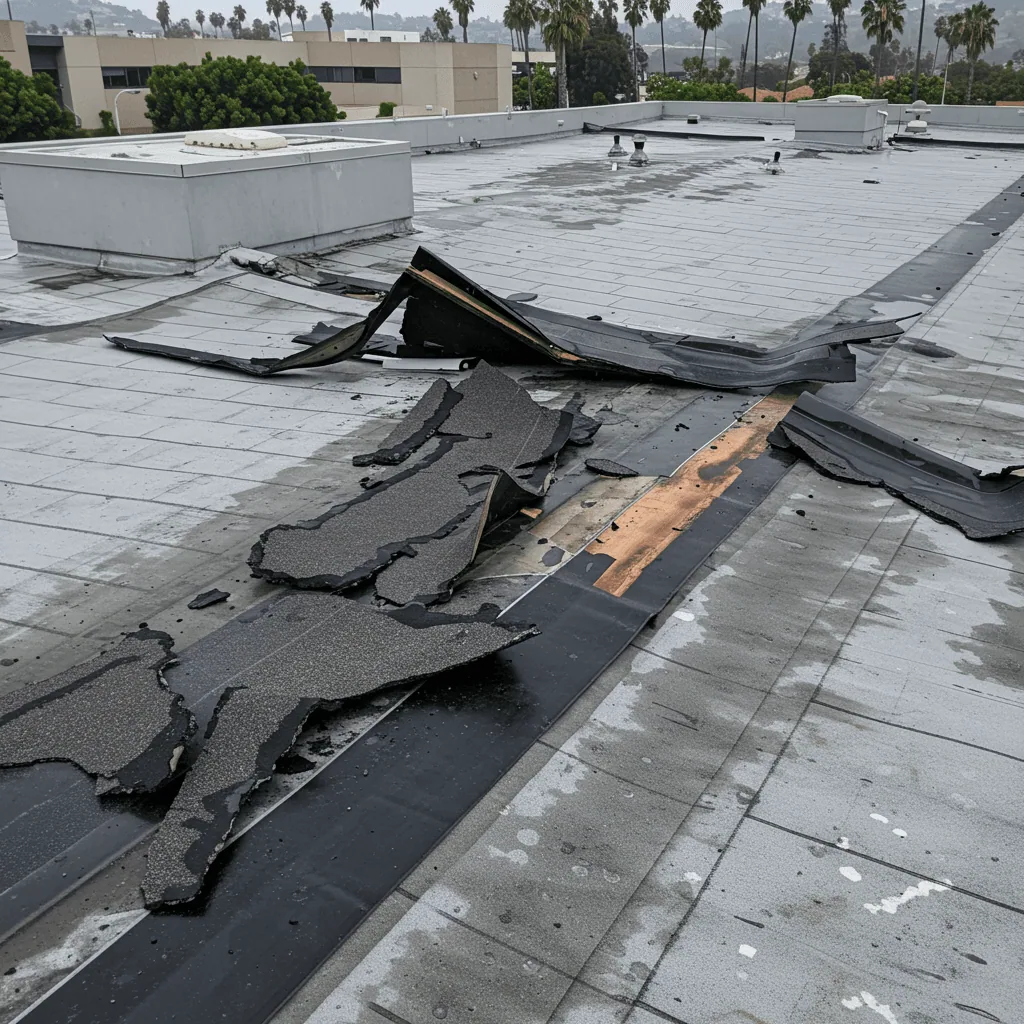
The sun is the main cause. Curb flashings in Yuma see constant ultraviolet exposure, and the membrane turned up the curb side becomes hot and brittle, particularly on the south and west faces. The corners are the weakest points, where the sheet is folded or patched and sealed with mastic that dries and cracks. Thermal movement between the curb and the roof deck pulls at the flashing daily. Unit vibration adds to the strain, and a loose cap or a sagging counterflashing admits water at the top edge.
Monsoon rain exposes all of it at once. A storm that follows months of dry weather finds each cracked corner, and condensate from the unit itself, discharging near the curb, can soak insulation if the drain line is misdirected. We check the condensate path as part of every curb inspection, because a drain line aimed at the flashing causes damage that looks like a roof leak.
Where a flashing has already failed, the work is a rebuild rather than a patch. The failed flashing is cut back to sound membrane, the curb surface is cleaned and primed, and a new sheet is turned up and terminated at the top with a sealed reglet or a metal counterflashing. A bead of sealant by itself is a stopgap, and the photos should say so.
How do supports and walk paths protect the membrane?
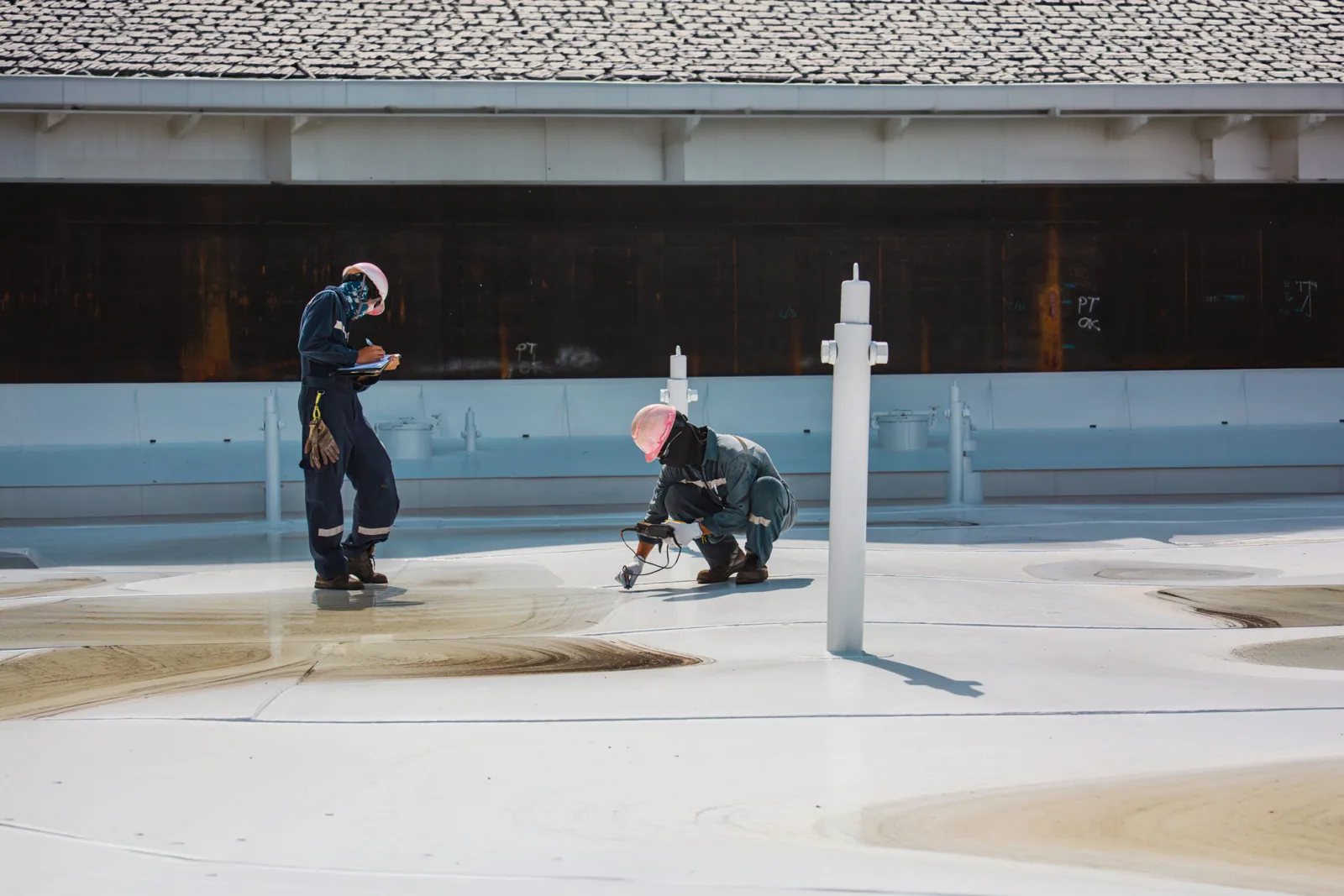
Technicians reach units by the same route every service call, and a membrane that is walked daily wears quickly. Walk pads of a compatible material, laid on the path from the access point to each unit, take that wear. Supports for piping need pads that do not trap moisture or chemicals against the sheet, and they must be spaced so the pipe does not sag onto the membrane between them. We mark these paths on the roof plan, install the pads and photograph them, and the record shows when each was last checked.
Where equipment sits close to the roof edge or a parapet, the support layout also affects edge metal and wind exposure, since a unit near the perimeter takes more suction. Tie-downs are checked against the wind loads the building was designed for, and loose or corroded tie-downs are replaced.
Which Yuma buildings carry the most equipment?
Retail centers at Yuma Palms and along the I-8 corridor run units for many tenant bays, and the mix of restaurants, theatres and stores generates varied equipment and frequent changes. A hospital roof, such as the one over Onvida Health, carries air handling and exhaust, and roof work near intakes needs coordination with the facilities office. Cold storage and produce packing buildings, tied to the region's trucking and farming trade, tend to run condensers and refrigeration lines across their roofs. On a warehouse roof, smaller units and exhaust fans are the norm, and a count of them belongs in every inspection.
When the equipment list grows, the roof's capacity is worth checking. Added weight, from a unit or a platform, must be carried by the structure, and the owner should have the engineer's confirmation before the lift.
Questions About Rooftop Equipment Curbs and Supports
Who is responsible for the curb flashing during a unit change?
The roofer and the mechanical contractor should agree on it in writing before the lift. We recommend that the roofer inspects and rebuilds the flashing while the unit is off.
Can we raise a curb if water ponds near it?
Yes, in many cases. Raising the curb and rebuilding the flashing gets it above the water line, though a cricket behind the curb often solves ponding more simply.
Do walk pads need to be a specific material?
They should be compatible with the membrane and rated for the weather. Using the wrong material can stain or damage the sheet.
What if a tenant adds a unit without telling us?
An inspection catches it, and the new curb or support is added to the register. A written rule that any rooftop work needs notice to the property manager prevents most surprises.
Can condensate lines cause roof damage?
They can, if they discharge onto the membrane or toward a flashing. Routing them to a drain or pad keeps water off sensitive areas.
Count the curbs before the next unit change
Send the roof plan and the list of rooftop equipment, and we will return a curb and support register with photographs and a priced list of flashings to rebuild before the heat season.
Call 555-555-5555 or email [email protected].