
Skylight and Penetration Flashing in Yuma, AZ
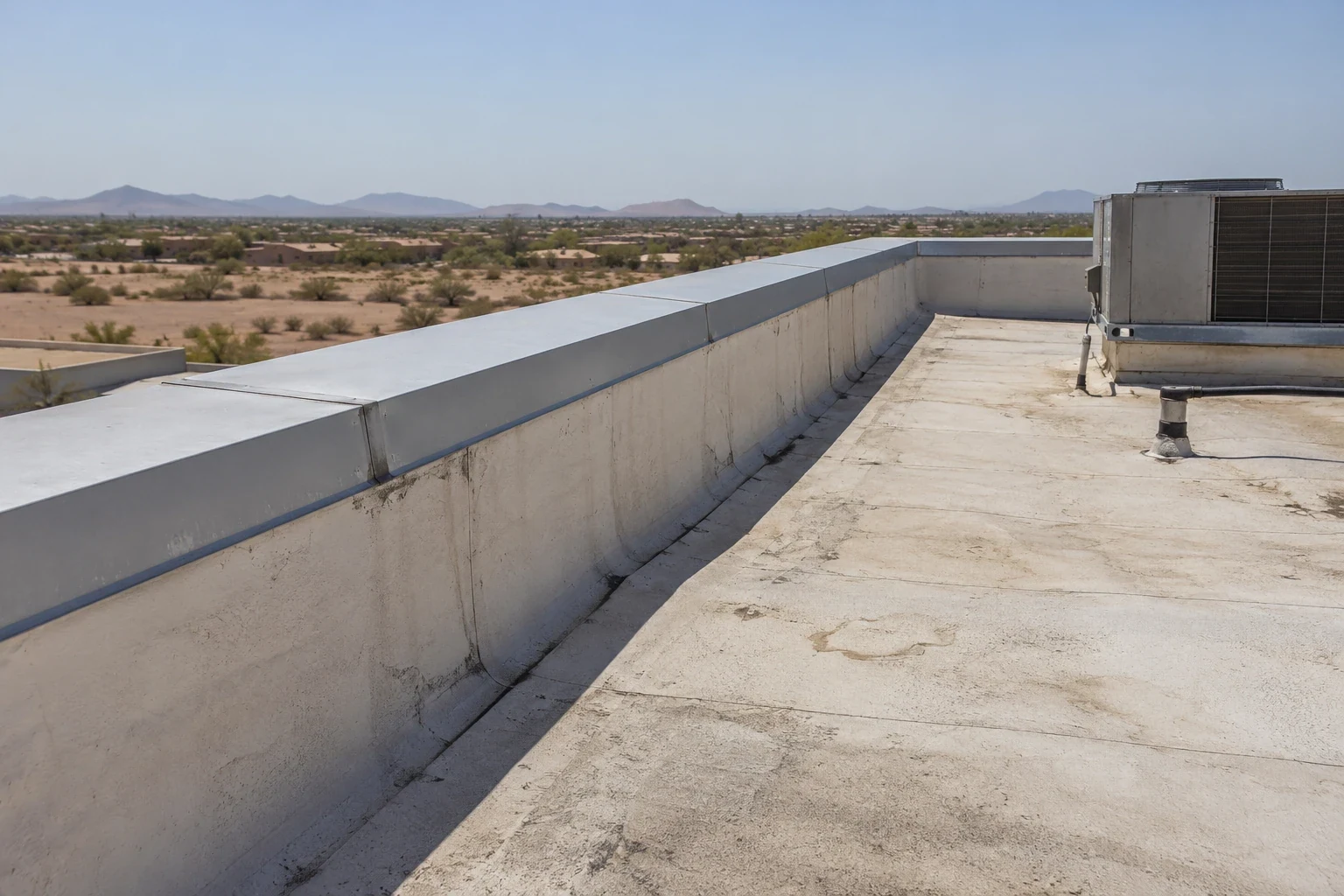
Every hole in a roof is a line item with its own life, and in Yuma the penetrations age faster than the field of the membrane around them. A pipe boot, a conduit riser or a skylight curb sits in full sun for most of the year, takes the swing from afternoon heat to night cooling, and is flashed with materials that crack first at the edges. The roof can look sound from the ladder while a cracked boot waits for the first real rain of the monsoon. We count penetrations on a roof plan, photograph each one, mark its condition and price the rebuild as a group, because replacing ten failing flashings in one mobilization costs far less than ten emergency calls spread over a season.
Roof leaking now? Call 555-555-5555 for a site visit and estimate.
How many penetrations does a roof really have?
More than the plan shows. Original drawings list the big items, but tenant improvements add exhaust pipes, antenna mounts, conduit, gas lines, roof hatches and condensate drains over the years. Every addition is a place where someone cut the membrane and sealed it, and not always with the right detail. A thorough count on the roof usually finds several unlisted openings, a few abandoned pipes capped with mastic, and at least one flashing that was made of sealant alone.
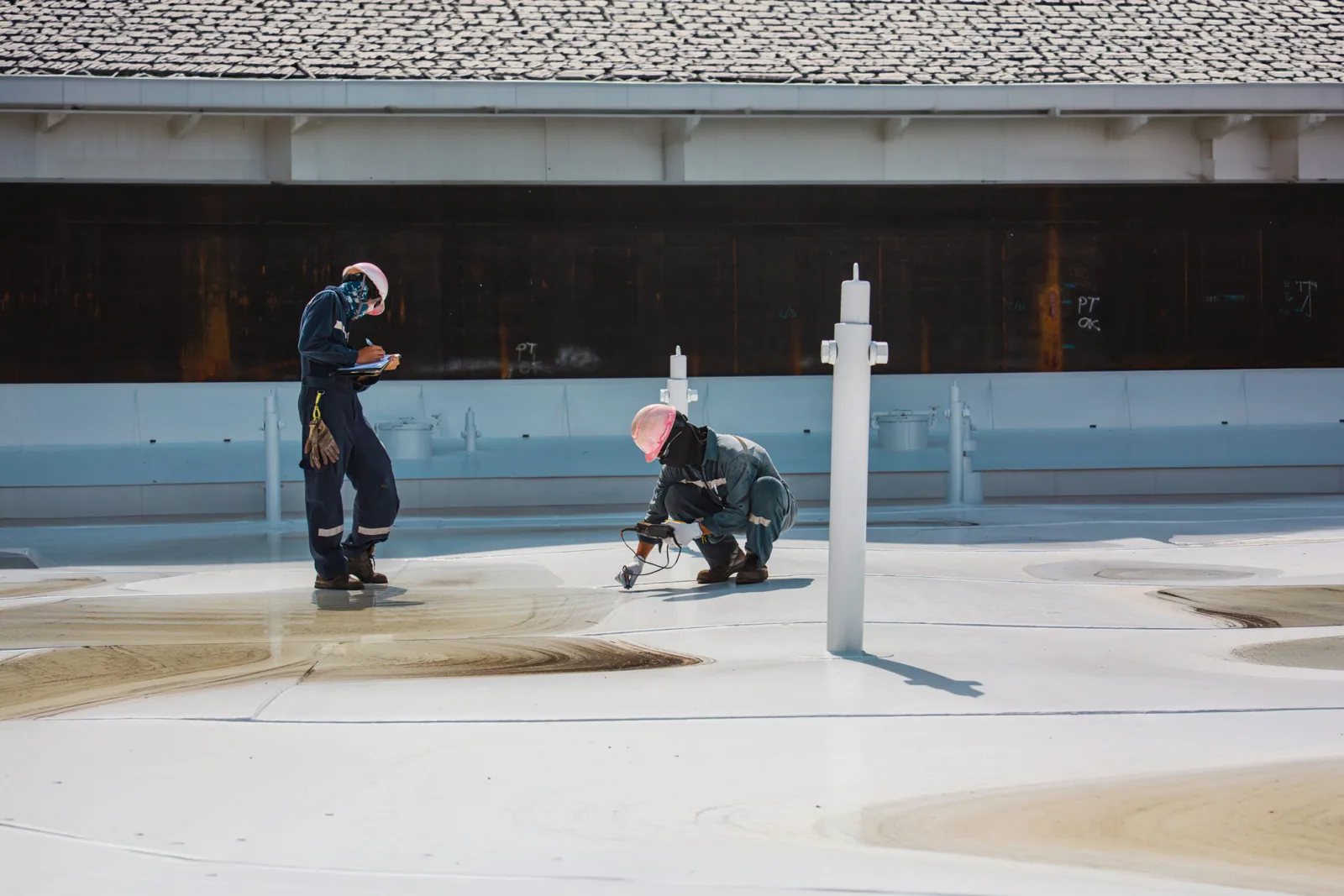
We number each penetration, photograph it from two angles and record its type, size, condition and the material used. That register is the basis of a budget. Abandoned penetrations can often be removed and patched permanently, which retires a leak point instead of maintaining it, and the rest are prioritized by condition so the worst are rebuilt first.
Equipment supports are their own category, and a rebuild near a unit often involves the mechanical contractor; curbs and supports are priced with the flashing so the two trades are scheduled together.
Related Roofing Work
Other pages that cover parts of the same roof question.
Rooftop Equipment Curbs and Supports
Flashing Failure Repair
Commercial Roof Leak Repair
Yuma Palms and the I-8 Retail Corridor
Hospital Roofing
TPO Roofing
What does Yuma sun do to a flashing?
Sealants, mastics and many rubber boots are organic materials, and ultraviolet light breaks them down. Yuma has about 175 sunny days a year, so a boot on a pipe sees an enormous dose of sun, and its rubber stiffens, cracks at the base and shrinks away from the pipe. A mastic bead dries, crazes and opens at the transition between the metal and the membrane. These are the early stages of flashing failure, small enough to go unseen until the first heavy rain finds them.
Thermal movement works against the flashing too. A pipe heats and cools at a different rate than the membrane, so the seal between them flexes every day. A rebuilt flashing uses materials that tolerate both sun and movement: a prefabricated boot with a stainless clamp, a liquid-applied flashing resin reinforced with fabric, or a welded membrane detail on a thermoplastic roof. Which one fits depends on the roof system and the penetration, and we choose by compatibility first, price second.
Should the skylight be repaired, curbed or removed?
Skylights fail in four places: the glazing or dome seal, the curb flashing, the frame joints and the glazing material itself, which yellows and crazes under constant sun. Repairing a curb flashing is a modest job. Replacing a worn dome is moderate. If a skylight no longer serves the interior, as in a space that has been partitioned or lit by electric fixtures, removing it and framing a permanent roof deck over the opening retires a leak point permanently.
Where daylight is wanted, a new curbed unit with an insulated frame and a flashing tied into the membrane replaces the old one. The decision is a cost and use question for the owner: repair the old unit for a known amount, replace it for a larger amount, or remove it for a middle amount and lose the light. We price all three where it matters, and the cost of an interior leak is part of the comparison.
Safety matters during any skylight work. Domes and old glazing can fail under a person's weight, so crews cover openings with rated guards before stepping near them, and building owners are advised to keep their own staff off the roof around them. That precaution is a standard part of the job, and the bid lists the guarding as its own line.
Why do penetration leaks show up in monsoon week?
Rain is rare, and a defect can sit unnoticed until it comes. Yuma gets about 3.3 inches annually, much of it in August, September and December, so a cracked flashing can leak for the first time long after it cracked. When the storm comes with wind, rain is pushed sideways into the gap, and a defect that would have stayed dry in a light drizzle admits a surprising amount of water. The interior damage then appears days later, away from the spot, because water runs along pipes and conduit before dripping.
That delay makes diagnosis hard, and it is why we trace every leak to a flashing before repairing it. The tools involve a moisture scan, a hose test and a close look at the transitions; our leak repair work follows the same logic. A pre-monsoon walk through the penetration register finds the future leak before it becomes a ceiling claim.
One more habit helps: photograph the underside. A visit inside the building above the penetration, looking at the deck and the insulation around a pipe, shows stains and rust that the roof surface hides, and those pictures go into the record beside the roof-side photo.
Which buildings carry the most penetrations?
Restaurants and theatres, like those in the Yuma Palms tenant mix, usually carry kitchen exhaust, makeup air and plumbing vents on top of the standard mechanical units. The Yuma Palms and I-8 corridor shopping centers mix dozens of businesses, and any tenant fit-out that adds a rooftop opening adds a flashing to the register. A hospital roof, such as the one over Onvida Health's 406-bed facility, typically carries exhaust stacks, vents and equipment supports, and each opening is a scheduling question for the facilities office, and any work near a patient floor calls for dust and odor control.
Cold storage and packing buildings serving the produce and trucking trade add refrigeration lines and condenser connections that pass through the roof, where condensation from cold lines can wet a flashing from beneath. Those penetrations get insulated sleeves and a second look at every visit, and where a TPO roof surrounds them the flashing is welded to the sheet rather than glued with mastic.
Questions About Skylight and Penetration Flashing
Can penetration flashings be fixed without opening the roof?
Surface repairs like new sealant and reinforced mastic can go over a sound flashing. Cracked boots, rusted collars and failed curb corners usually need to be removed and rebuilt.
How long does a pipe boot last in Yuma?
Rubber boots in constant sun tend to crack well before the membrane around them wears out. We inspect them each visit and replace them as a group when their condition drops.
Will new penetrations void my warranty?
Roof warranties often require that new penetrations be made and flashed by an approved method. Check the warranty terms and tell us before any equipment is added.
Do skylight domes need to be replaced when the curb is fixed?
Not always. If the dome is clear and sealed, it can stay, but a yellowed or cracked dome is cheaper to replace while the curb is open.
What does a penetration register cost?
It is built during a regular inspection, and the cost depends on roof size and the number of openings. We quote the count and photos before starting.
Build the penetration register before the rain does
Send the roof plan and any list of tenant rooftop work, and we will count, photograph and price every opening so the rebuilds can be done in one visit ahead of the monsoon.
Call 555-555-5555 or email [email protected].