
Built-Up Roofing in Yuma, AZ
The multi-ply tar-and-gravel roof is among the oldest commercial assets an owner in Yuma, AZ may still carry on the books, and its remaining life is a question that a core sample answers better than an invoice date. A built-up roof is assembled on site from alternating layers of asphalt and reinforcing felt or fabric, topped with gravel, a mineral cap sheet or a reflective coating, and its strength is redundancy: if one ply is damaged, the others still shed water. With only about 3.3 inches of rain a year and 100-degree F weather on some 117 days, the stress on those layers is heat cycling and sun, and the question for an owner is how many good years remain before the capital line has to be funded. We repair, restore and replace built-up roofs, and we document the condition so that timing is a decision, not a surprise.
Roof leaking now? Call 555-555-5555 for a site visit and estimate.
What are the layers actually doing?
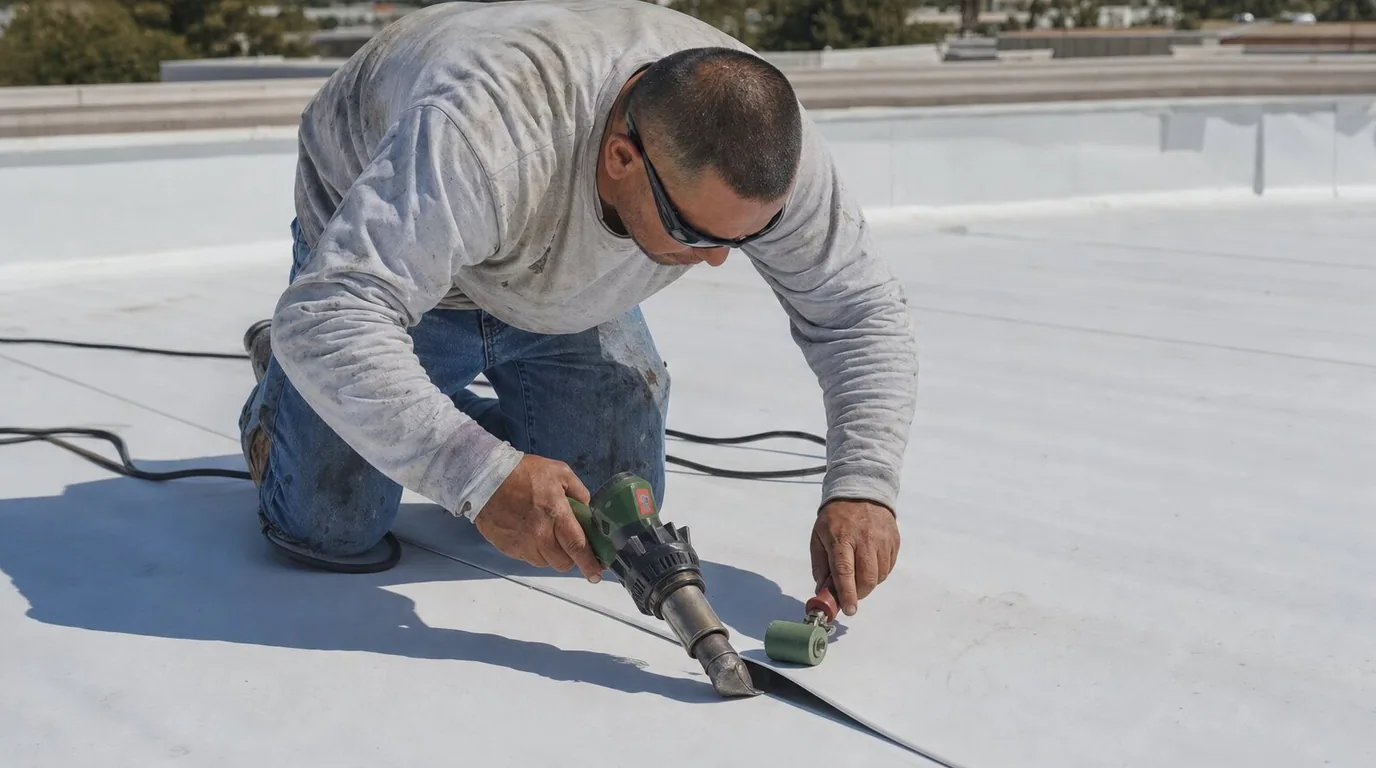
A typical assembly has a base sheet or insulation, three or four plies of felt set in hot asphalt, and a surfacing that shields the asphalt from the sun. Gravel protects against ultraviolet exposure and adds weight and fire resistance but makes leak tracing slower, since the stone has to be swept back. A mineral cap sheet is lighter and easier to inspect. Each ply is a barrier, and the asphalt between them is the waterproofing, so a roof in good condition has bonded plies with no voids. In Yuma, asphalt hardens and loses elasticity under a decade of sun, and the felt can crack where the surface has worn through. We cut small test cores, look at the layers, photograph them and measure moisture, which turns an old roof into a set of data the owner can use in a budget meeting.
Related Roofing Work
Other pages that cover parts of the same roof question.
Roof Coating Restoration
Silicone Roof Coatings
Acrylic Roof Coatings
Commercial Roof Replacement
Downtown Yuma
Roof Capital Planning
Repair, coat or replace: where does the money go?
A built-up roof that is sound beneath its surface can often be restored with a reflective coating, which re-protects the asphalt and cuts surface temperature, and that is the least expensive route when the plies are still bonded and dry. Choosing that route means restoring the roof with a coating, and the reflective finish can be a silicone or an acrylic film, chosen for the way water will behave on that particular roof. A roof with scattered wet insulation can have those areas cut out and replaced, then coated, which is a mid-range spend. A roof that has failed throughout needs full replacement, and the owner should know the tear-off cost of old gravel and layers, the disposal of the debris and the downtime on the building. We price all three paths in one document with the expected years each adds, so the manager can choose the cheapest year of ownership, not the cheapest invoice. Nothing is hidden in a line that says contingency; we state the unit price for wet insulation removal and let the survey decide the quantity.
How does heat age asphalt in the desert?
Asphalt oxidizes under sun, and a built-up surface that was black and flexible at installation becomes brittle and crazed after years of cycling between a hot afternoon and a cool night. The 124 degree F record is an extreme, and it is the long season of 100-degree weather that really ages the roof. Hairline cracks in the surface let water in during the August and September monsoon, and a single heavy storm can find them all. The first signs for a manager are alligatoring on the surface, bare felt at ridges and blisters where the plies have lifted. We map and photograph each defect on a dated set, so a roof's decline is shown as a trend line instead of an argument. Dust from haboobs lodges in those cracks, and the first heavy rain turns it into a paste that holds water against the surface, which is why we flush the roof and clear the scuppers after a major dust event.
Which Yuma buildings still carry tar roofs?
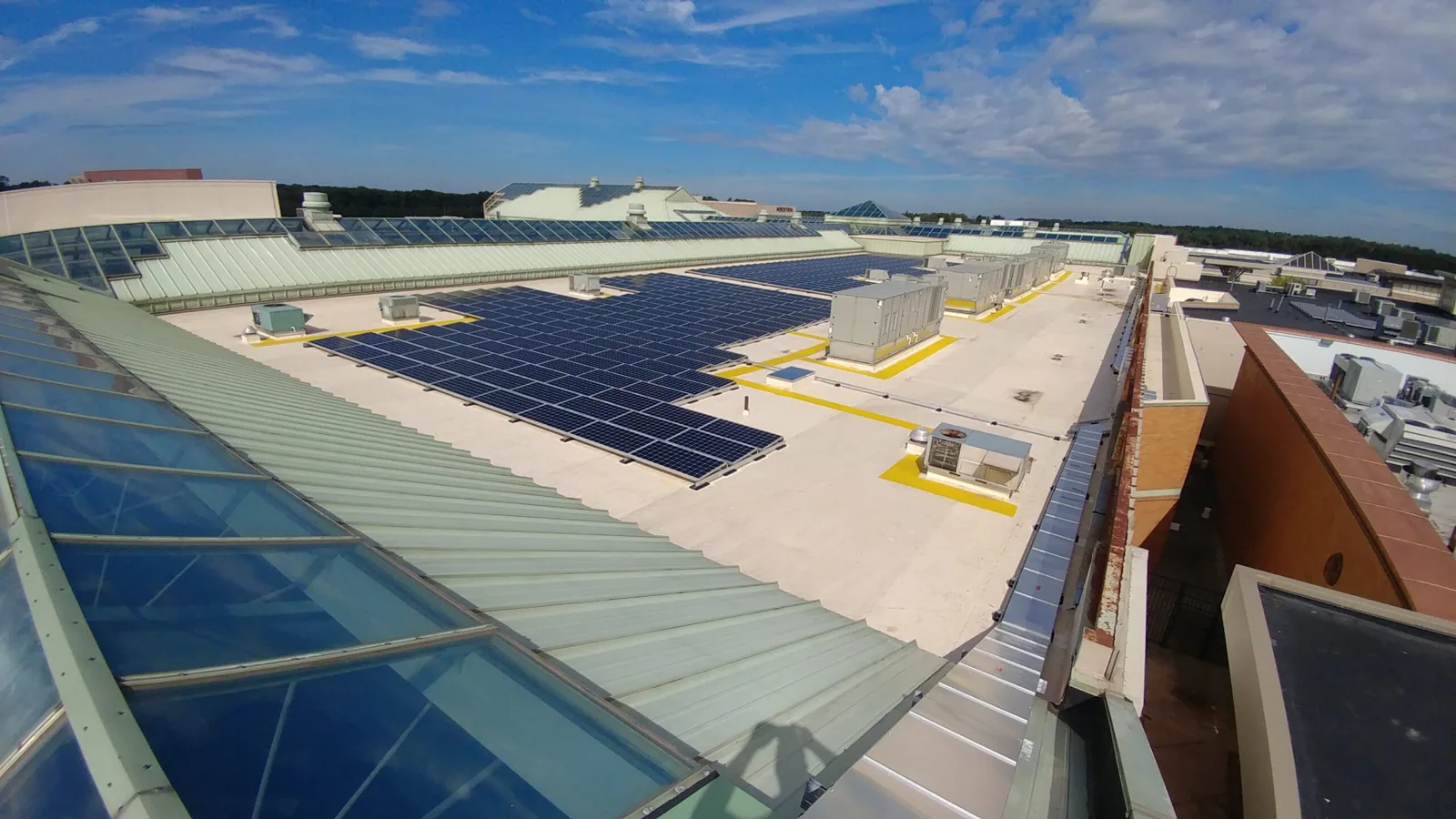
Older commercial buildings in downtown Yuma, inside the Yuma Crossing historic district, may still carry a built-up roof, which we confirm by core rather than assumption. A campus built in stages, as the Onvida Health hospital was with a tower finished in 2004 and a cancer center in 2014, carries roofs of different ages, and a core on each section shows whether any of it is layered asphalt. When a roof of that kind is part of a campus plan, we compare it with newer sheets for the sections that remain and create a phased schedule. A phased capital plan avoids replacing everything in one year and puts each roof on the reserve schedule at its own date, which keeps the capital line smooth for the owner.
Owners of newer property, such as the Panattoni industrial site being developed beside Highway 195, may never meet a tar roof, but an investor buying an older building near Interstate 8 can inherit one, and the age of a building says little about the layers on top of it. A core sample is the dependable way to know what is under the surface.
What does the file show when the work is done?
Whether the roof is repaired, coated or replaced, the owner receives an inspection binder. It holds the core sample photographs, the moisture readings, the dated photo set for each stage, the drain and scupper tally and the flashing details, along with the warranty file where one applies. The inspection rhythm that follows fits the age of the roof: an older tar roof earns a walk each spring and each autumn, and a newer one can settle into a single yearly walk with new photographs. For a portfolio, the binders line up so that the manager sees which tar roofs are nearing the end and which can wait another cycle. That ranking is the content of a reserve schedule, and it is the document a board or lender is likely to request.
Questions About Built-Up Roofing
Can a gravel-surfaced roof be coated?
Yes, but the gravel must be removed or embedded, and loose stone swept off, so the coating can bond. For a roof with a smooth cap sheet, preparation is faster. We test adhesion on a small area before committing the full roof.
How do you find a leak in a layered roof?
Water often travels between plies before showing inside, so we pair an infrared survey with moisture probes and a visual check of flashings and penetrations. The dated photographs show where the plies are wet and where they are dry.
Are built-up roofs allowed on occupied buildings?
Hot asphalt brings fumes and fire risk, so on occupied buildings we plan kettle location, air-intake protection and fire watches in the scope. Where those risks cannot be controlled, a cold-applied or single-ply alternative is priced beside it.
What does the weight of gravel mean for the deck?
Gravel adds load, so before reroofing we confirm the deck capacity. If a new system will be lighter, the owner may gain structural margin; if a heavier ballast is planned, we check the deck first.
Why would an owner keep BUR instead of switching to a single-ply sheet?
Some owners value the redundancy of layered plies and the toughness under foot traffic. Others prefer the lighter sheet and lower installation time of a single-ply system. We price both on a lifecycle basis and let the numbers lead, including the disposal cost of the old layers, any added insulation and the number of heat seasons each option is expected to cover before the next capital event.
Send the roof age and the last core results
Share the roof plan, the year of installation and any prior core or moisture results, and we will return a dated scope with repair, coating and replacement priced as separate paths. Call to book a walk.
Call 555-555-5555 or email [email protected].