
Acrylic Roof Coatings in Yuma, AZ
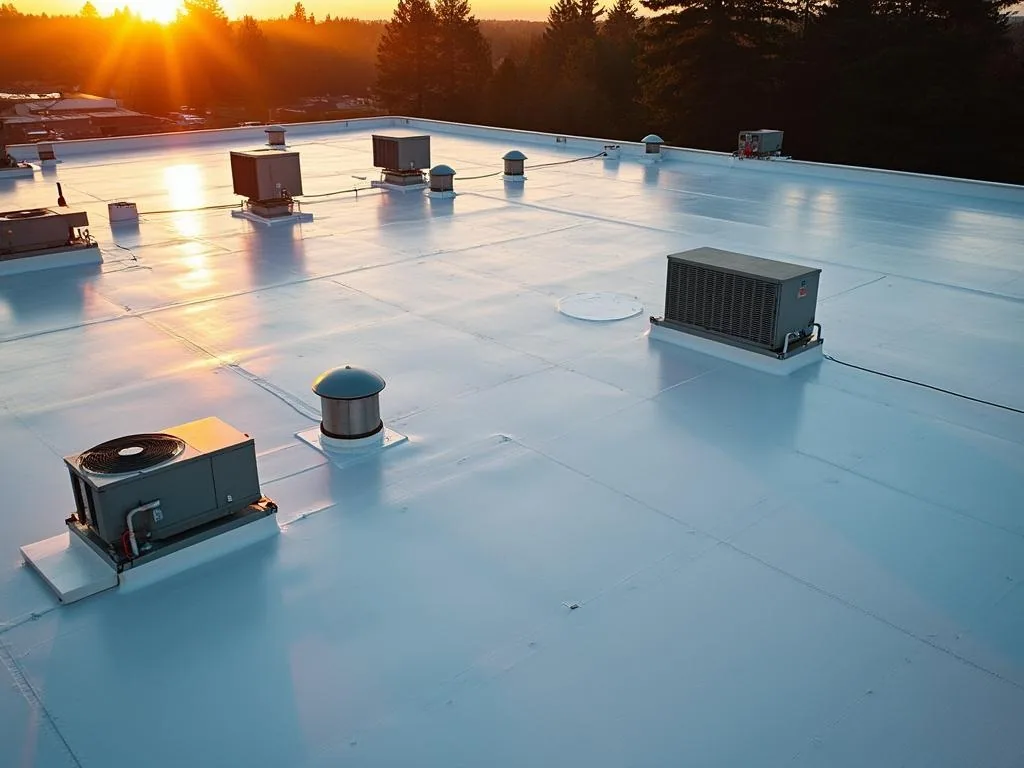
Among the coating options on a Yuma, AZ capital plan, acrylic is the lowest-cost reflective restoration, and its price carries a condition that the roof must meet: the water has to leave. An acrylic coating is a water-based elastomer that dries to a white, flexible film, reflects much of the sun that reaches it and seals small cracks and seams on a roof that is still sound. With rainfall limited to roughly 3.3 inches a year, most roofs satisfy the condition most of the time, which is why acrylic is common. The risk sits in the few storms that arrive each year, and in the low spots where water lingers. We specify acrylic where drainage supports it and say plainly where it does not.
Roof leaking now? Call 555-555-5555 for a site visit and estimate.
When does acrylic beat the alternatives on cost?
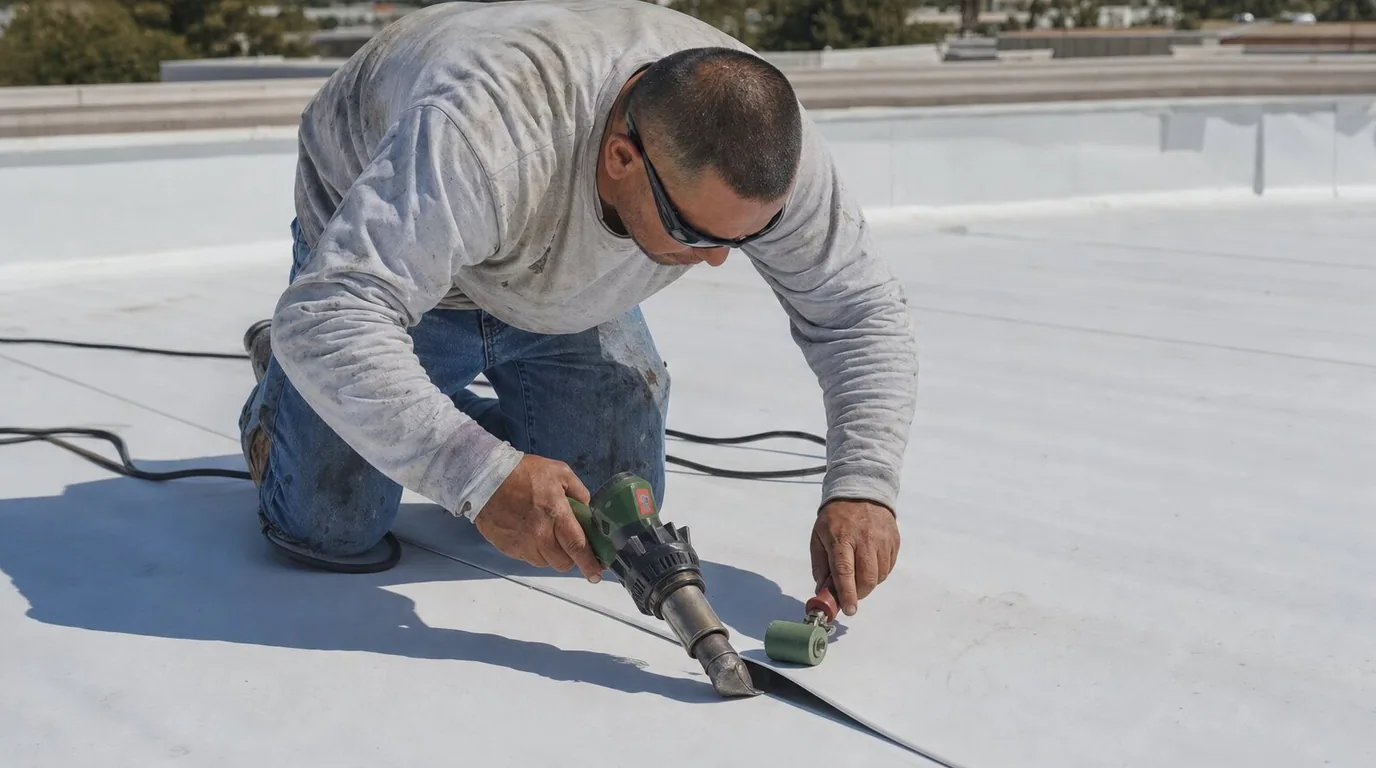
Acrylic costs less per square foot than silicone, applies easily with spray or roller, and cleans up with water, which suits large, simple roofs where drainage is good and the budget is firm. A big-box roof with positive slope to drains is a typical fit, and the same applies to a self-storage complex with long, uniform roofs. The savings narrow if the surface needs repair, primer or fabric reinforcement first, since those lines are the same for any coating. We price the preparation in its own line, so the owner sees the real cost of the coating and the cost of getting the roof ready for it. A coating restoration that skips the cleaning, the adhesion test and the repair of open seams is only a paint job, and the bid should not call it anything else. We write the prep as a sequence: wash, repair, reinforce, prime where required, then coat to a measured thickness.
The cleaning step deserves its own mention in Yuma. Dust bonds to old surfaces, and a roof that has gone through many monsoons carries a crust of fine silt that blocks adhesion. Power washing removes it, but the roof then needs time to dry, and the schedule has to account for that. We record the dry-down time and the surface moisture reading before the first coat goes on, because that is the number that proves the prep was done. A cheap coat over a poorly prepared roof is the most expensive outcome, because it fails early and must be removed.
Related Roofing Work
Other pages that cover parts of the same roof question.
Self-Storage Roofing
Roof Coating Restoration
Silicone Roof Coatings
Ponding Water Roof Repair
Cool Roof Installation
Heat and UV Roof Damage Repair
What does ponding do to an acrylic film?
Acrylic is vulnerable where water stands. Prolonged immersion can soften the film or cause it to blister and lose adhesion, so a roof that holds a puddle for days after a rain is a poor candidate unless the drainage is fixed first. Yuma's wettest months are August, September and December, and the first heavy rain after a long dry spell shows where the low spots are. We walk the roof after a storm, photograph the water, record depth and duration, and count drains and scuppers. If ponding is minor, we may add drains or tapered insulation, and if it is major, we price silicone beside acrylic, since silicone tolerates standing water better. The ponding water record goes into the file.
How does acrylic hold up under 117 hot days?
Acrylic resists ultraviolet light well and keeps a high reflectance when clean, and that reflectance cools the roof surface and reduces the load on rooftop units. In Yuma, with 117 hot days a year at 100 degrees F or above, the coating works through sun and heat cycles that shorten the life of an uncoated roof. What it does not resist is dirt: dust from haboobs and dry ground sticks to it, and the whiteness fades until the roof is washed. We take reflectance readings and film thickness readings at installation and at each inspection, and we recommend a rinse after the monsoon and before the heat season. A cool roof that is never washed is cool only in its first season. The same discipline applies to the heat and UV wear that thin a film over time: gauges at the same test spots each year show how many mils have gone, and the trend gives the owner a date for the next coat instead of a surprise.
Which weeks are workable for application?
Acrylic dries by water evaporation, so it needs dry surfaces and a stretch of weather without rain. The long dry months in Yuma make that easy most of the year, and the water-based product can go on in the cooler early hours. What stops the work is the monsoon, because a shower before the film has cured can wash the coating off the roof. We check the forecast daily in August and September, and the bid shows the hold risk. Wind carries dust that sticks to wet film, so we avoid days with haboob warnings. Outside the monsoon, the application is quick enough to complete a building in a few days, which limits disruption for tenants. December is the other wet month on the Yuma calendar, so we avoid scheduling the last coat of a project for the week after a forecast front, and we keep the sprayers and tarps ready for a quick cover if the sky changes.
Where do acrylic coatings fit among Yuma buildings?
Retail roofs in the Yuma Palms corridor, where Target, Sam's Club, Dillard's and JCPenney stand beside the main tenants as neighboring big-box stores, are candidates when the roof is dry and drains well. Schools and the residence halls at Arizona Western College, which operates three halls for up to 348 students, are another group where a budget-sensitive coating can extend a roof until a replacement is funded. Industrial roofs along Highway 195 may also qualify, but we check the roof surface first. For each, we write a scope with survey results, repair quantities and the number of coats, and we compare it with a full replacement over a stated number of years. A single-ply roof such as TPO that has weathered but not failed can often take an acrylic topcoat after cleaning, and the film extends its reflectance. Where the existing surface is a smooth modified cap sheet, adhesion is usually good, and we still test a patch.
Questions About Acrylic Roof Coatings
Can acrylic go over an old foam or built-up roof?
Yes, when the surface is clean, dry and well bonded. We test adhesion, repair blisters and open seams, and use primer where the product calls for it. Wet insulation is dealt with first.
How long before the first inspection after coating?
The first visit comes once the August and September storms have passed, to look for ponding, dirt and film wear. A second visit in late winter confirms the film and records reflectance. After that, a yearly visit with photographs is typical.
Does acrylic hide the cracks on an old roof?
It bridges hairline cracks, and fabric reinforcement handles seams and larger gaps. Wide openings are repaired before coating. We photograph repairs before they are covered so the file shows what is underneath.
What if rain falls right after application?
A light shower on a cured film does no harm, but rain on a fresh coat can wash it away. We stop when the forecast shows rain and recoat any area touched by water once the surface is dry.
Is acrylic a permanent fix?
No coating is permanent. Acrylic extends a sound roof for a set number of seasons and then needs another coat. The reserve schedule should carry that recoat date so it is planned.
Send the roof plan and the drain locations
Share the roof plan, the drain and scupper locations and any photographs of water left after a storm, and we will return a dated acrylic scope with silicone priced beside it. Call to book a walk.
Call 555-555-5555 or email [email protected].