
Roof Coating Restoration in Yuma, AZ
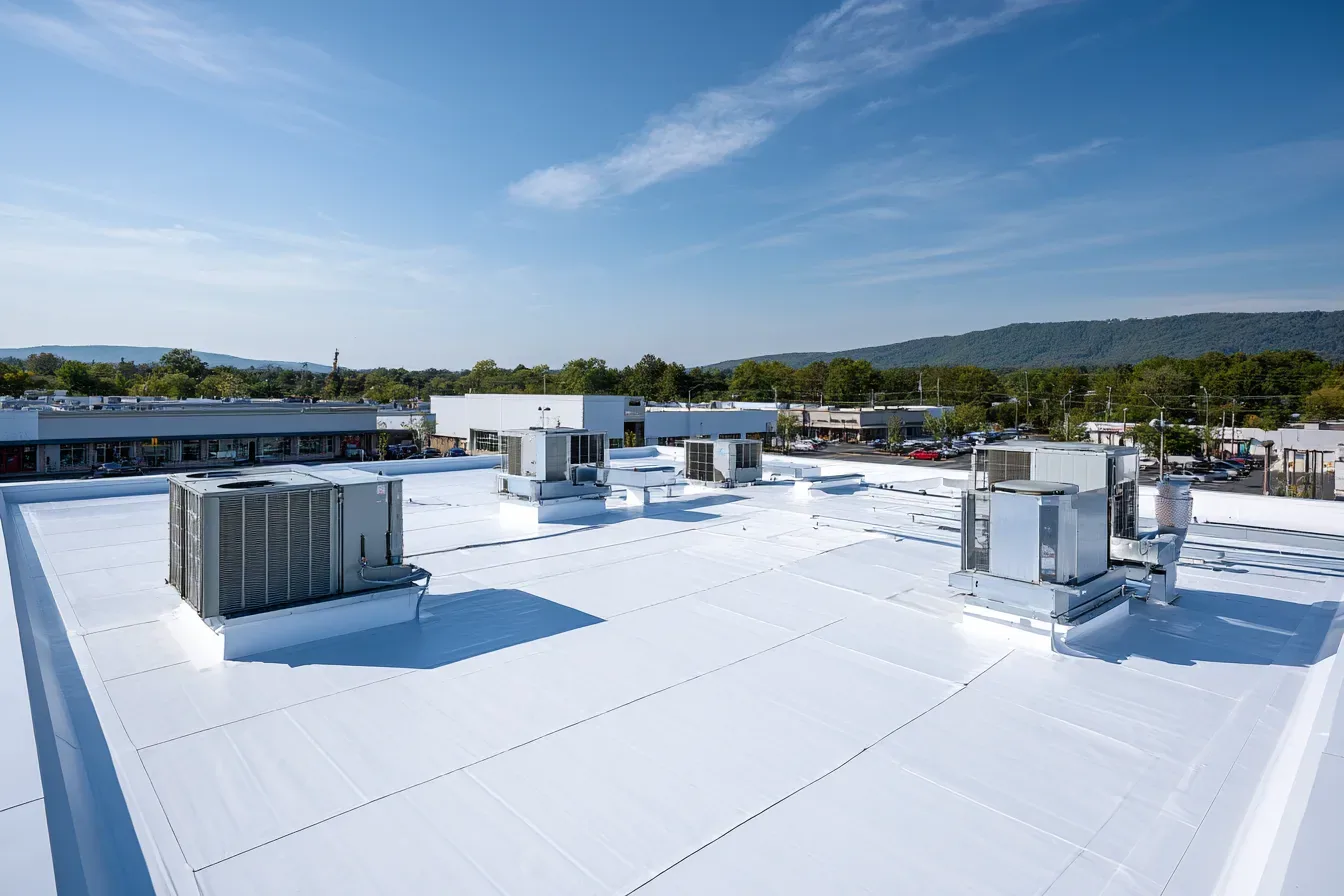
A coating is the cheapest way to add service life to a Yuma roof, and it is also the easiest to spend badly, because the money is lost if the membrane underneath is wet, loose or past saving. Yuma sees about 3.3 inches of rain in a year but 100-degree F heat on some 117 days, and a roof here rarely dies of water first. It dies of ultraviolet exposure and daily expansion and contraction, which craze the surface, open seams and strip the reflective layer that keeps the deck cooler. Restoration works when those losses are caught while the system below is still sound, and it fails when the coating is asked to hide a problem. We start with proof of condition and price the coating only after the roof has earned it.
Roof leaking now? Call 555-555-5555 for a site visit and estimate.
Which roofs qualify for a coating at all?
Three tests decide eligibility. The insulation and deck must be dry, which an infrared moisture survey and a handful of core cuts will show. The existing membrane must be attached well enough that the coating is not simply gluing a loose sheet to itself. And the surface must be clean enough to bond, since dust, oxidation and old chalking from a weathered single-ply or modified bitumen sheet all stand between the coating and the substrate.
Roofs that fail the first test are not candidates, and the survey is the cheapest way to learn that before a coating contract is signed. A wet area can sometimes be cut out and replaced so the rest of the roof can be coated, but a roof that is wet across large stretches belongs on the replacement schedule and a coating there is just a more expensive way to postpone it.
Related Roofing Work
Other pages that cover parts of the same roof question.
Infrared Roof Moisture Survey
Silicone Roof Coatings
Acrylic Roof Coatings
Warehouse Roofing
Yuma Palms and the I-8 Retail Corridor
Roof Capital Planning
Silicone, acrylic or something else?
The choice depends on what the roof already is and what water does to it. Silicone coatings tolerate standing water and keep their performance when ponding is present, which matters on Yuma roofs where a clogged drain turns a monsoon afternoon into a pond. Acrylic coatings cost less and reflect well, but they prefer a roof that drains and they can soften if water sits on them for long. Polyurethane and other liquid systems have a place on certain substrates, and a few metal roofs need a primer and fastener sealing before any topcoat.
Compatibility is the quiet constraint, and it surfaces years later when a recoat is priced. A silicone does not accept most other coatings over it later, so choosing silicone commits the roof to silicone recoats. That decision goes in the file so the next manager does not have to rediscover it.
How do you know the film is thick enough?
A coating protects in proportion to the film that is actually on the roof, and the figure that matters is the dried thickness, not the number of gallons delivered. We calculate coverage for each roof section, apply in measured passes, and take film readings with wet gauges during application and again after cure. Those readings go into the record alongside dated photos of each pass and the reflectance of the finished surface, so the owner holds proof of what was applied.
Without that proof a coating contract is a promise about a layer nobody can see once it dries. With it, a warranty claim, a lender review or a later recoat decision can start from numbers rather than argument. Seams, fastener heads, curbs and penetrations get reinforced with fabric or mastic before the field coat so the weak points are covered by something stronger than a thin film.
When can a coating go on in Yuma?
Coatings cure by temperature, humidity and surface condition, and Yuma stresses all three. Surface temperatures on a dark roof in July can be far above air temperature, which flashes off water or solvents too quickly and traps blisters, so application is usually planned for early morning or for the shoulder seasons. The monsoon weeks of August and September are the other constraint: dust storms deposit fines on a fresh surface, and a rain event over uncured acrylic can wash it out.
A realistic schedule puts most restoration work in the cooler months, with the survey and repairs finished first so the coating crew is not waiting on carpentry. A warehouse roof on the Highway 195 industrial corridor with a tenant dock below needs a different sequence than an empty warehouse, and the bid should show the weather-hold allowance so the invoice does not surprise anyone. A single storm week in late summer can idle a coating crew for days, and that idle time is a schedule cost the owner should see written into the bid on day one.
What does restoration save, and what does it defer?
A restoration is a capital deferral, and the useful way to look at it is as a purchase of years against a replacement. The coating, the preparation and the repairs cost a fraction of a tear-off on most roofs, and the reflective surface lowers roof temperatures, which can ease the load on rooftop air conditioning during the long cooling season. What it does not do is erase the age of the membrane underneath. A restored roof has a new service life measured from the day of application, and the replacement still sits on the reserve schedule, only later.
For retail landlords at Yuma Palms, a development of more than a million square feet, and for packing and distribution buildings that run through the produce season, a restoration planned inside the off months avoids a replacement forced into an operating peak. Our capital planning work puts the deferral and the later replacement on the same sheet so the trade is visible.
Questions About Roof Coating Restoration
Can a coating be applied over a roof that has leaked before?
Once the wet insulation is found and replaced and the leak path is repaired. A coating over a wet area traps moisture and tends to blister.
Does a coating change the roof warranty?
A coating can start a new warranty on the coating itself while the original membrane warranty may end or change. Compare the terms of both before the work begins.
How long before the roof can take foot traffic?
Light traffic can resume once the surface is cured, which depends on the product and the weather. Heavy equipment needs walk pads, and the crew will say when each area is clear.
Will a white coating really lower cooling cost?
Cooler roof surfaces are the proven part; the dollar benefit varies with insulation, building use and how much equipment sits on the roof, and a utility bill comparison before and after gives the real figure. Reflectance readings from the finished surface give the starting point for any estimate.
What if the survey finds wet insulation in one corner?
Cutting it out, replacing the insulation and flashing the patch lets the whole roof be coated. A small wet area rarely rules out restoration, but a spread of wet areas does.
What keeps a restored roof restored?
A coating thins slowly under sun, dust and foot traffic, so restored roofs go onto a maintenance program with a film check at each visit. Drains are cleaned so the roof does not hold water on a surface that was not meant to sit in it, and rooftop technicians are told which paths to use, since repeated foot traffic to the same unit wears a coated path faster than the open field. Dated photos of those paths show where walk pads belong. When readings show the coating approaching its minimum, a recoat is scheduled before the base membrane is exposed.
Test the roof before you budget the coat
Send the roof plan, the age of the membrane and any leak history, and we will schedule the moisture survey and core cuts first, then return a dated scope with film thickness targets before the heat season shuts the window.
Call 555-555-5555 or email [email protected].