
Roof Capital Planning in Yuma, AZ
A replacement year is the single largest roof line an asset manager in Yuma, AZ will carry, and it is cheapest when it is chosen in advance, because a failure in July is priced as an emergency on a surface too hot for most materials while a scheduled job in the cooler months is priced as a plan. Commercial Roofing Yuma builds capital plans that name each roof, the action, the year and the measured reason, so that the request that goes to an owner or lender is backed by a record and not by an impression.
The plan is a ledger with dates. It shows what each roof costs to keep, what it costs to defer and the year at which the second number overtakes the first.
Roof leaking now? Call 555-555-5555 for a site visit and estimate.
What goes on the capital line for a roof?
Each roof receives one line with four entries: the action (repair, restore, recover or replace), the target year, the cost drivers and the evidence. The action follows from what we measure on the walk, which includes moisture mapping of the insulation, coating film thickness where a restoration is possible, ponding depth and the condition of seams and flashings.
- Repair: the sheet is sound and the failures are local. The cost is small and belongs in the operating budget.
- Restore: the membrane is worn but dry. A coating, applied to a cleaned and tested surface, defers replacement and sits in the capital budget.
- Recover: the insulation is dry and the deck is sound, so a new system can be placed over the old.
- Replace: insulation is wet, the deck is damaged or the membrane is past repair.
Moisture decides most of it. Dry insulation keeps restoration and recover on the table, and wet insulation removes them, which is why we test before we recommend and put the result in the file.

Related Roofing Work
Other pages that cover parts of the same roof question.
Roof Coating Restoration
Roof Asset Management
Fortuna Foothills
Cool Roof Installation
Solar-Ready Roofing
Roof Warranty Management
What does waiting cost on a Yuma roof?
Deferral does not feel expensive in Yuma until the day it is. With so little rain across a year, a heat-aged membrane keeps shedding the occasional shower well enough that no leak appears, while seams pull, coating thins and sealant cracks, and then a monsoon week finds all of it at once. The rain of August, September and December tests drains and flashings that have not carried water for months.
The deferred cost is the difference between a planned scope and an emergency one, and it has three parts: wet insulation that must now be removed, interior damage that the owner or tenant must now repair, and the lost work window while the roof waits for the cooler months. We show all three beside the base figure so that deferral is a decision with a price and not a default.
When does the work window open and close?
Heat sets the calendar. Adhesives, welds and coatings need workable surface temperatures, and a roof surface can run far above the air, so major scopes belong in the cooler months, usually late fall through spring. The monsoon-week hold in August and September can stop a job for days when a storm cell crosses the site, in a climate where Yuma Proving Ground has seen 70 mph gusts and a single monsoon season has outrun a normal year of rain.
A plan that ignores those constraints shifts cost to the invoice. We write the hold into the schedule, price standby for the windows when it is likely, and place replacements early in the window so that a slip does not push a job into the heat. For owners with several roofs, sequencing matters as much as price: the roofs with wet insulation or ponding go first, and the roofs that can take a coating restoration follow.
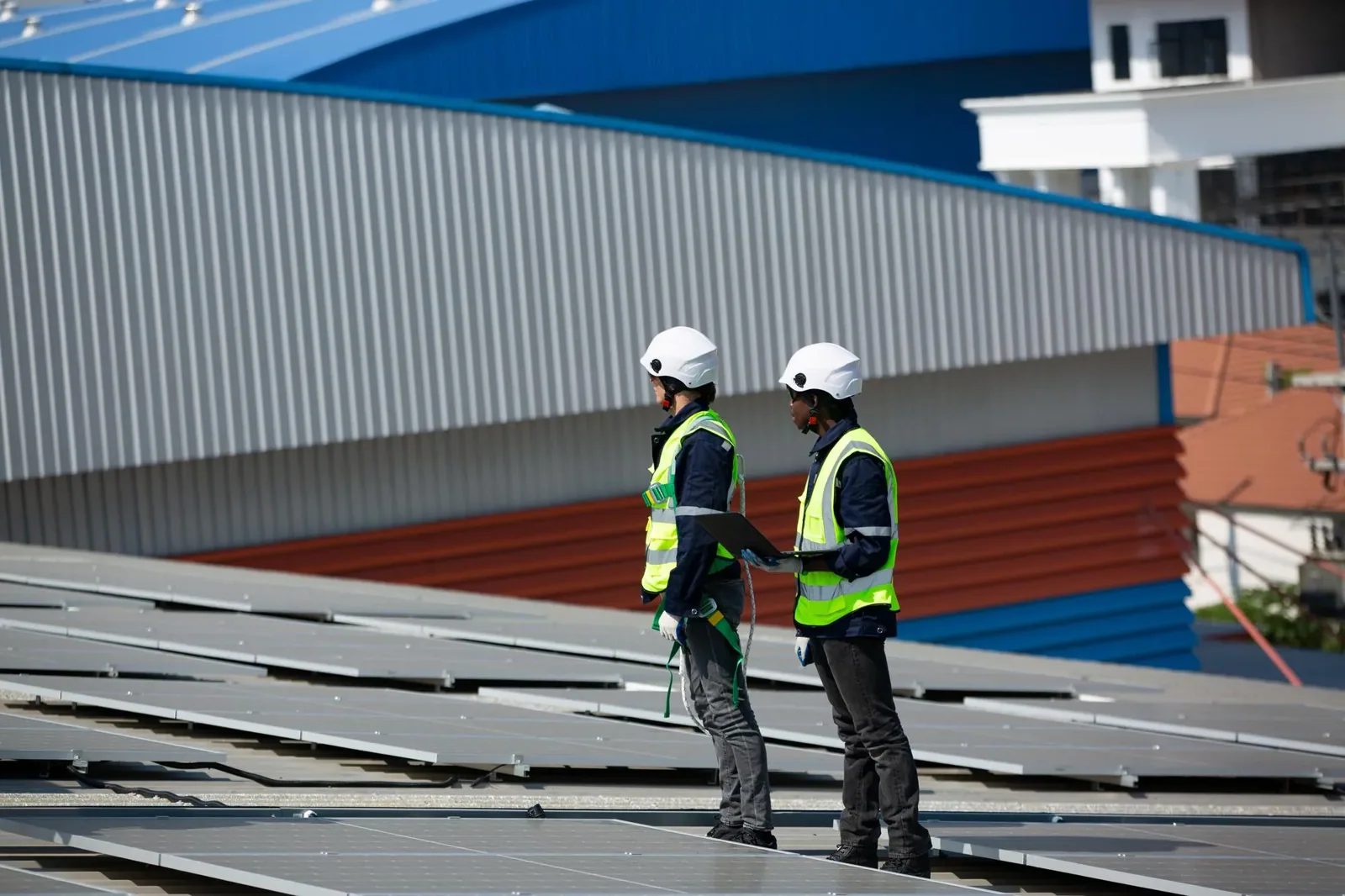
Which roof goes first, and how is that decided?
We rank roofs by risk and consequence, not by age. A newer roof with a drainage defect can outrank an older one that is dry and stable, and a roof over refrigerated or clinical space carries a higher cost of failure than a roof over empty floor. Four questions order the list.
- Is insulation wet or is the deck damaged?
- Is ponding recurring, and does the drain and scupper tally show blocked outlets?
- Does the space below depend on the roof, as cold storage, produce packing or a hospital-type building does?
- Is a warranty tied to timely work, and what does the file say about its terms?
Yes answers move a roof up the list. The result is a three-to-five-year schedule that matches the owner's budget cycle, reissued after each season so that the walks and the plan stay aligned. The asset record supplies the evidence for every entry.
How do different Yuma building types change the plan?
Retail, industrial, agricultural and seasonal properties age on different clocks. At Yuma Palms Regional Center, replacements can be phased tenant by tenant and drainage zone by drainage zone. Panattoni's 290-acre industrial site, under development beside Highway 195, gives a new building there the chance to start with a warranty file and a baseline drain and coating record, and the plan for it is built on those from the first year.
Cold storage and produce packing, supported by Yuma's role as a trucking hub between California, Arizona and Mexico, put the highest price on a leak, so these roofs rank high and are scheduled around harvest. In Fortuna Foothills, where roughly four in ten homes counted as vacant in 2020 because many residents are seasonal, a senior or seasonal property may stand unattended for months, which argues for a closing walk and a dated photo set before the owners leave.
Questions About Roof Capital Planning
How far ahead should a Yuma owner budget for replacement?
Three to five years for the plan and one year for a firm price. A longer horizon spreads cost and places the job in a good window. If testing finds wet insulation, the clock shortens and the plan says so.
Can a roof be coated instead of replaced?
Yes, when the insulation is dry, the deck is sound and the membrane is worn but intact. Moisture testing and a coating thickness check come first; wet insulation takes a coating off the table, and the plan then prices replacement.
What if the budget does not cover everything this year?
We phase the work. Roofs with wet insulation, ponding or high consequence go first, and stable roofs wait on maintenance. Each phase is priced separately so approval of one does not commit the owner to the rest.
How does the monsoon change a bid?
It adds a hold risk. A storm week in August or September can stop work for days. We write the likely hold into the schedule so the cost appears in the bid and not in a later change order.
Who writes the plan, you or our engineer?
We write the roofing side: condition, options, timing and cost drivers. Structural questions go to a licensed engineer. The finished schedule is something an owner can hand to a board or a lender.
How does the plan become a reserve schedule?
Once every roof has an age, a condition and an action year, the reserve can be set to match. We deliver a schedule that lists each roof, the year, the likely figure range and the cost drivers behind it (tear-off depth, insulation thickness, drain count, equipment, access and the weather window), so that a change in one line does not hide inside a lump sum.
Add-on items carry their own prices next to the base figure, since the roof is open only once and improvements cost less now than later. A cool roof surface that lowers surface temperature, added insulation or a solar-ready layout can be included or declined on the evidence. The warranty file shows which actions keep coverage alive and which expiry dates fall inside the plan.
Send the Roof Plan, Last Record and Budget Year
Send the roof plan, the last inspection record and the budget year, and we will set a dated scope and a capital line before the heat season closes the work window.
Call 555-555-5555 or email [email protected].