Roof Warranty Management in Yuma, AZ
A roof warranty is an asset only while its conditions are met, and in Yuma, AZ the conditions are tested by heat and a few violent storms more than by steady rain, so the warranty file is the document that decides whether a failure becomes a claim or a bill. Commercial Roofing Yuma reads the terms, schedules the inspections they require, repairs by the method they allow and keeps the dated record that a manufacturer will ask for when something goes wrong.
Coverage rarely ends with a dramatic event. It ends with a patch in the wrong material, a missed inspection or a cut made by another trade, and the file exists to stop each of those before it costs the owner the protection.
Roof leaking now? Call 555-555-5555 for a site visit and estimate.
What does the warranty actually say?
We start from the paper, not from memory, because terms differ by manufacturer and by product, and a summary written years ago may not match the document. The items we mark are the ones that move cost.
- Who holds the warranty, and whether it transfers when the building sells.
- What is covered: membrane only, labor and materials, or the full system.
- What voids it: unapproved repairs, rooftop work by other trades, neglected maintenance or standing water beyond a stated limit.
- What the owner must do: required inspections, notice windows and written records.
- How a claim starts: who is called, within what time and with which documents.
If the document is missing, we help the owner request a copy from the installer or the manufacturer, and the roof is carried as uncovered until the paper is in hand. Start date, expiration, notice windows and inspection intervals go on one calendar, so nothing lapses inside a heat season when no one wants to be on the roof.
Related Roofing Work
Other pages that cover parts of the same roof question.
TPO Roofing
Emergency Roof Repair
Roof Condition Reports
Roof Capital Planning
Due Diligence Roof Surveys
Yuma Palms and the I-8 Retail Corridor
Where does heat put coverage at risk?
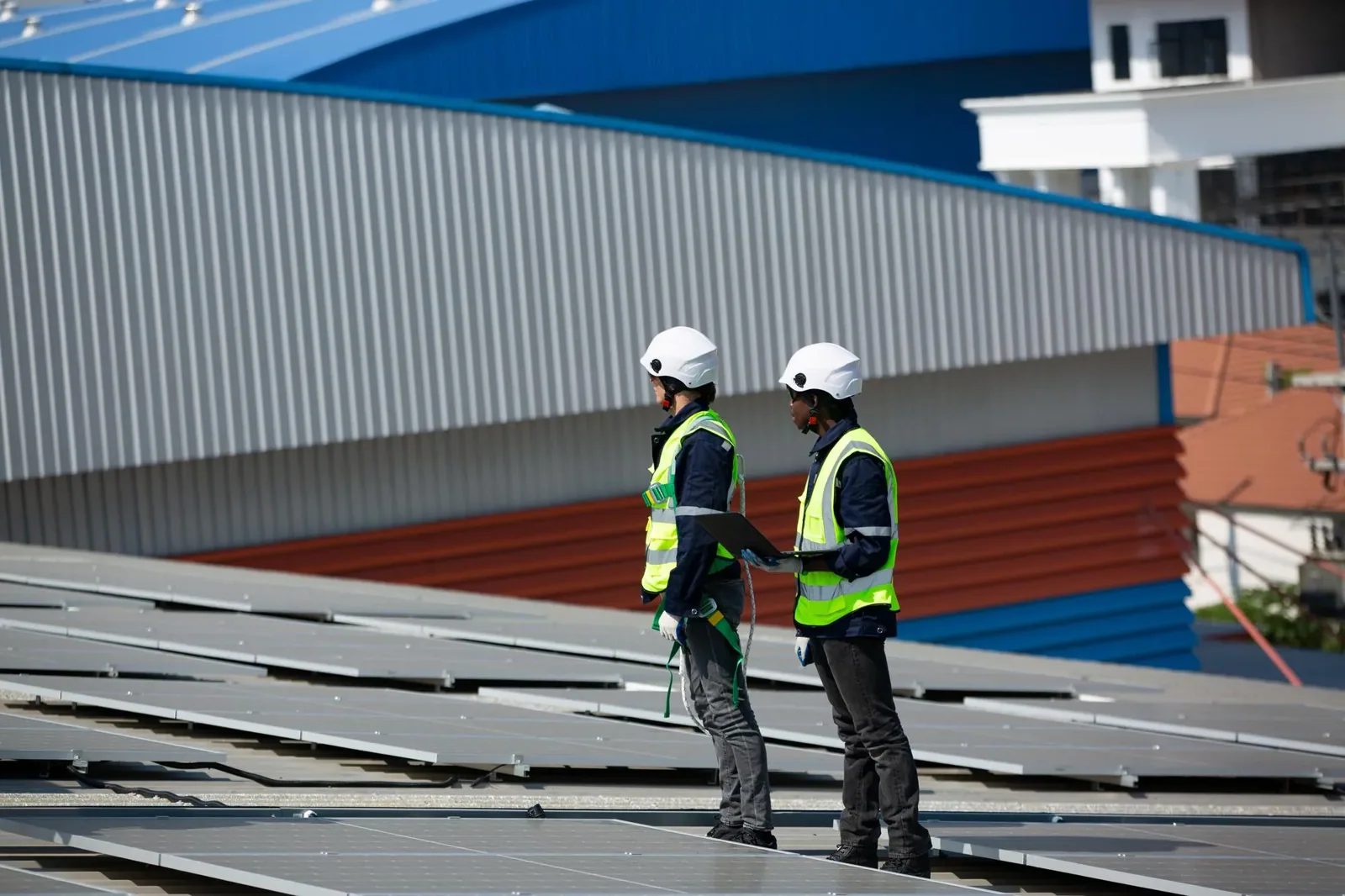
Roughly 117 days a year reach 100 degrees, and the roof ages through surface temperature and daily expansion. Warranties commonly exclude damage from foot traffic, and in the heat a hot membrane is softer and cuts more easily under a technician's boots, so rooftop service visits are a quiet source of voided coverage.
Another trap is the repair itself. A seam opened by thermal movement should be closed with the manufacturer's method and materials, on a clean surface, at a workable temperature. A quick patch in the afternoon sun, with a sealant that is not on the approved list, can create a second problem that the first claim never had. We schedule seam and flashing work for the hours when the surface allows a proper bond, and where it does not, we place a temporary dry-in and document it as temporary.
After the hottest weeks we walk the roof for the items most likely to draw a denial: standing water, cut membrane, displaced flashing and thinned coating. Each is repaired and documented before the next storm window opens.
What does the monsoon do to a warranty file?
The wettest months are August and September, along with December, and the storms that arrive bring dust, rain and gusts like the 70 mph reading Yuma Proving Ground logged in 1996. Many warranties treat wind above a stated speed, or ponding beyond a stated depth or duration, as excluded events, so a storm week can create exactly the disputes a file is meant to settle.
The dated photo set from the last walk is the answer. It shows whether the lifted edge, the pond or the clogged scupper was present before the storm, and it shows that drains were cleared on the schedule the warranty expects. After a storm we walk the roof against that set, record the changes and report them promptly, because notice windows run from the date of discovery and a late report can be held against the owner.
How do repairs stay inside the warranty?
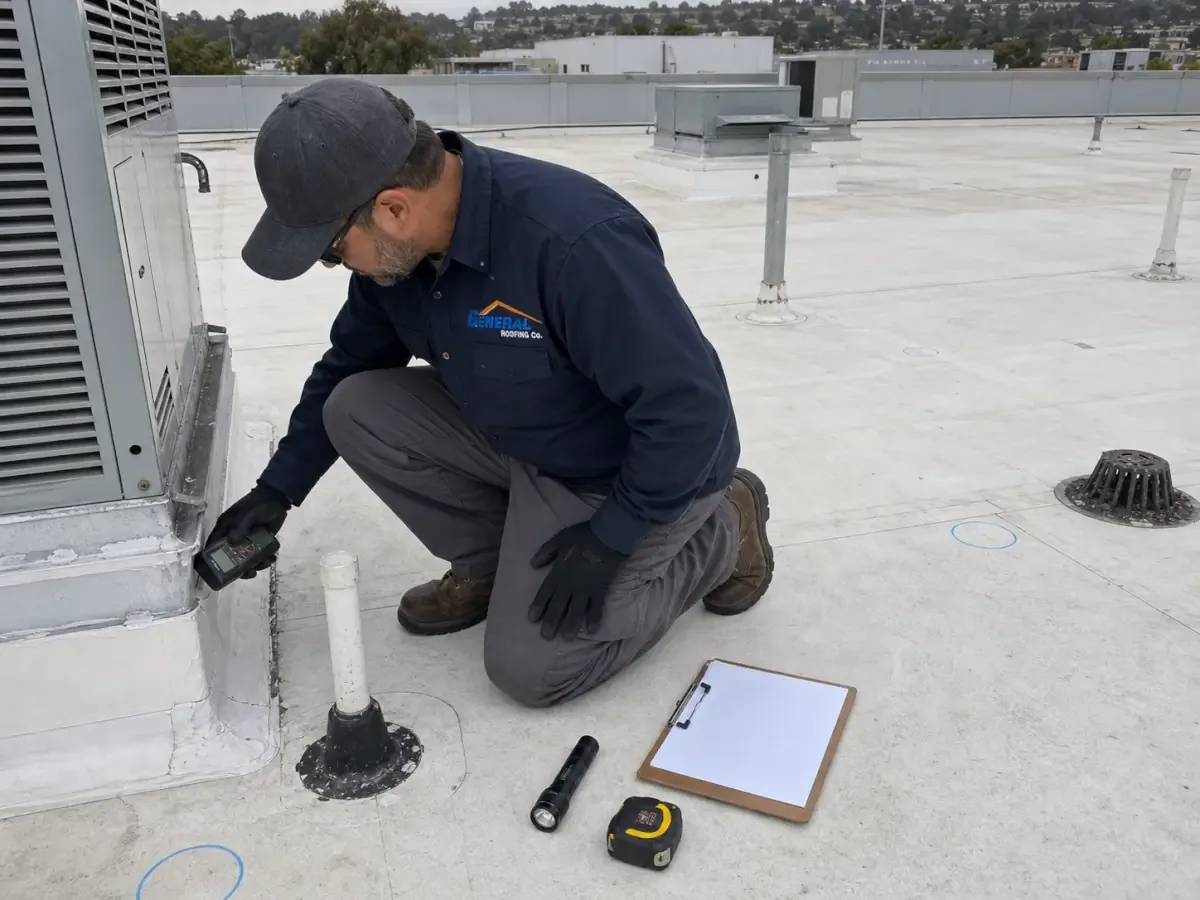
Many warranties require repairs to use the manufacturer's materials and details, and some require an installer the manufacturer recognizes. We read that clause before touching the roof and match the repair to it, whether the system is TPO, PVC, EPDM, modified bitumen or a coated or metal system. Where a repair would put coverage at risk, we tell the owner before the work, with the alternatives and their cost.
Other trades need rules as well. A mechanical contractor adding a unit, a solar installer or a telecom crew can void coverage by cutting into the roof, so we write short access rules with a sign-in sheet and a requirement to call us for flashing at any new penetration. Where an emergency repair is needed outside the manufacturer's method, we document it as temporary, photograph it and schedule the permanent repair, so the file shows a defensible sequence.
Cost follows the system and the damage. Repair to manufacturer detail takes more preparation and documentation than a quick patch, but it keeps coverage in force, which is the cheaper path if a failure comes later.
Which inspections and records matter most?
Some warranties require periodic inspections, and others only reward them with a clean record when a claim arrives. Either way, a dated inspection with photographs is the strongest evidence an owner can hold. The walks fall in spring, after each August or September storm week and again in winter, each producing a short entry tied to the condition report format, with drains, seams and flashing recorded the same way each time.
If a defect appears, the file shows when it was first seen, when it was reported and what was done. A claim built on that record moves faster than one built on recollection. The same record supports an insurance claim when a storm causes damage the warranty excludes, and it supports the capital plan by showing which expiry dates fall inside the budget horizon.
Questions About Roof Warranty Management
Does a patch from another contractor void my warranty?
It can. Many warranties name approved materials and methods. Send us the repair details and the warranty, and we will check whether the method fits what the document allows.
What belongs in a warranty file?
The warranty document, installer name, completion date, inspection entries, repair records with photographs, a list of every trade that has been on the roof, and the drain and ponding records.
Can rooftop equipment be added without losing coverage?
Often yes, if the flashing follows the manufacturer's detail and notice is given where required. Call before the unit goes up, since repairing a cut roof afterward is harder.
What if the paperwork is lost?
We help trace it through the installer, the original contractor and the manufacturer. If it is not found, the roof is carried as uncovered and maintained on its condition alone.
Does a monsoon storm void coverage?
Not by itself. What matters is the document's wind and ponding terms and the condition of the roof before the storm, which the dated photo set shows.
What happens to the warranty when the building changes hands?
A warranty does not always follow a building through a change of owner or manager. Some transfer with notice and a fee, others end at sale, and the difference is worth knowing before a closing. We check transfer terms during any due diligence survey, so a buyer does not assume coverage that is not there.
For a multi-tenant retail property such as those along the Yuma Palms corridor, we add a roster of who has worked on the roof and what they were permitted to do.
Where a roof is sold or refinanced, the file also lists the deferred cost on every open item, so the buyer or lender sees the warranty and the work it depends on together.
Send the Roof Plan, Warranty and Budget Year
Send the roof plan, the warranty paperwork if you have it, the last inspection record and the budget year, and we will build the file before the heat season closes the work window.
Call 555-555-5555 or email [email protected].