
EPDM Roofing in Yuma, AZ
Rubber is among the oldest single-ply materials still being laid on commercial roofs, and a manager who inherits an EPDM roof in Yuma, AZ should treat its remaining years as a number to be measured, not guessed. A black EPDM sheet can reach surface temperatures well past what the air reads, and a place where the mercury tops 100 degrees F for 117 days a year puts that rubber through a long cumulative heat load while the rain barely touches it. The membrane does not fail like a roof in a wet climate; it dries, shrinks, and pulls at its seams and edges. We install EPDM in white and black, repair it, and document it, so the capital line for the roof is set from readings and photographs and not from the age on the invoice.
Roof leaking now? Call 555-555-5555 for a site visit and estimate.
What does an EPDM scope include besides the rubber?
The sheet itself is a smaller share of the price than most budgets assume. A complete EPDM scope covers deck repair, insulation, the cover board that protects the rubber from the underlayer, the sheet in its adhered, mechanically attached or ballasted form, the seam tape or splice adhesive, and the pre-molded boots at pipes. Each of those is a separate line, and we keep them separate so an owner can defer the lower-priority lines, such as a second layer of insulation, without cutting into the weather protection. Rubber can be installed in very wide sheets with few field seams, which is a real cost advantage on a large, simple roof, and it is the reason EPDM remains on the shortlist even beside TPO when the building has plain geometry and few penetrations.
Related Roofing Work
Other pages that cover parts of the same roof question.
TPO Roofing
Heat and UV Roof Damage Repair
College and University Roofing
Downtown Yuma
PVC Roofing
Commercial Roof Replacement
How does Yuma heat age a rubber membrane?
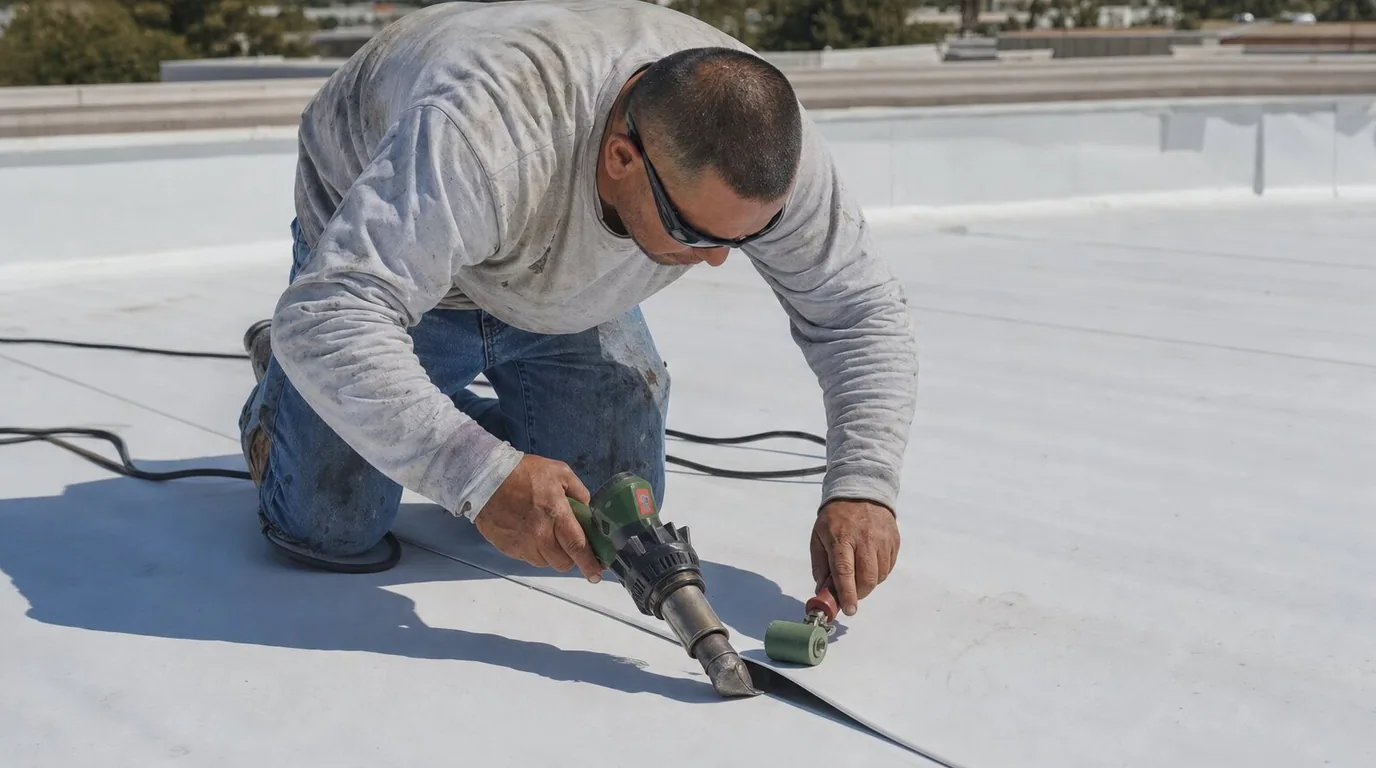
Two things happen to EPDM under sustained sun: the sheet loses some of its plasticity and the lap seams, which depend on tape or splice adhesive, are asked to hold while the surface swings between afternoon heat and night cooling. Freezing is not the concern in a place where the coldest night on record is only about 21 degrees F. The concern is the repeated expansion and contraction that pulls on a flashing at a wall or a curb until it lifts. We log surface temperatures on a survey, photograph each seam and edge on a dated set, and probe laps with a blunt tool to find the ones that have begun to open. Heat and UV on any exposed roof is a documented damage pattern, and a white EPDM sheet runs cooler than a black one and slows the aging, which can be worth the added price on a building with a long hold period.
Which Yuma roofs make sense for rubber?
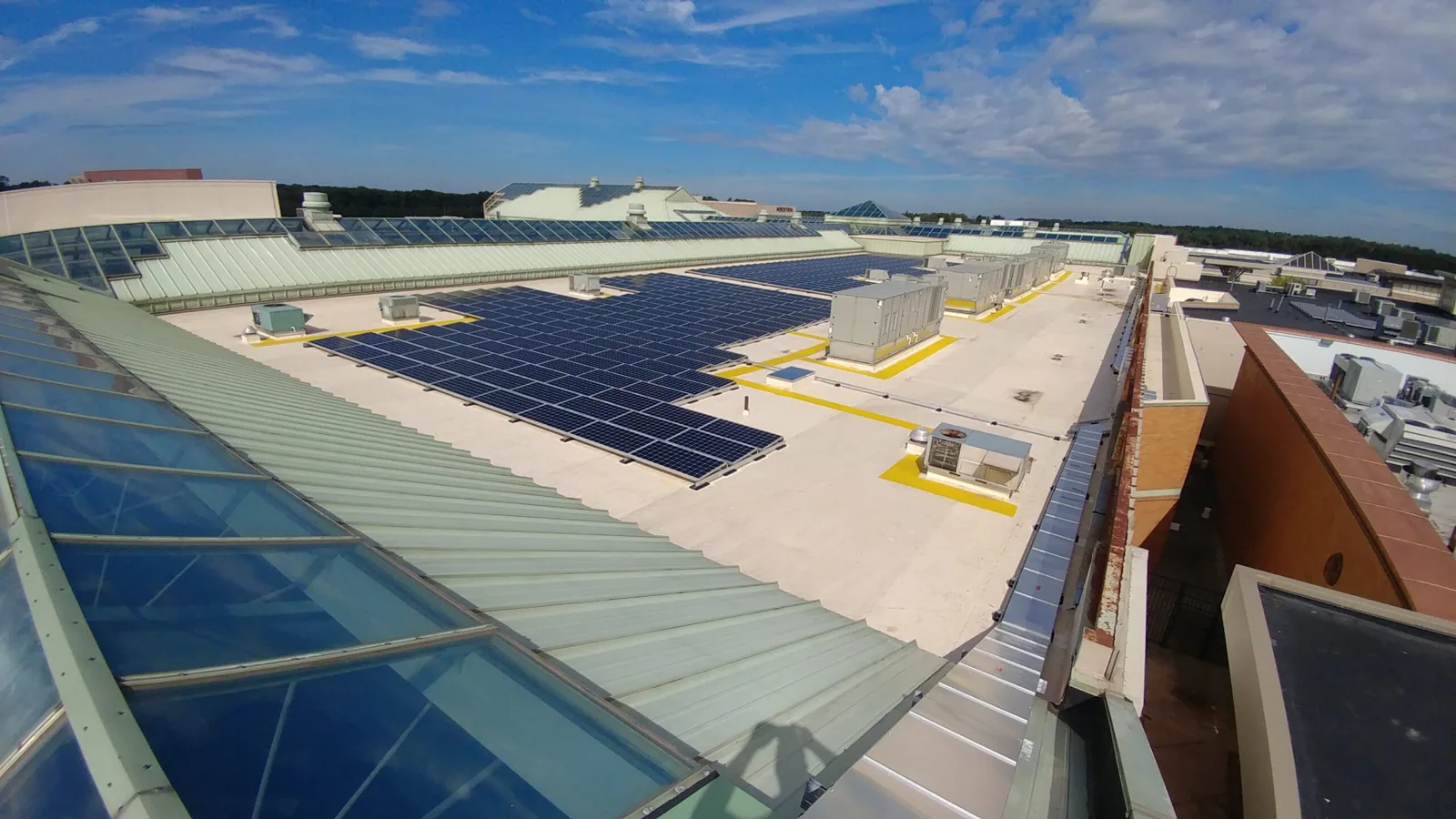
EPDM suits plain, low-traffic roofs where cost per square foot dominates and the details are simple. The three residence halls at Arizona Western College, housing up to 348 students, are a college campus case and the kind of mid-sized building where a clean field of rubber with limited equipment can work, and the owner can plan replacement against a campus capital cycle. Older buildings in downtown Yuma, inside the Yuma Crossing historic district, raise a different question: rubber can be shaped to awkward parapets and low-profile details without heavy hardware, so we consider it there when the owner wants minimal visible change. For anything with heavy rooftop traffic or grease exposure, we recommend a different system such as PVC or a coated roof, because rubber is soft and punctures more easily than a reinforced thermoplastic. The scope notes where foot traffic will fall and adds walkway pads at those paths.
Large, plain industrial buildings are the other natural fit. The Panattoni industrial site now being developed beside Highway 195 is the kind of ground where an owner who counts price per square foot will want an EPDM number priced beside TPO. A retail owner at Yuma Palms can have a harder call, because tenant rooftop units and frequent service visits wear on a soft sheet. We write that foot-traffic exposure into the scope, with the added cost of protection, so the comparison between buildings is on equal terms.
Can an old EPDM roof be saved by repair?
A rubber roof can often be extended with targeted repair, and the first question is whether the sheet has shrunk. Shrinkage shows at the corners of parapets and around curbs, where the membrane pulls away and bridges across the angle, and it is the defect we measure first. A sheet that has not shrunk can be repaired with cured-seam tape patches, new boots and re-adhered flashings, and the cost is modest compared with replacement. A sheet that has cracked in the field, or one whose laps have opened across many seams, is a different budget item; we price repair and replacement side by side so the manager sees how many years the repair actually buys and what that costs per year held. If moisture has reached the insulation, an infrared moisture survey maps it before any money is spent.
What does the owner keep after an EPDM installation?
The record is the part of a roof that outlasts the crew. We assemble an inspection binder with dated photographs of the deck, insulation, seams and flashings, the drain and scupper tally before and after the work, the fastening or adhesive details, and the warranty file kept current for the owner. The binder pairs with a short inspection schedule, an early look once the storm months have passed and a second in late winter, then an annual visit with new photographs. For an owner with several rubber roofs, the files line up for comparison, and the reserve schedule can show which building will come due first. That ordering is what a lender or a board wants to see when a budget is being defended.
Questions About EPDM Roofing
Does a black EPDM roof make the building hotter inside?
It raises the surface temperature of the roof and adds load to the cooling system through the insulation, though a well-insulated assembly limits the difference. White EPDM reduces that load and slows membrane aging, so on an air-conditioned building in Yuma we usually price the white option beside the black.
How are seams on rubber roofs checked?
Field laps are probed along the edge with a blunt tool, and any lap that lifts is cleaned and re-taped or re-spliced. We photograph corners, boots and flashings at the same time, so the dated set shows what was found and what was done.
Will a rubber roof survive a monsoon wind event?
The attachment method matters more than the material. Fully adhered and mechanically attached systems resist uplift when installed to the wind design for the building, while ballasted roofs rely on stone weight and need a check after strong outflow winds of the 60 to 70 mph kind that arrive in August and September.
Should we recover a rubber roof or tear it off?
A recover is possible when moisture readings show the insulation is dry and the deck is sound. If the old sheet is wet or has failed seams, tear-off removes the problem. We run the readings before offering either option, so the choice rests on measured conditions.
What is the usual cost driver on an EPDM bid?
Roof size, insulation thickness and the number of penetrations carry the most weight. Access, crane time and the monsoon hold risk follow, and we list each in the bid so an owner can compare it with a TPO or PVC proposal line by line.
Send the roof plan and the last repair invoices
Share the roof plan, the repair history and the year the sheet went down, and we will return a dated EPDM scope with white and black options priced side by side. Call to set a walk before the heat season peaks.
Call 555-555-5555 or email [email protected].