
Heat and UV Roof Damage Repair in Yuma, AZ
On a Yuma, AZ roof the damage that costs the most is the damage nobody saw happen, because it accrues over about 175 sunny days a year, roughly 117 of them at 100 degrees or hotter, with only about 3.3 inches of rain to interrupt it, and arrives on the capital line as a membrane that is simply finished. No storm date, no insurance event and no photograph of the day it failed. The record high of 124 degrees is the extreme case, but the working load is the climb from a cool dawn surface to a far hotter afternoon surface and back again, repeated every day of the year. By the time a manager sees crazing, chalking or a brittle seam, years of cumulative exposure have already been spent.
We measure heat and UV wear while the roof can still be restored, log it in a dated set and put a price on the choice between coating, repair and replacement before the heat season closes the work window.
Roof leaking now? Call 555-555-5555 for a site visit and estimate.
How can an owner tell sun damage from ordinary age?
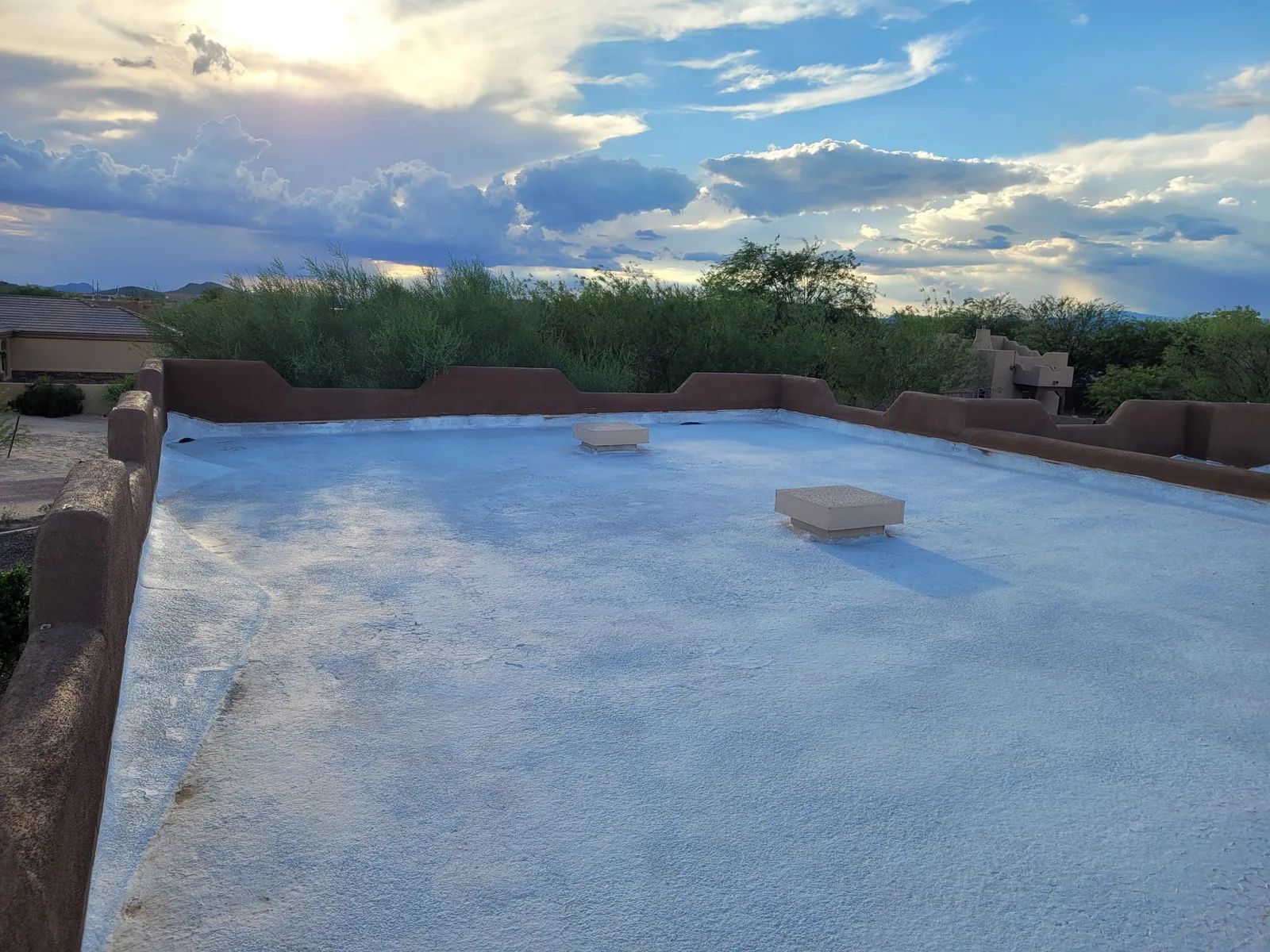
Sun damage has a look. Single-ply membranes chalk, craze or shrink at the edges and seams. Modified bitumen loses granules, exposing the asphalt to direct sun and speeding its decline. Built-up roofs alligator, with a surface that cracks into a pattern like reptile skin. Coatings lose film thickness, turn dull and let the base show through. Sealants and mastics harden, crack and pull from their substrate. Metal roofs fade, and their sealant at fasteners and laps hardens and opens.
None of this requires a leak to be present. A roof can be dry and still be near the end of its useful surface life. We photograph each condition on the same dated set and, where a restoration is possible, we record reflectance readings and coating film thickness at sample points so that the owner can see the numbers and not just our description. Readings are repeated on the next visit at the same points, which turns a feeling that the roof is getting worse into a measured rate of change.
Related Roofing Work
Other pages that cover parts of the same roof question.
Cool Roof Installation
Drone Roof Inspection
Roof Coating Restoration
Silicone Roof Coatings
Acrylic Roof Coatings
Flashing Failure Repair
What do surface temperature readings tell a manager?
A dark roof in summer reads well above the air temperature, and that surface temperature matters because it drives both the aging of the membrane and the cooling load of the building below. We take readings at several points across the roof, on different surfaces and at different times of day, and record them in a table the manager can keep.
The readings point to the places where heat concentrates: dark patches, ponded areas that hold warm water, spots near exhaust fans and areas where reflective surface has worn away. They also set a baseline for comparison after a repair or coating. A cool roof upgrade or reflective coating should lower surface temperature measurably, and the second set of readings shows by how much. A drone roof inspection with thermal imaging shows the pattern across a large roof in minutes and finds hot areas that ground-level inspection would miss.
What are the repair options for a sun-aged roof?
There are four paths. The first is local repair: resealing flashings, replacing worn sealant, patching cracked areas and re-welding open seams on a membrane that still has life. The second is coating restoration, in which a prepared surface receives a reflective coating that restores waterproofing and cuts surface temperature. The third is a recover or overlay, in which a new membrane goes over the old one when the insulation is dry and the deck sound. The fourth is replacement, when the base is wet or too far gone to carry anything else.
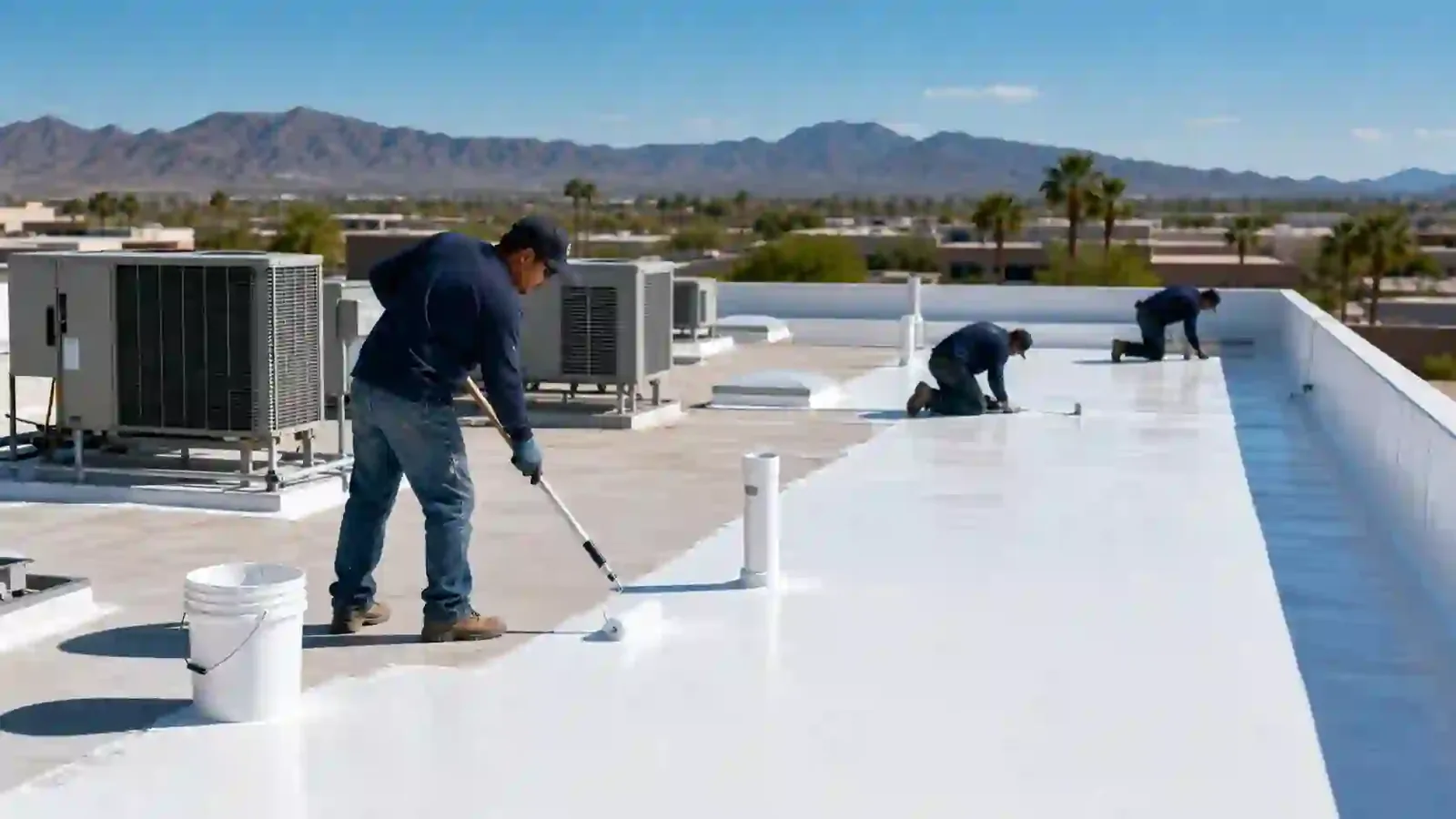
The moisture survey and the film thickness readings decide which path is open. A coating restoration works on a dry, sound base and fails on a saturated one. A silicone product suits roofs with ponding and a clean surface, while an acrylic product suits roofs that drain well and need a lower cost per square foot. The scope lists a silicone roof coating and an acrylic roof coating side by side with prices, so the owner chooses between them on cost and drainage. If the coating path is chosen, we also set the timing against the heat season: a prepared surface needs a dry cure window, and a monsoon-week hold on a coating job is a schedule cost that belongs in the bid.
Which details fail first under heat and UV?
Flashings and seams give way before the field of the roof does, because they carry the most movement. A base flashing that stands off a wall, a sealant bead that has split and a termination bar with open gaps let water in long before the membrane itself fails. Resealing them is the work of flashing failure repair, done curb by curb.
Seams follow a similar pattern. A heat-welded seam on a single-ply roof is only as sound as the membrane on either side, and when the sheet shrinks the seam is pulled apart. Seam failure repair begins with a probe of every run. Rooftop equipment adds to the load: a hot condenser throws heat onto the membrane beside it and speeds local aging, so the area around equipment usually shows wear first. Walkways and equipment pads take a share of the same exposure, and a pad that has hardened and cracked needs replacement before it starts to abrade the membrane beneath. We note these zones on the roof plan and recommend reflective pads or shielding where the pattern is clear.
How should an owner budget for heat wear on several buildings?
A workable budget treats heat and UV as a scheduled cost and not a surprise. We survey each roof, rank them by remaining surface life and put the ranked list into a reserve schedule with a year and a price for each building. Retail along Interstate 8 near Yuma Palms, senior and seasonal properties in Fortuna Foothills and agricultural buildings out toward Somerton and San Luis all age in the same sun but carry different consequences, and the schedule reflects.
A preventive maintenance program slows the process by keeping drains clear, resealing details and recoating on a schedule before the base is exposed. The program also produces the dated record a lender or board can read: each visit adds a photograph set, readings and a short note, and over several years the file shows the pace of aging. An owner who has that file can decide the timing of a restoration from evidence and can defend the decision.
Questions About Heat and UV Roof Damage Repair
How long can a sun-aged roof wait before it leaks?
There is no date to quote. A roof can sit dry for years with a thin surface and open details, and the first heavy rain may find them all at once. The condition report ranks the risk and sets the order of work.
Does a white coating cool the building?
A reflective coating lowers roof surface temperature, and the cooling load on the space below often falls with it. We measure the surface before and after so the owner sees the actual change on the building.
Is UV damage covered by the manufacturer warranty?
Warranty terms differ. Many cover defects in the product and not weathering from ordinary exposure, so we read the paperwork and tell the owner what it does and does not cover.
Can heat-damaged seams be repaired or must the sheet be replaced?
Seams on a flexible sheet can be re-welded. If the sheet has shrunk and hardened, new seams will not hold, and the scope will compare a larger repair against restoration or replacement.
When is the best season to coat a roof in Yuma?
Spring and fall, when surface temperatures allow proper cure and the monsoon is not close. Summer work is possible with early starts, and the schedule allows for storm weeks.
Send the roof plan and the last inspection record
Send the roof plan, the last inspection record and the budget year, and we will take surface readings, log the wear and return a dated scope with coating, repair and replacement priced side by side.
Call 555-555-5555 or email [email protected].