
Due Diligence Roof Surveys in Yuma, AZ
The roof is the one major building system whose cost a buyer in Yuma, AZ cannot see from the street, and the figure that belongs in the model is the deferred cost: what the roof will need in the hold period, in what year and at what likely price. Commercial Roofing Yuma runs roof surveys for acquisitions, refinancing and lender reviews, and the product is a short, firm document built to fit the clock the deal allows.
Heat makes the finding harder to read from a closing table, because a roof can look intact after years of high surface temperature while the seams, coating and sealant have been working toward a failure. The survey measures what the eye misses.
Roof leaking now? Call 555-555-5555 for a site visit and estimate.
What does a survey cover?
The scope is fixed, so that reports compare cleanly across buildings and across deals.
- System identification: membrane type, attachment, insulation, deck and approximate age, from paperwork and test cuts.
- Surface condition: seams, flashing, edges, penetrations, coating or surfacing wear and prior repairs.
- Drainage: the drain and scupper tally, slope, ponding record and overflow provisions.
- Moisture: infrared or meter mapping of suspect areas, with core samples where the scan flags a problem.
- Surface readings: temperature log, and where a coating is on the roof, reflectance and film thickness.
- Opinion of remaining life, a ranked repair list and a replacement window for the hold period.
The survey is read-only. We repair nothing during it, and the findings are the same whether or not the buyer hires us afterward.
Access is logged as well: hatches, ladders, lift positions and any area where tenants or equipment limit repair work. Those facts change the price of every future repair, and a buyer who sees them early can plan for them instead of finding them in a bid.
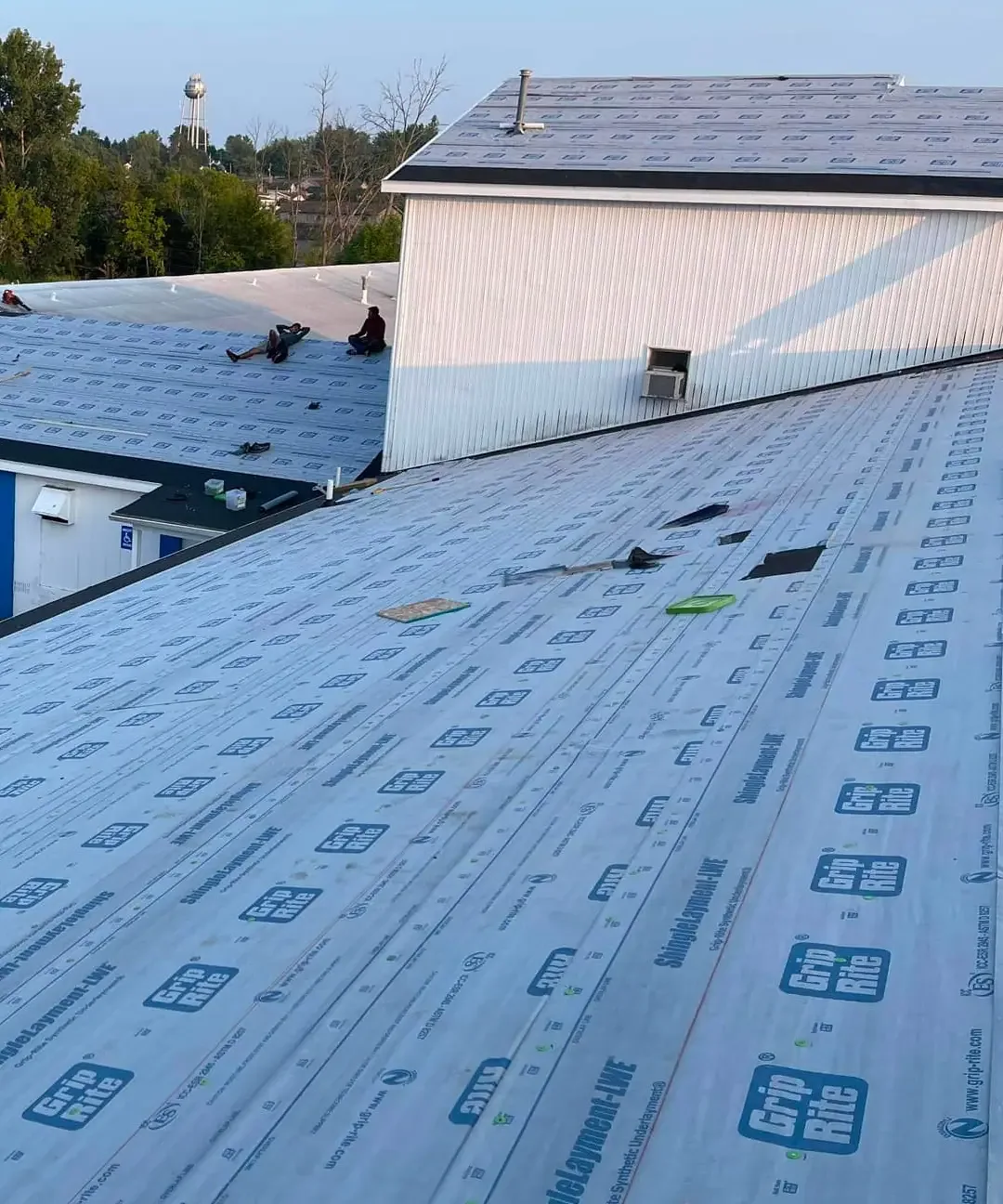
Related Roofing Work
Other pages that cover parts of the same roof question.
Drone Roof Inspection
Infrared Roof Moisture Survey
Yuma Palms and the I-8 Retail Corridor
Roof Condition Reports
Roof Capital Planning
Investors and REITs
How does the survey fit the deal clock?
A typical due diligence window is short, and the survey has to be scheduled around weather, access and the data we need. Most single roofs take a day or two in the field, with the report following in a few working days, and larger or multi-building sets take longer. Heat shapes the field schedule: walks run early in the day, instruments stay off any surface that has baked in full sun so the readings can be repeated by anyone who returns, and moisture scans wait for the evening after a hot day, when wet insulation gives up heat more slowly than dry.
Drone imagery speeds up large roofs, and our drone inspection gives a quick overall view before the walk. The infrared moisture survey picks up wet insulation, and core samples confirm anything the scan suggests. When the closing date is fixed, tell us the date and we plan backward from it, because a survey that arrives after the contingency period is worth far less than one that arrives with a week to spare.
What numbers does the buyer or lender receive?
Buyers and lenders want a figure, and we give a range tied to what was found, not a guess. Remaining life depends on the membrane, the attachment, the moisture and the deck. A sound sheet over dry insulation has a long road, and open seams, thin coating or wet board shorten it.
Findings sort into three buckets. Immediate repairs should be done within the year. Near-term work, such as coating restoration, drain upgrades and edge replacement, falls over the next few years. Replacement is the large item, and we state which roofs are likely to need it inside the hold period. Cost drivers sit beside each line: tear-off depth, insulation thickness, drain count, rooftop equipment, access and the weather window, and the August and September monsoon-week hold is priced as a schedule cost. The buyer can use the numbers to price the deal, request a credit or set a reserve.
One more figure matters to a lender, which is the condition of the insulation. Dry board under a worn membrane is a candidate for restoration or recover, and wet board is a tear-off. The core samples that settle the question cost little beside a surprise replacement in the first year of ownership, and the survey records the result with a photograph of each sample and a mark on the roof plan showing where it was taken, so a second reader can find the same spot.
What do Yuma deals look like on the roof?
Yuma transactions come in several shapes, and the survey adjusts to each. Retail is one: Yuma Palms Regional Center is a retail development of more than 1 million square feet with 49 tenants in its sold portion alone, so a buyer of an interest there is weighing many leases and a good deal of rooftop equipment. The Yuma Palms and I-8 retail corridor is the kind of location where a survey phased by tenant or by drainage zone fits.
Industrial and agricultural deals are another. The winter lettuce season, when Yuma County grows nearly all of the nation's leafy vegetables, and the trucking between California, Arizona and Mexico support cold storage, produce packing and distribution buildings. For these, the survey stresses moisture under the roof, since wet insulation over refrigerated space is costly to remove, and drainage, since a pond over a packing floor is a risk to operations.
Healthcare and institutional deals add consequence. Onvida Health, formerly Yuma Regional Medical Center, is the area's major hospital, and a buyer of a medical office near it weighs roof failure against clinical operations: a leak over an exam room takes that room out of service, which is a revenue problem for the tenant and a lease question for the owner. The survey ties each ceiling zone to the roof area above it so that question can be answered with a location.
What is delivered and who reads it?
The report arrives as a document with photographs, a roof plan, moisture maps, measured quantities and the ranked list. It follows the layout of our condition reports with added sections for remaining life and hold-period costs. For lenders, the report states the basis of each finding and the limits of each method. For owners refinancing, the same document supports a discussion of capital reserves, and the capital plan turns the findings into a year-by-year schedule.
For an investment group, a one-page summary rolls the roofs into a table sorted by priority. If the survey finds an urgent safety issue, such as signs of structural movement, we report it by phone the same day and recommend an engineer.
Questions About Due Diligence Roof Surveys
How fast can a survey be completed?
A day or two on the roof covers most single buildings, with the written report a few working days later. Multi-building sets take longer, and the closing date is the starting point for the field schedule.
Does the survey say whether the roof needs replacing?
It gives a ranked view: sound, repairable or near the end of its life. Moisture and core samples decide most of it. If replacement is likely inside the hold period, we state the likely year and the cost drivers.
Do you need the seller's roof records?
They help. Warranty papers, invoices, installation dates and earlier reports sharpen the opinion. Without them we work from the roof, with test cuts and core samples, and mark age and warranty as unconfirmed.
Is the survey independent of repair work?
The survey stands alone, with its own scope and price, and nothing in it is written to lead into repair work.
Can the survey cover several buildings in one deal?
One layout and one ranking cover the set, with a portfolio table added, so the buyer can compare roofs and set one reserve.
Send the Roof Plan, Last Record and Closing Date
Send the roof plan, the last inspection record and the closing or budget date, and we will set a dated scope before the heat season closes the work window.
Call 555-555-5555 or email [email protected].