
Solar-Ready Roofing in Yuma, AZ
A solar array in Yuma will sit on the same roof for twenty-odd years, and the membrane under it has to last at least as long or the owner pays twice to lift the panels. About 175 sunny days a year make the roof here an attractive place to generate power, and the same sun makes the roof an unforgiving place to hide a weak membrane. The timing question for a manager is simple to state and often skipped: is the roof old enough that it will need replacing within the array's life? If so, the roof comes first. We assess the roof against the array's schedule, plan penetrations and ballast loads, and set the roofing work in an order that does not strand the investment.
Roof leaking now? Call 555-555-5555 for a site visit and estimate.
Should the roof be replaced before the panels go on?
The answer comes from a comparison of remaining roof life and array life. A membrane with many years left may carry an array, with periodic checks. A roof near the end of its service life should be replaced or restored first, because removing and resetting an array to reach the roof underneath is a large cost that dwarfs the roofing itself. Coating restoration can extend a sound roof, and a full replacement is the answer when the membrane is spent; either belongs in the same schedule as the array.
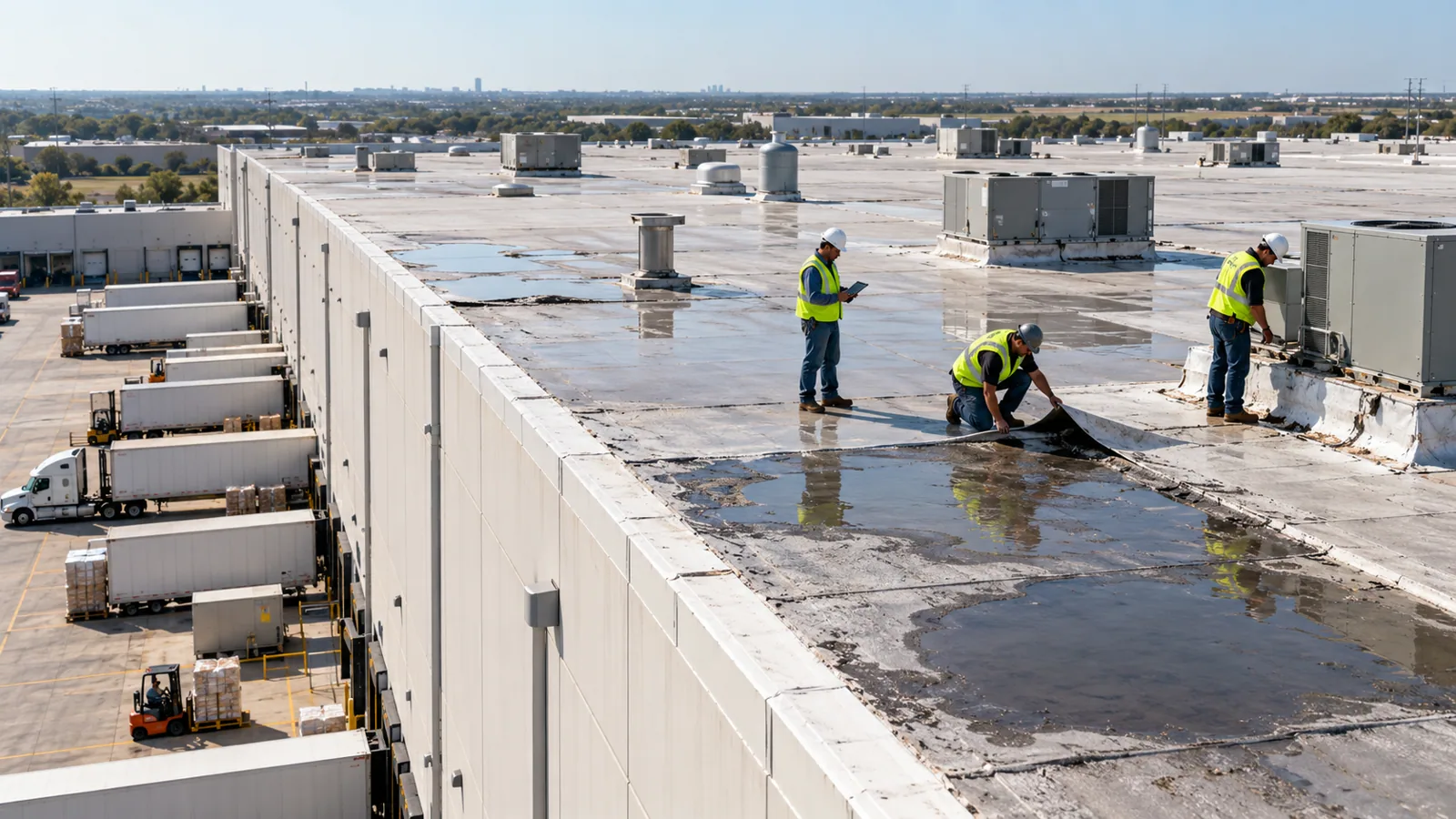
We reach that answer with evidence: a condition review, an infrared moisture survey to find wet insulation under the array footprint, and core cuts where the scan is ambiguous. Wet insulation under a panel is almost impossible to repair later. The result is a short written recommendation with the remaining life of each roof area, so the manager can set the roof and the array on one capital timeline.
The cost logic is plain. Lifting and resetting an array for a roof replacement means electricians, racking labor, panel handling and an interruption in power production, and those costs are paid on top of the roofing. An owner who replaces the roof first pays the roofing bill once and installs the array on a surface that has its full life ahead.
Related Roofing Work
Other pages that cover parts of the same roof question.
Roof Coating Restoration
Commercial Roof Replacement
Infrared Roof Moisture Survey
Rooftop Equipment Curbs and Supports
Roof Warranty Management
South Yuma Airport and Industrial Area
How are panels attached without ruining the membrane?
There are three common approaches. Ballasted racks sit on the membrane and are held by weight, with no penetrations, which suits roofs with enough structural capacity and gentle wind exposure. Attached racks use stanchions or footings through the membrane to the deck, with a flashing at each foot. Adhesive or clamp systems, common on standing seam metal, attach to the seams without piercing the panels. Each approach has trade-offs in structural load, wind uplift, leak risk and the ability to remove panels for roof work.
Every foot of an attached rack is a penetration, and we flash it to the same standard as any other. Pads under ballasted racks protect the sheet from abrasion. The racking layout leaves walkways, drainage paths and clearances so a roofer can still reach the membrane, and the plan is drawn on the roof drawing before installation, not found by the crew on the day.
Equipment already on the roof shapes the layout. Rooftop units need clear service space, and their curbs and supports cannot be buried under rails. If a unit will need replacement during the array's life, the layout should leave a crane path or a plan to lift panels, so the cost of that future change-out is known now.
What does Yuma heat do to the roof under an array?
Panels shade the membrane, which protects it from ultraviolet light, but they also trap heat in the space beneath and reduce airflow. The membrane under a panel can experience a different temperature pattern than the exposed field, so the roof ages unevenly. With summer air well past 100 degrees F for weeks at a time, conductive and radiant heat make the thermal environment under the array one worth watching. We photograph and take readings in both the shaded and open areas on later visits, and the comparison tells the owner how the roof is behaving.
Dust adds to it. Haboob storms leave a film on panels and on the membrane between them, and drains in the array field clog without notice. Cleaning the array and the roof together, on a schedule, protects both.
Wind is the last factor. Yuma Proving Ground has measured monsoon gusts near 70 mph, and an array turns the roof into a sail. Rack design and ballast weights are engineered for local wind loads, and the roofer checks that the field membrane and perimeter around the array are secure so a gust does not find a loose edge underneath.
Who coordinates the roofer and the installer?
The array installer and the roofer should agree on four things before work begins: who flashes each penetration, what warranties apply to which part, how the roof will be accessed after the array is in, and who pays to remove and reset panels if the roof needs work. A roof warranty can be voided by unapproved penetrations, and an array warranty can be voided by incorrect mounting, so both documents need to be read before the contract is signed. Our roof warranty management work looks at the terms and records the approvals.
We also supply a roof condition file to the installer so the structural and drainage conditions are known. After the array is in, the same file is updated with photographs, and a drone survey of the finished field shows where the panels, rails and conduit actually landed.
Sequence is the other half of coordination. The roofer finishes membrane repairs, drain work and flashing before racking begins, and the installer returns the roof to the roofer's inspection when the work is done. A walk with photographs at hand-off, taken by both parties, closes the question of who caused any damage and gives the warranty file a clean starting date.
Which Yuma roofs are the best fit?
Large industrial and distribution roofs have the area for arrays, and the airport industrial district south of town takes in the 290-acre Panattoni site beside Highway 195, which has a new 230kV substation, and that makes the array question one to settle at the design stage. A warehouse roof with few rooftop units is easier to lay out than a retail roof crowded with equipment. In Fortuna Foothills, where many properties serve seasonal and retirement residents, the smaller commercial roofs call for the same age check before any panel is ordered.
Roofs with heavy equipment, skylights or tight parapets leave less room, and the installer may reduce the array size to keep access. We flag those limits during the survey, so the layout reflects what the roof can actually take.
Questions About Solar-Ready Roofing
How old can a roof be and still take panels?
Age alone does not decide it. A roof with a sound, dry membrane and enough life to match the array can take panels, while one near the end of its life should be restored or replaced first.
Will solar panels void my roof warranty?
They can, if installed in a way the manufacturer does not approve. Get written approval before installation and keep it in the warranty file.
Can we repair the roof under the panels?
Only by lifting the panels, which costs extra. A survey before installation avoids hidden problems underneath.
Does ballast damage the membrane?
Not when protective pads are used and the load is spread correctly. Check drainage so water does not pool around the ballast.
Do panels change inspection needs?
They add a shaded area and more penetrations, so visits include both. Drone views help cover the field.
Fix the roof timeline before the array contract
Send the roof plan, the membrane age and the proposed array layout, and we will return a condition review and a dated recommendation on roof work before the panels are ordered.
Call 555-555-5555 or email [email protected].