
Roof Drains, Scuppers and Ponding Correction in Yuma, AZ
The drain tally is the cheapest line in a Yuma roof file and the one that carries the most weight in August. With only about 3.3 inches of rain in a normal year, many roofs here are asked to shed water so rarely that nobody checks the outlets until the day the sky opens, and then a single afternoon proves whether the slope, the sumps and the scuppers can pass what arrives. One monsoon season at Yuma Proving Ground, in 1992, put six inches on the ground, and a roof that holds water after a storm run like that carries weight the deck was never rated to hold for long. We count every outlet, clear it, test it and record it, and then price whatever correction the roof needs.
Roof leaking now? Call 555-555-5555 for a site visit and estimate.
What does a drain and scupper tally include?
The tally is a plan and a list. Each drain, scupper, overflow and downspout gets a number on the roof plan and a line in the record: its type, its condition, what was in it, whether water moved freely when tested with a hose, and what was done. Strainers are checked for missing domes, and drain bodies for cracked clamping rings, since a failed ring leaks into the building below while looking fine from above. Scuppers are checked for the metal liner, the seal to the membrane, and whether the opening is large enough to pass water at the roof's low point.
The dated photo set shows each outlet before and after cleaning. That sequence matters when a storm later damages the building, because a plugged drain on a maintained roof is a different story from a plugged drain on one that was never looked at, and the record shows which story applies.
The tally often finds its answers during a routine roof inspection, where water-path questions are easier to settle than in a post-storm scramble. Outlet counts are compared with the original drawings when they exist, because roofs sometimes lose an outlet to an addition or gain a blocked one under new equipment, and the record should show which outlets are live.
Related Roofing Work
Other pages that cover parts of the same roof question.
Commercial Roof Inspection
South Yuma Airport and Industrial Area
Ponding Water Roof Repair
Roof Insulation and Cover Board
Downtown Yuma
Roof Coating Restoration
Why do Yuma drains clog so quickly?
Dust, not leaves, is the main culprit. Haboob dust storms in the monsoon season deposit fine silt across a roof, and wind pushes it into the low corners where the drains sit. A small rain then turns the silt into mud that sets around the strainer and holds water back. Roofs in the South Yuma airport and industrial area are exposed to the same wind-driven silt as any other roof in the city, and loose debris on the roof travels to the same low corners.
Because the wet season is short and the dry months leave deposits to harden, the cleaning visit has to be timed before August and again after the monsoon. Waiting for a visible blockage is already too late, since by then the water is on the roof. A tally taken in July shows the clog that would have mattered in August, while the roof is still dry and nobody is racing a cloud.
Debris also hides defects. A drain body packed with silt conceals a cracked ring, and a scupper full of grit conceals a failed liner seam, so cleaning is where those faults come to light and where they are photographed for the file.
How long can water sit before it becomes ponding damage?
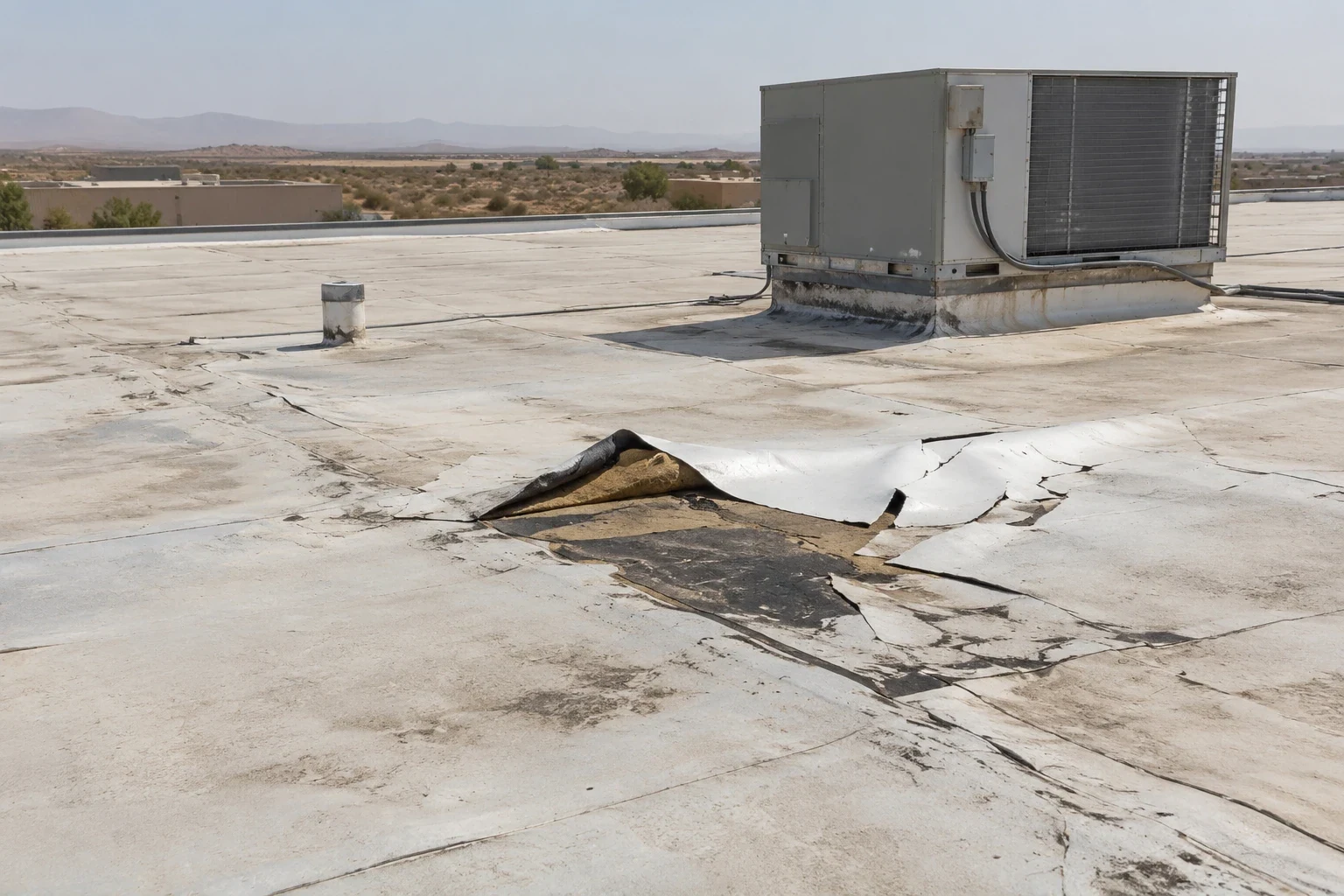
Water that remains on a roof for 48 hours after rain is generally treated as ponding, and the effects build slowly. The membrane stays wet at the low spot, grit and algae collect, UV and heat attack the wet surface, and a seam in that area ages faster than its neighbors. Deflection under the weight of water often deepens the low spot, so the problem grows each time it rains. In a dry market the ponding record is easy to ignore, because weeks pass without any rain at all, but the first monsoon storm exposes every area that had been quietly collecting water.
We map ponded areas after the next rain or with a water test, measure depth, and note which are caused by blocked outlets and which by slope. Blocked outlets are a cleaning job. Slope problems need correction through tapered insulation or additional drains, and the repair of ponding water follows from which cause the map points to.
What are the correction options?
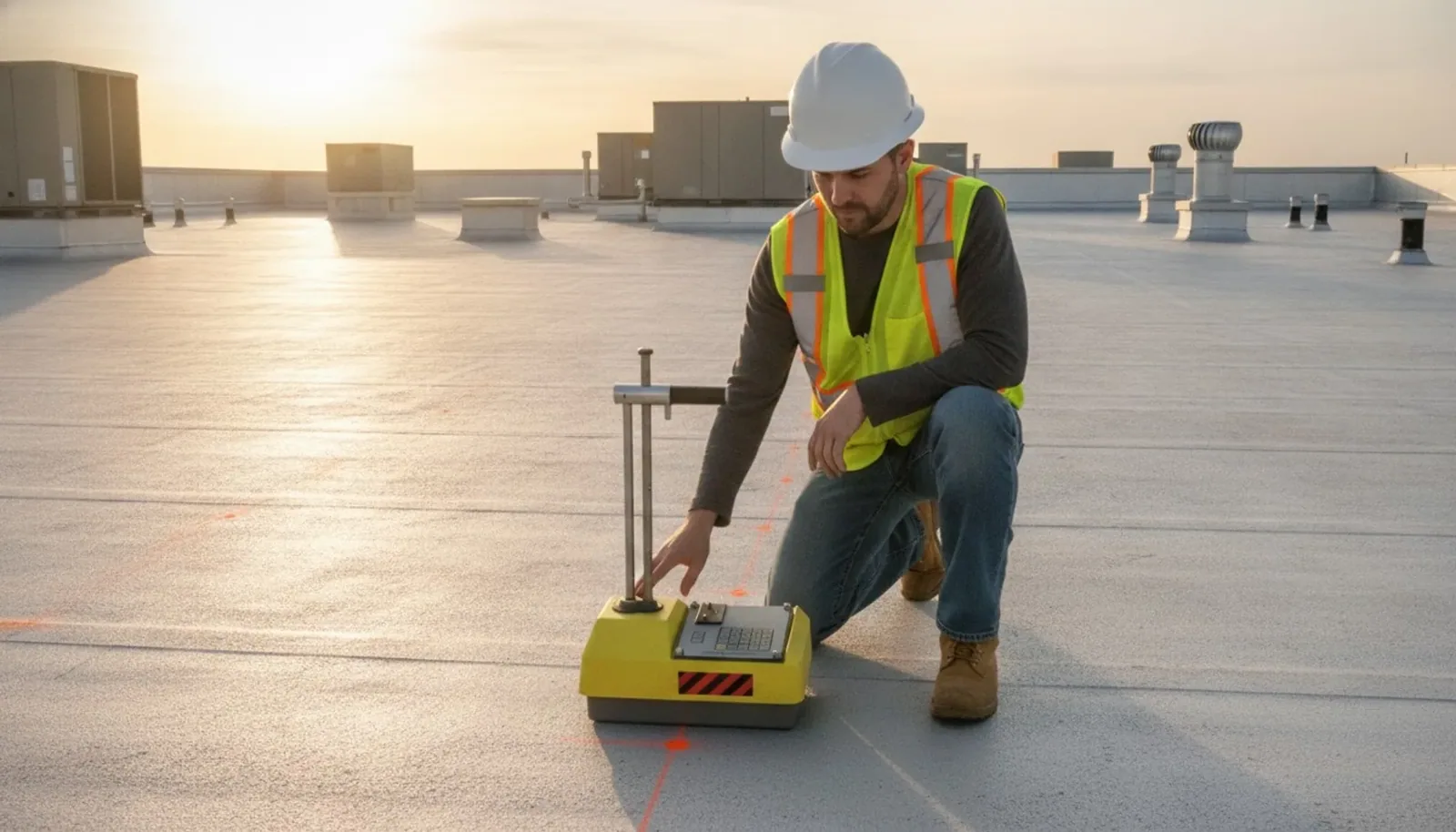
A roof can get relief in four ways. Add drains or scuppers at the low points so water has somewhere to go. Build crickets behind curbs and equipment so water diverts around obstacles instead of stopping behind them. Add tapered insulation, which changes the slope and is the real correction for a roof that was flat from the start; the tapered system and its cover board are designed together. Or replace worn drain bodies and clamping rings so the existing outlets work as intended.
Each option has a different cost and disruption profile. A new scupper through a parapet is a half-day job and a tapered system is a re-roof decision. We price them as separate lines, with a note on which corrections hold up if the roof is later coated, and which would be undone by a future recover.
Sequence matters. The outlets are cleaned and tested first, the ponding map is drawn second, and the correction is priced last, because many roofs that look like slope problems turn out to be maintenance problems. Only when the roof still holds water with clean drains do we recommend adding outlets or tapering.
Which roofs have the greatest drainage risk?
Retail roofs around Yuma Palms tend to carry rooftop units over tenant space, and each curb is an obstacle that holds water on its uphill side unless a cricket is built behind it. Distribution and packing buildings serving the trucking trade depend on a limited number of outlets for each run of roof, so when two clog, the load shifts onto the rest. Hospital roofs, including the one over the 406-bed Onvida Health facility, generally combine mechanical equipment with patient areas below, which makes any ponding near an air handler a concern for the facilities office. In downtown Yuma, where the historic district holds older storehouse and quarters structures, scuppers and internal drains deserve a look at every visit because the openings and liners are original equipment of unknown age.
Where roofs are coated or planned for restoration, drains get attention first. A fresh coating over a roof that still ponds wastes a good portion of the investment, and silicone and acrylic react differently to standing water.
Questions About Roof Drains, Scuppers and Ponding Correction
How often should the outlets be cleaned in Yuma?
Before the monsoon and after it, with a December check on roofs that pond. Buildings next to open lots or unpaved ground may need more frequent visits.
Can we add scuppers to an existing parapet?
Often yes, subject to the structure and the flashing detail. The opening is cut, lined with metal and flashed into the membrane, and the roof is rechecked after a water test.
Is ponding covered by the roof warranty?
Many membrane warranties exclude ponding water beyond a stated period. Read the exclusion in the file before assuming coverage.
What does an overflow scupper do?
It sits above the main drain and passes water if the primary outlet clogs, protecting the structure from overload. It is most useful where parapets would otherwise trap water.
Will a tapered system solve all ponding?
Properly designed, it removes most standing water by giving the deck a slope. Structural deflection and blocked outlets still need separate attention.
Count the outlets before the monsoon does
Send the roof plan and the date of the last drain cleaning, and we will schedule a tally visit before the August weather, then return a priced list of corrections for the capital line.
Call 555-555-5555 or email [email protected].