
Occupied Building Reroofing in Yuma, AZ
Shutting a building to reroof it is a cost that never appears on the roofing bid, and in Yuma, AZ the calendar makes that cost harder to avoid. Work is cheapest and the materials behave best in the cooler months, which are also the months when the winter vegetable trade, the seasonal population and the school year all press on the buildings. A phased reroof keeps tenants, patients and classes in place by dividing the roof into sections, closing one at a time and making each section watertight before the crew leaves. The line item an asset manager needs to see is the cost of disruption, not just the cost of membrane, and we price both on the same page.
Roof leaking now? Call 555-555-5555 for a site visit and estimate.
How is an occupied roof divided into phases?
The roof is cut into zones on the plan, sized so that a crew can tear off, install and seal a zone within a single working window. Zone boundaries follow the building: over a tenant bay, a classroom wing or a mechanical room. The loading of materials, the crane position and the debris route are set before the first day, so equipment does not cross entrances or park in fire lanes. Each evening the open edge of the new membrane is sealed to the old with a temporary tie-in, and the plan shows which tie-ins are temporary and which are final.
Phasing lengthens the schedule, because each zone repeats the setup, but it removes the exposure of an open roof. A monsoon storm in August can arrive within a few hours, and a zone that is sealed each evening limits the interior damage to nearly nothing. The schedule includes weather holds, and the owner sees the allowance in the bid.
Phasing costs money, and the bid lists it. Extra mobilizations, temporary tie-ins, standby tarps and longer crane time all add to the bid, and an owner comparing a phased price with a closed-building price should compare the lost rent, lost sales or relocation cost on the other side. In a market with a seasonal population, such as Fortuna Foothills, the choice of month also decides how many residents are in town while the roof is open.
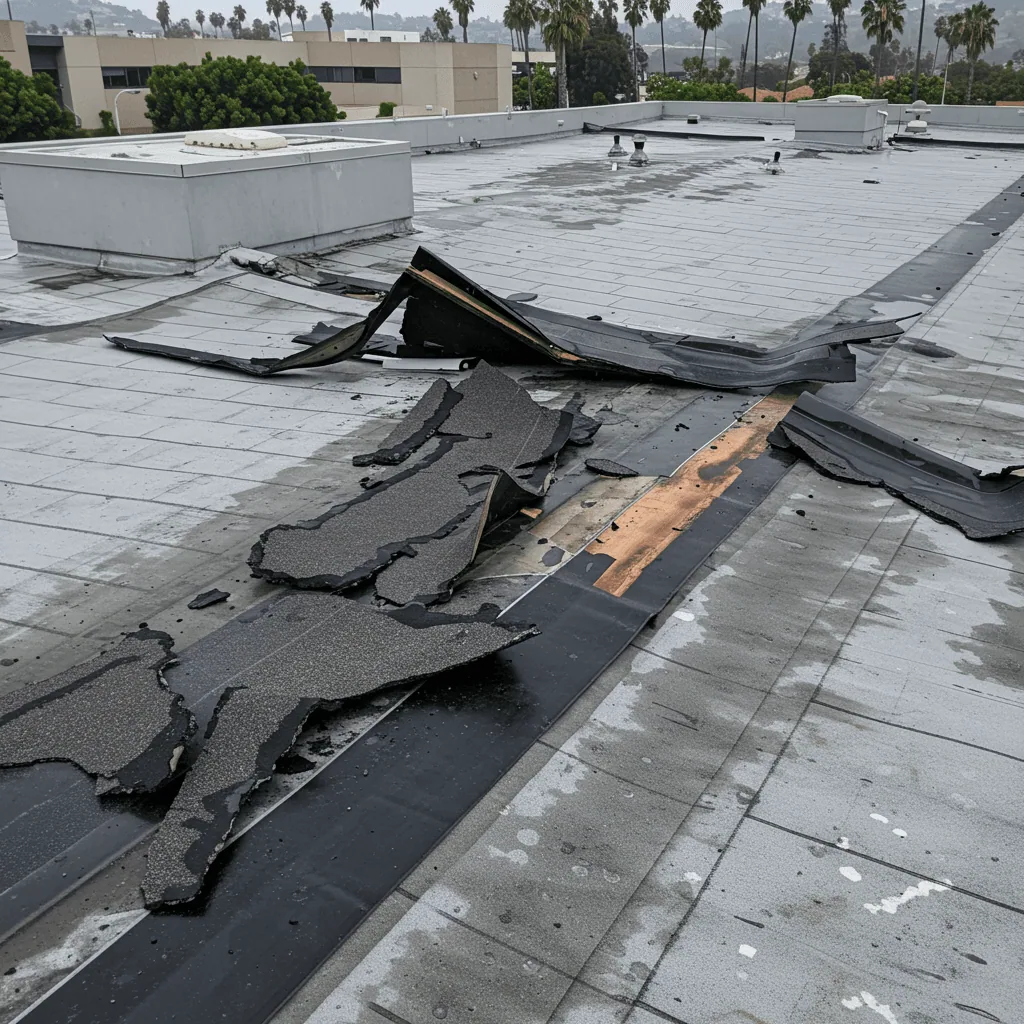
Related Roofing Work
Other pages that cover parts of the same roof question.
Fortuna Foothills
School Roofing
Yuma Palms and the I-8 Retail Corridor
Hospital Roofing
Military Installation Roofing
Roof Insulation and Cover Board
What protects the people and goods below the roof?
Below the roof, the building still operates, so protection starts at the ceiling. We coordinate with the facilities office on which rooms are under each zone, so furniture, records or equipment can be covered or moved. Dust and debris are controlled with sealed tear-off, vacuum collection and enclosed chutes where required. Fasteners driven through the deck can drop dust and sometimes pierce ceiling tiles, so spaces below are protected or temporarily vacated during that step.
Noise and odor matter for tenants. Mechanical fasteners and power tools are loud, and adhesives and hot work smell. We schedule the loudest operations around quiet hours the building identifies, use low-odor adhesives and mechanical attachment where appropriate, and place air intakes on a protection list so fresh-air units are shut down or screened while the work is nearby.
For public buildings, the school roof plan adds a safety layer: fenced staging areas, deliveries outside drop-off and pick-up times, and a gate rule for the crew. Yuma Union High School District, one of the area's larger employers, runs campuses on a set calendar, and winter break and summer are the natural windows for the largest zones, with smaller phases carried out during term.
How do we handle retail and office tenants?
A multi-tenant property such as the Yuma Palms retail center, where tenants include Best Buy, Marshalls and Harkins Theatre, needs a notification plan before the first day. Tenants learn which section is next, when noise is expected, and which entrances stay open. A landlord who sends a one-page schedule to every bay avoids a flood of calls, and we supply the schedule in a form that can be forwarded. Restaurants get special attention: exhaust fans and kitchen hoods are protected, grease management is checked, and work above the kitchen avoids the lunch and dinner rush.
A theatre tenant such as Harkins has fixed showtimes, and a leak or a loud operation in the middle of a showing is a larger problem than the same event on a quiet morning. Along the Yuma Palms corridor the sequence matters: we work the bays that are least busy first, and leave the busiest bays for a time when the tenant can pause.
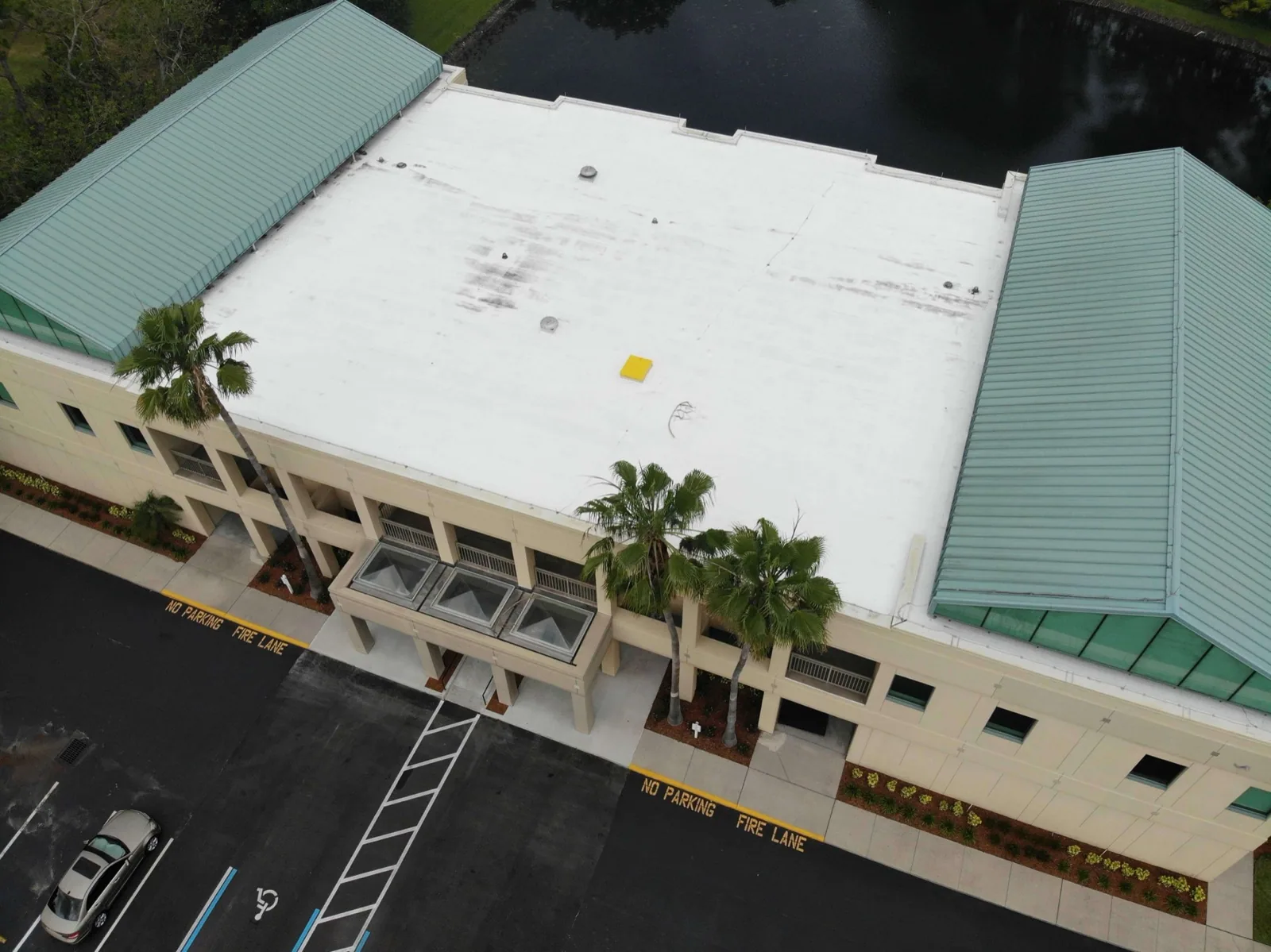
What changes for hospitals, schools and campuses?
A hospital such as Onvida Health, a 406-bed teaching facility, cannot close beds for a roof, so work above patient floors requires infection control, noise limits and coordination with the facilities department on air handling. Our hospital roof planning uses negative air in affected spaces where required and avoids work above procedure areas while they are in use. Schools and colleges can often shift the heaviest work to breaks, but classroom wings still run during phased jobs, and a campus like Arizona Western College, with residence halls housing up to 348 students, has to keep sleeping areas quiet during the night and early morning.
Whatever the building, the owner names the protected hours, areas and equipment, and the schedule is set to fit them, with changes agreed in writing before the work moves.
A military installation operating around the clock follows the same logic, with access rules and mission schedules in place of tenant notices and the control held by the base rather than by a manager.
How does Yuma heat shape the working day?
Crews work early. Because a Yuma summer holds months of 100-degree weather, a surface in July is too hot to handle by the middle of the afternoon, and adhesives and membranes behave differently at those temperatures. Start times move earlier, a shift ends sooner, and some tasks wait for the cooler hours. In the shoulder seasons, work can run longer. Heat also affects the people under the roof: a section left open through the evening gives up insulation and cool air, so sealing early protects the interior comfort as well as the water barrier.
The same discipline applies to insulation and cover board placement. Boards laid in the morning are covered before the day heats, so the membrane goes over a stable, dry surface, and no board sits exposed to the afternoon sun or an unexpected afternoon storm.
When the work involves old membrane removal, a full replacement in sections ends with a seam check and a photograph set for each zone, so the sealed edge of one day is documented before the next zone opens. Zones on roofs near Highway 195 and the airport follow the same rule, since afternoon outflow winds from a monsoon storm do not wait for a convenient hour.
Questions About Occupied Building Reroofing
Will the building have to close during reroofing?
No. Phased work lets the building stay open. Specific rooms below noisy operations may be vacated for short periods, which the facilities office schedules.
How long does a phased reroof take compared to a closed one?
Longer, because each zone repeats setup and sealing. The extra time buys the continuity of operation, and the bid shows both durations.
What if a storm hits while a zone is open?
Each zone is sealed before the crew leaves, and a standby crew and tarps cover any open edge if weather appears. Monsoon forecasts are checked before every start.
Who tells the tenants what is happening?
The property manager sends the notice, and we supply a schedule and contact sheet to forward. A named site lead answers questions during work.
Can rooftop units keep running during the work?
Yes, in most cases, with protected intakes and curbs. Some units are shut down for short periods when work is close to their air intakes.
Mark the protected hours and areas first
Send the roof plan, the tenant list or floor plan and the hours the building cannot be disturbed, and we will return a phased schedule and a disruption allowance priced beside the membrane.
Call 555-555-5555 or email [email protected].