Wind Damage Roof Repair in Yuma, AZ
The wind line on a Yuma, AZ roof budget is small until an August outflow gust turns it into the largest repair of the year, and the owner who has no dated record of the perimeter has to argue for the number from memory. Yuma Proving Ground, north of the city, logged 61 knots, about 70 mph, as its top wind in August 1996, and monsoon thunderstorms in the area bring strong winds, torrential rain and haboob dust. A roof that has sat through months of triple-digit heat has aged by August, with sealants dried and adhesives softened, so a gust can find an edge in worse shape than it was in April.
We repair wind damage in the order that stops the next loss first, and we record each step so the cost can be explained to an owner, a lender and an adjuster in the same terms.
Roof leaking now? Call 555-555-5555 for a site visit and estimate.
Where does wind take a roof first?
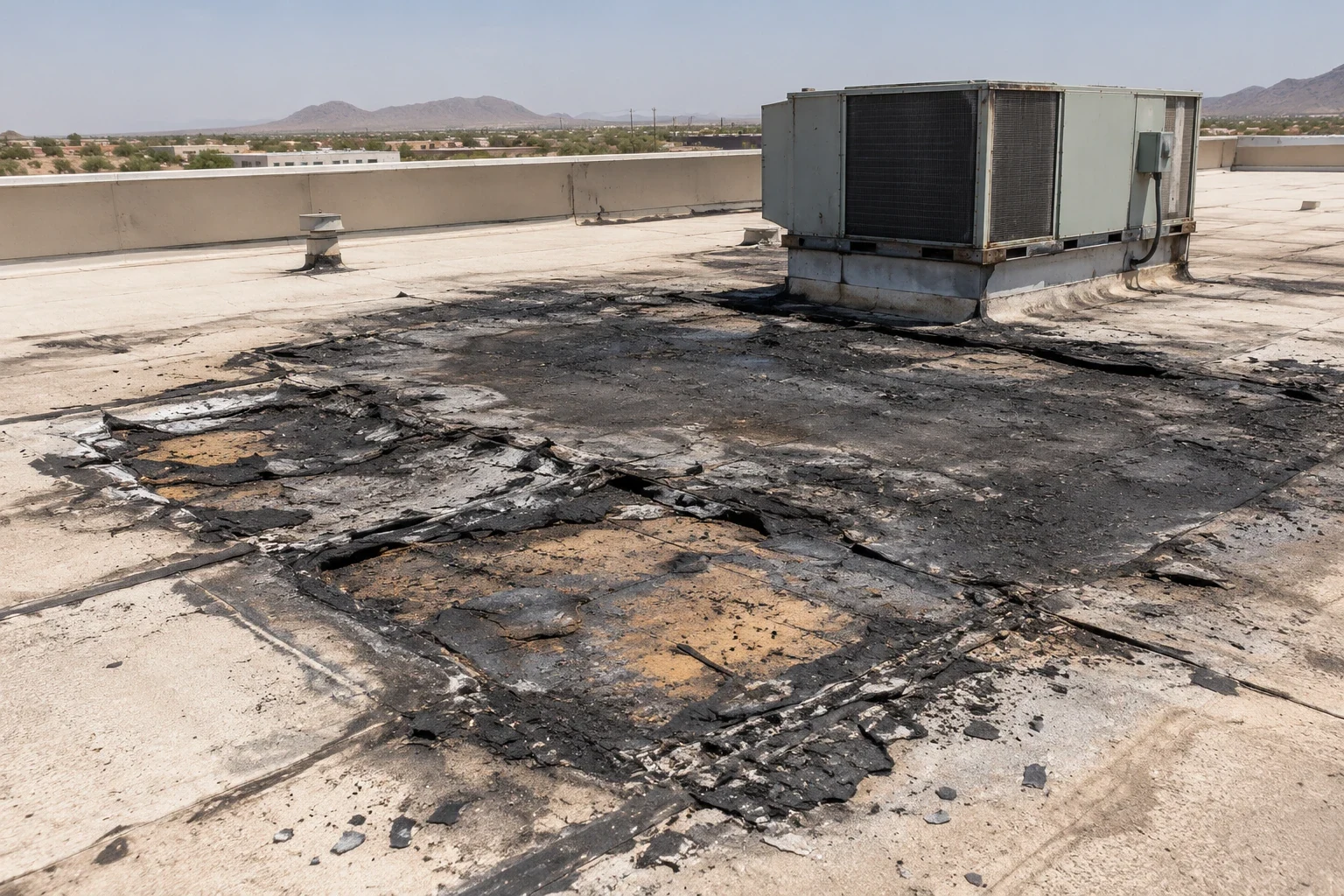
Wind finds the perimeter and the corners, where uplift pressure is highest and the membrane is held by edge metal, fasteners and adhesive that have been cycling between hot afternoons and cool nights for years. A lifted edge is rarely a tear in the field of the roof. It is a failure of the line that holds the roof to the building, and once the edge opens, each gust acts like a lever on the next row of membrane.
We check the edge metal first: loose or bent coping, missing fasteners, open joints in the cap and gaps between the metal and the membrane. Edge metal and coping work is often the cheapest part of a wind repair and the part that prevents a second event. If the edge has been peeled back, we measure how far the membrane has pulled in, since the repair extends well past the visible damage into the zone that has lost its bond.
Related Roofing Work
Other pages that cover parts of the same roof question.
Edge Metal, Coping and Gutters
Membrane Puncture and Foot-Traffic Repair
Emergency Roof Repair
TPO Roofing
Seam Failure Repair
Roof Insurance Claim Assistance
What does airborne debris do once the wind has passed?
Wind damage is not limited to the uplift. Loose gravel, sheet metal, plywood and light rooftop covers become projectiles, and they strike the membrane in places far from where they started. A scuffed surface is a cosmetic note; a puncture is a leak path. We walk the whole roof after a storm and mark every strike, then separate those that need a patch from those that need a larger repair.
Haboob dust is the second effect. Fine silt settles into every low place, plugs drains and scuppers and coats the membrane in a layer that must be removed before any repair adhesive will bond. When rain follows, the water has no outlet. Punctures made by flying debris are handled with the same approach as ordinary membrane puncture repair, with the difference that wind damage tends to produce several at once, so the priced scope is a count and not a single item. Each strike gets a number on the roof plan, a photograph and a repair method, and the owner can see the total before work starts.
In what order should the repairs be made?
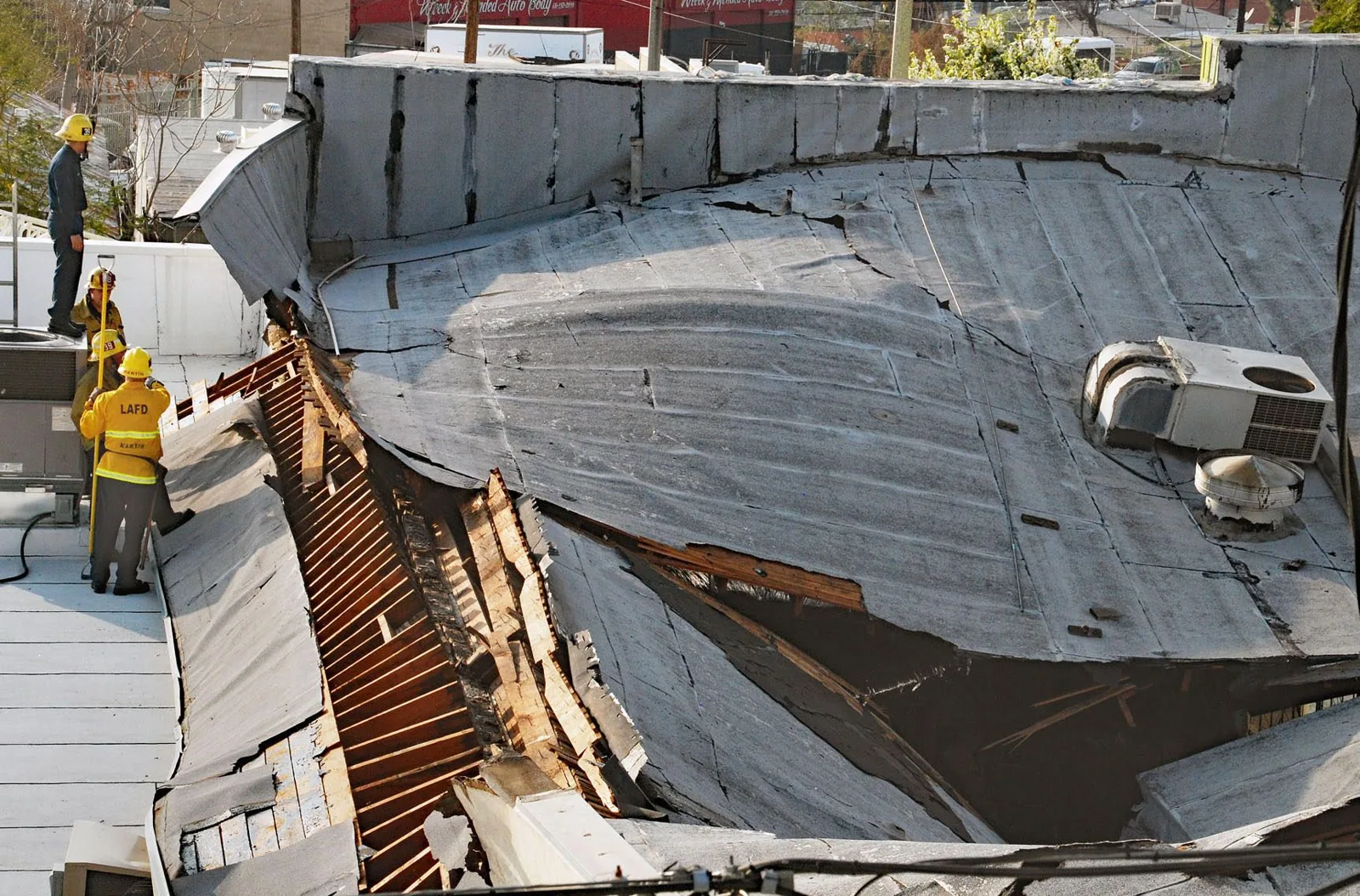
The sequence is protect, secure, repair and document. Protect means stopping water entry with temporary measures, which our emergency roof repair crews handle at any hour. Secure means resecuring the perimeter and any loose equipment so the next gust does not undo the work. Repair means replacing the damaged membrane, flashing and edge metal with proper attachment, and document means a closing photo set matched to the opening one.
The order matters because a field patch placed before the edge is secured will be undone by the next uplift. A repaired field with a loose edge invites a second claim, so the perimeter work is priced and scheduled ahead of the membrane work. We also price the temporary measures separately. Where buildings stand side by side along Interstate 8 or the Highway 195 industrial corridor, a storm that lifts one edge can show up on the next roof as well, so we walk the adjacent properties when the owner asks. A tarp held down by sandbags through a second storm week costs differently than a permanent repair, and the bid should list both. If damage extends across a large area, the scope may call for partial replacement of the affected section, with the rest of the roof left in service.
Does an older attachment method change the repair?
It does. A mechanically fastened system fails differently from a fully adhered one, and a ballasted roof fails differently again. Fasteners that have backed out, plates that have worked loose and membrane that has torn at the fastener row all point to different fixes. An adhered system that has lost its bond in patches calls for re-adhering or replacement of the affected area, depending on how large the unbonded zone is.
On a TPO roof we examine the seam welds near the damage as well, because wind movement can stress a seam that looked sound the week before. The same inspection is relevant to seam failure repair, since a seam opened by wind and a seam opened by heat look similar from the ground. We mark which is which in the report, because a carrier treats wind and heat differently.
What record supports an insurance claim for wind damage?
The claim file needs the storm date, a dated photo set of the damage taken before cleanup, a roof plan marked with each location and the repair scope with quantities. We take photographs from several distances with a scale reference, and for large roofs we add drone imagery to show the pattern. Our claim documentation keeps temporary and permanent repairs on separate lines.
For buildings in the airport and industrial area near Yuma International Airport, the pattern of damage across neighboring buildings can help show that the event was a storm and not an age failure. The carrier evaluates the record, and the owner acts on the scope whichever way the claim goes. If the carrier approves part of the repair, the unapproved items stay on the list with their prices, ready to be scheduled before the next monsoon.
Questions About Wind Damage Roof Repair
How soon after a gust should the roof be walked?
The same day if safe access is possible, because dust and debris move and rain can arrive within hours. A drone pass is a quick first look when the roof surface is unsafe.
Will a patch hold through the next monsoon week?
A patch on a secure edge usually does. A patch on an edge that is still loose will not, which is why we resecure the perimeter before anything else.
Is a lifted edge a repair or a replacement item?
It is a repair when the bond loss is limited to a few feet of the perimeter. When the membrane has lost its bond across a wide area, partial replacement costs less than repeated patching.
What does a wind repair cost?
The price depends on perimeter length, membrane type, access and how much of the roof is wet. We write a numbered scope with a price per item so the owner can compare it to the claim estimate.
Should rooftop equipment be checked after a wind event?
Yes. Wind can shift units, loosen panels and break curb seals, and a unit that has moved a half inch on its curb can leave a gap that stays dry until the next rain. We check each curb and support and note any that need resealing or a mechanical contractor's review.
Send the storm date and the roof plan
Send the date of the wind event, the roof plan and any photographs you have, and we will make the building safe, mark every damaged location and return a priced repair scope.
Call 555-555-5555 or email [email protected].