Sika Sarnafil Roofing Systems in Yuma, AZ
A Sika Sarnafil roof is a thermoplastic membrane, and the line an owner carries for it is the premium paid up front against the contamination and heat it is expected to resist. Sika Sarnafil is a manufacturer of PVC-based single-ply roofing, with welded seams and a family of flashings and accessories, and it is a natural fit for the buildings that produce oils, vapors and wash-down water on a Yuma roof. In Yuma, AZ, where sun tests a membrane more than rain does, the sheet is judged by how it holds up under sustained heat, and the file we keep records that holding.
We install, repair and maintain thermoplastic systems of this kind, and every scope we write shows the cost, the date and the evidence behind each line.
Roof leaking now? Call 555-555-5555 for a site visit and estimate.
Where does the premium for thermoplastic sheet pay back?
The extra cost of a PVC-type membrane returns where the building gives the sheet something to resist. Cold storage, produce packing and distribution buildings, fed by winter lettuce and by trucking between California, Arizona and Mexico, are part of the county's stock. Those uses put process vapor, condensate and cleaning chemistry near the roof, and they put exhaust from refrigeration plants and kitchens on top of it.
A PVC membrane sheds many of the contaminants that soften other sheets, and its seams are welded rather than glued. For a building with no exhaust, no grease and no chemical source on the roof, the premium may not pay back, and we say so in the scope. When the exposure is real, the cost of the sheet is small beside the cost of an early replacement, and the reserve schedule shows the difference. We show both numbers side by side: the installed cost of the thermoplastic option and the installed cost of the alternative, with the expected service interval of each and the year in which each would next be replaced. The owner sees the premium divided across the years it is expected to protect, which turns an argument about first cost into a comparison of cost per year of service.
Related Roofing Work
Other pages that cover parts of the same roof question.
PVC Roofing
South Yuma Airport and Industrial Area
Commercial Roof Replacement
Roof Capital Planning
Duro-Last Roofing Systems
Versico Roofing Systems
How does the sheet hold up under Yuma heat?
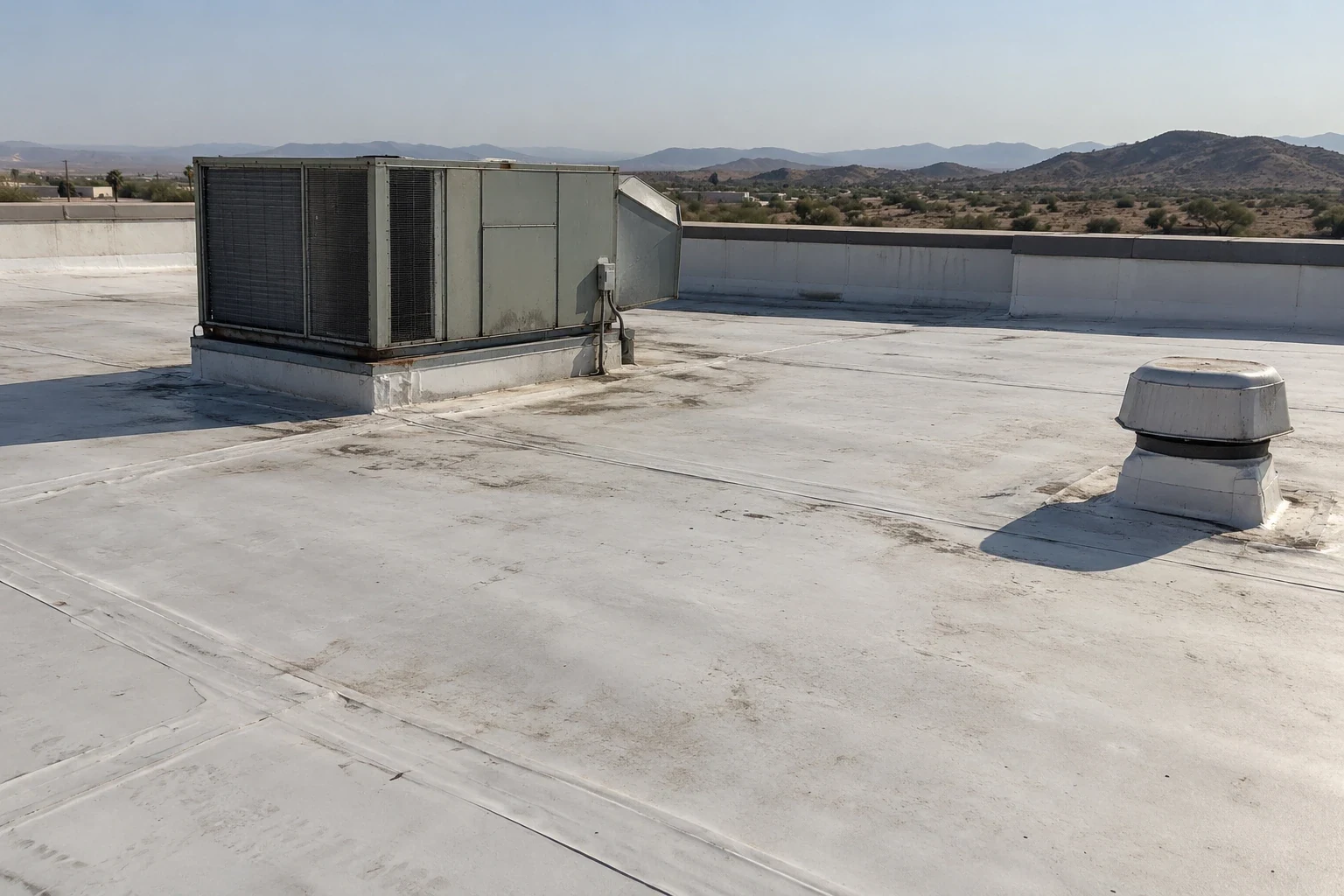
Thermoplastic sheet stays flexible because of plasticizers in the compound. Sustained heat draws those plasticizers out over the years, and the sheet can stiffen, pull back from walls and curbs, or grow brittle at the edges. The first sign an asset manager sees may be a flashing that has pulled away or a seam that has opened, rather than any stain on a ceiling.
Each walk records surface temperature and reflectance, and the flashing terminations are photographed on a dated set, since that is where shrinkage appears first. Cold cracking is not the main worry here, since freezes are rare. The movement the sheet has to absorb is the daily expansion under the sun, and a sheet that has stiffened takes that cycle less gracefully. When we find early shrinkage, we price a detail retrofit before the pull-back opens a path for monsoon water. A retrofit rebuilds the termination, adds a new flashing strip welded to the field sheet and re-secures the top edge at the wall. It is a small line compared with a leak into a packed building, and the photographs taken before and after become the first entry in the next review.
Which Yuma buildings usually need this kind of sheet?
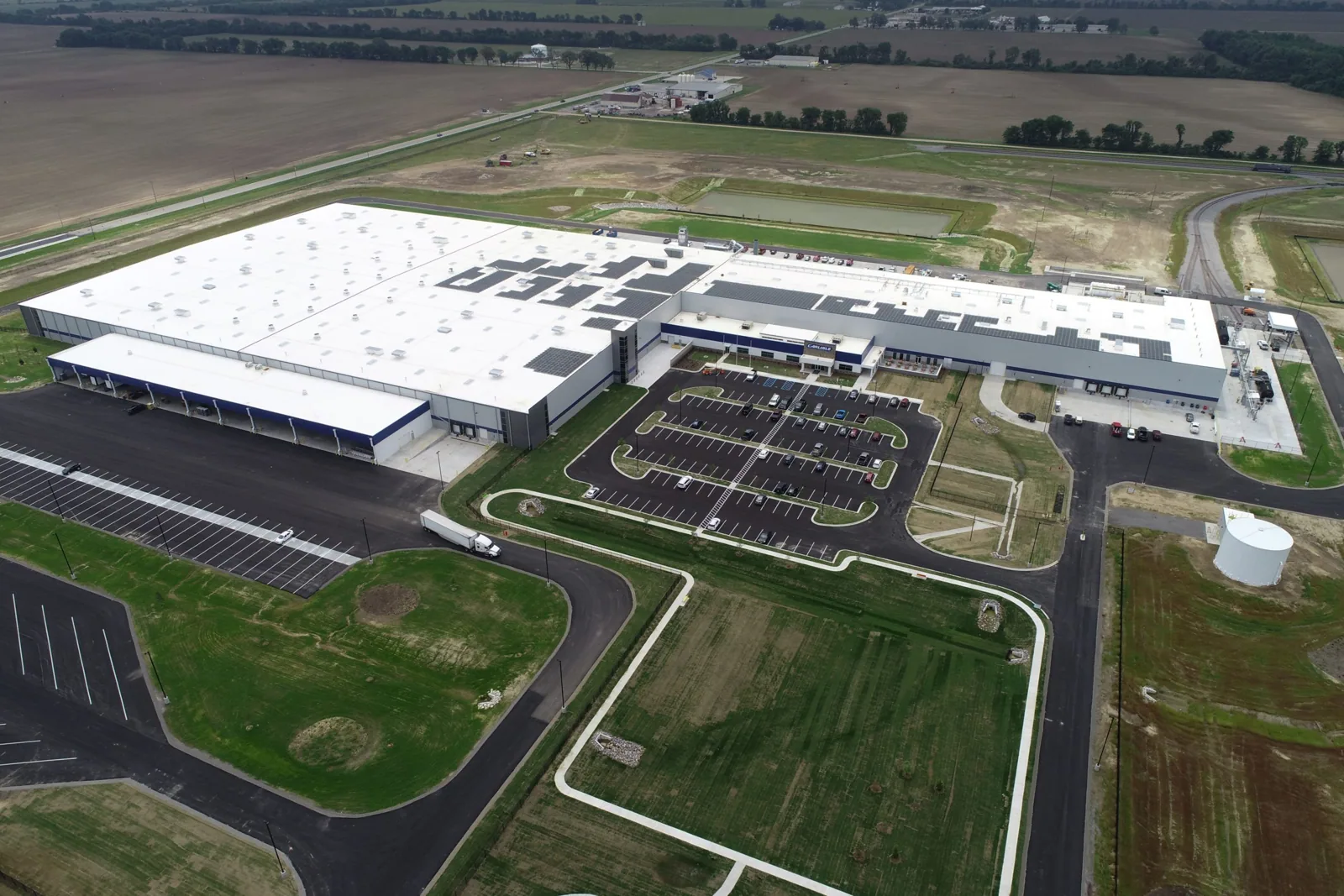
Three groups come to mind. Produce packing and cold storage buildings use refrigeration and wash-down, which put vapor and moisture near the roof. Kitchens and restaurants send grease up through exhaust fans. Distribution buildings near the border and the airport carry large rooftop equipment and see regular service traffic. San Luis has two ports of entry, and commercial trucks use the second, which supports distribution use in that border town. Panattoni's 290-acre industrial site beside Highway 195 is under development, and an owner of new space there weighs membrane choices on the same terms.
The first walk on each building identifies the sheet, the attachment and the exposure. In the airport and industrial area, a long single-story field makes seam length and drain placement the main cost drivers. For smaller buildings, flashing count matters more. A scope built from the actual roof lists those drivers line by line, so the capital figure reflects the building and not a rule of thumb. A refrigerated building also asks a vapor question that a dry warehouse does not, and the scope names where the vapor control sits, what the membrane is attached to and whether the penetrations were sealed against air movement from below.
Which weeks suit installation, and what does a hold cost?
Hot-air welding works in a range of surface temperatures, and Yuma's long heat season narrows the comfortable window. Cooler months and early-morning starts give crews the best control, while peak summer afternoons push work into the dawn hours. The August and September monsoon brings gusty storms, silt and heavy rain, and a single storm week can hold an open roof.
We put the monsoon-week hold in the bid as an allowance, along with the planned dry-in date and the delivery schedule for materials. Owners with seasonal operations, such as a packing facility whose harvest runs from November to March, can plan roof work for the quieter months. A commercial roof replacement that finishes before harvest is cheaper to protect than one that overlaps it. For a facility that cannot close, we divide the roof into sections, dry in each section before the crew leaves and stage materials away from loading doors. The bid shows each section separately, so the owner can see how the sequence affects cost and which section moves first.
What goes in the binder for a lender or board?
The binder opens with the membrane type, seam method and attachment, followed by the repair history, dated photo sets and temperature log. Some warranties limit repairs to approved materials or applicators, so each repair entry names who made it and with what. The file feeds the capital planning work, where roofs are ranked and funded by year.
For owners who also hold other makers, such as Duro-Last or Versico roofs, the same fields apply, so a mixed portfolio can be read as one inventory. A manager who opens the binder for a packing house and then a distribution building sees the same fields in the same order, and the next review date for each roof sits at the top of the first page.
Questions About Sika Sarnafil Roofing Systems
Does PVC hold up better than TPO in Yuma?
Where grease, oils or chemicals are present, yes. Where they are absent, a white TPO sheet gives similar reflectance at lower cost, and we say so in the scope.
How are welded seams repaired?
We clean the area, prepare the surface and hot-air weld a cover strip or patch. Each repair is photographed and located on the roof plan.
Can a thermoplastic sheet go over an old roof?
Sometimes, if the old layers are dry and sound. A moisture survey and a core cut confirm that before any recover is priced.
How does early pull-back show up on a thermoplastic roof?
The sheet pulls back from the base of the wall or curb, leaving a gap or a taut edge. We catch it on the dated photo set and price a detail retrofit.
Do rooftop exhaust fans change the PVC decision?
They can. Grease and oil deposits soften some membranes, so we check the area around each fan for staining, add walk pads where crews service the unit and price grease containment where the roof shows damage.
Send the equipment list and the last report
Send the roof plan, the equipment list and any kitchen or process exhaust details, and we will return a dated scope that shows what the premium buys and when the work fits the heat-season window.
Call 555-555-5555 or email [email protected].