
Aircraft Hangar Roofing in Yuma, AZ
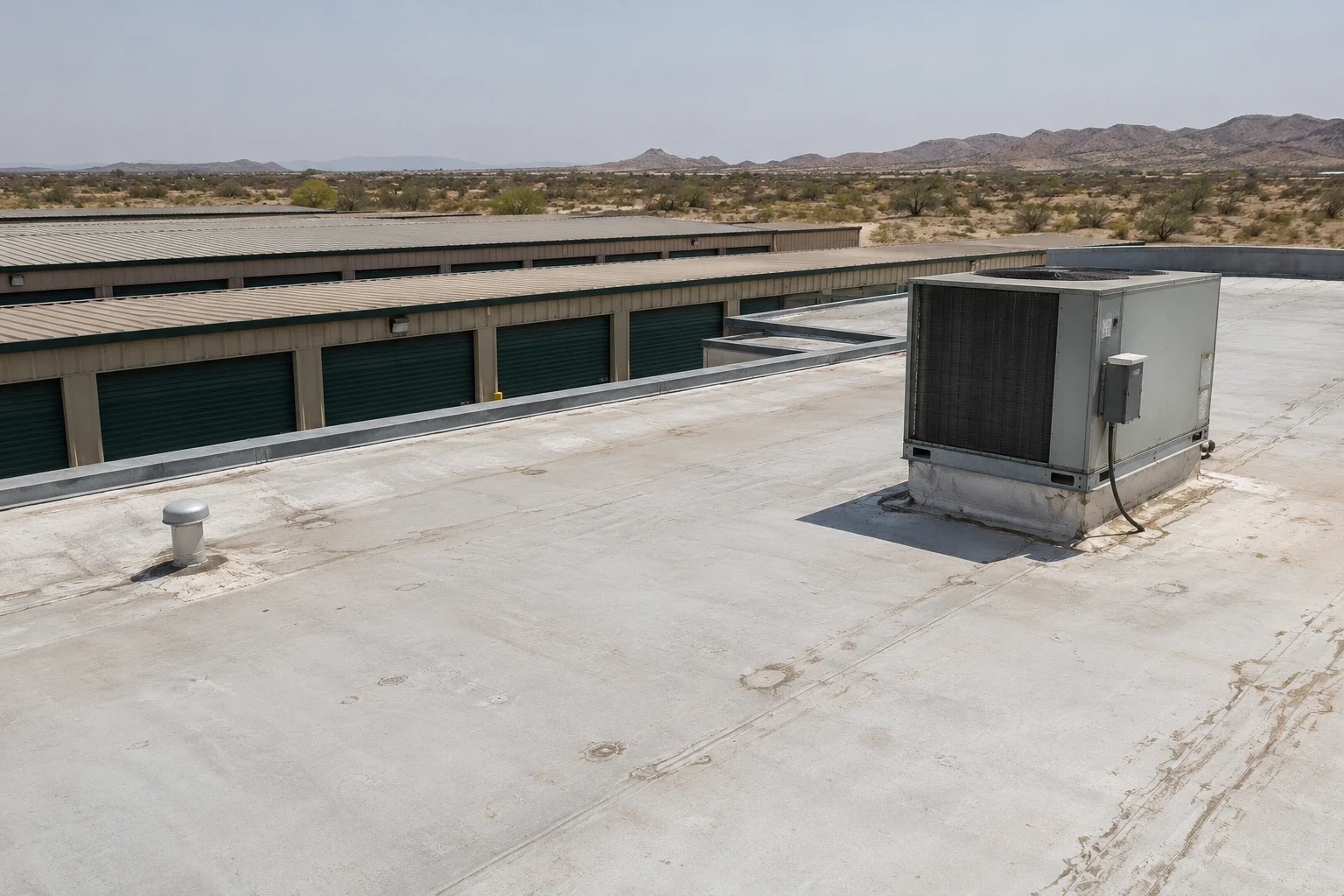
An airport manager or hangar owner in Yuma, AZ carries a roof whose failure costs aircraft time: water over a parked airplane, a dripping door track, or a wet floor near avionics shuts down more than a room. Most hangar roofing in the area sits at Yuma International Airport, a joint-use field of 3,100 acres roughly 3.5 miles south of downtown where Marine Corps Air Station Yuma is the neighbor and Million Air, CBP Air and Marine Operations, two air ambulance companies and the FedEx Feeder and Ameriflight cargo services are among the tenants. Yuma reaches 100 degrees F on roughly 117 days a year and sees little rain, so a hangar roof wears from heat and the nightly cool-down far more than from water, and we log surface readings and dated photographs so the capital line follows measured condition.
Roof leaking now? Call 555-555-5555 for a site visit and estimate.
What sets a hangar roof apart from a warehouse roof?
A hangar is a wide clear-span building with very large doors, little interior structure and a roof that spans the full width in one run. The roof carries exhaust fans, lighting, fire suppression piping and sometimes heating equipment, and every penetration has to be flashed without disturbing what is hung below. Door headers and their tracks sit at the roof edge, so leaks there end up on a rail that must stay clean to run. A hangar roof also covers a high-value interior, because aircraft, tooling and avionics benches cost far more than the stock in a typical warehouse. That raises the consequence of failure and shapes the order of repairs.
The first survey looks at the places where a hangar roof is most likely to admit water: the line above the door header, the ridge and eave closures, the skylight or light-panel perimeters, and the base of each exhaust fan. We count fasteners in sample areas, probe sealants, and note rust at the panel edges. If a roof leaks over a specific bay, the file shows the bay, the entry point and the work needed, so the operator can move aircraft before the repair crew arrives.
Related Roofing Work
Other pages that cover parts of the same roof question.
Warehouse Roofing
Standing Seam Metal Roofing
Metal Roof Retrofit and Restoration
Storm Damage Roof Repair
South Yuma Airport and Industrial Area
Military Hangar and Maintenance Facility Roofing
Which roof systems fit large hangars?
Many hangars use metal panels, and a standing seam metal roof handles daily thermal movement through its seam design, while exposed-fastener panels depend on fastener and sealant upkeep. Low-slope sections over offices and shops often carry single-ply membranes. An existing metal roof with sound panels but failed sealants and fasteners can be restored, and one that is rusted or leaking widely may be a candidate for a metal roof retrofit that avoids a full tear-off over parked aircraft. We state the condition of the panels, the fastener count and the sealant state in the file before any option is priced. Coatings can seal and reflect on a sound metal roof, with silicone suited to ponding spots and acrylic to sloped panels, and the film thickness is read at fixed points and entered in the warranty file. A reflective surface cuts the heat the metal absorbs, and the reflectance reading goes into the same file as the film thickness.
How does work happen on an active airfield?
Airfield rules come first. The airport operator sets the access route, the crew badging, vehicle and crane restrictions, and height limits near runways and taxiways, and a crane or lift near a flight line needs coordination before it moves. Material deliveries are scheduled, loose items are secured against jet blast and wind, and tools and fasteners are tracked, since foreign object debris on a ramp is a hazard. We plan the roof sequence around hangar use, so a bay with an aircraft inside is protected with interior covers and the crew works over empty bays first. A drone survey near an airfield needs its own airspace coordination, and that is part of the schedule.
Heat shapes the day on a hangar roof as much as airfield rules do. Metal surfaces in Yuma summer can be too hot to touch, so crews start at first light, take scheduled breaks in shade and stop when the panel surface reaches a limit that protects both the people and the sealants. Adhesives and mastics cure differently in extreme heat, and we choose products and times of day accordingly, then record the surface temperature during installation.
What do heat and monsoon storms do to a hangar roof?
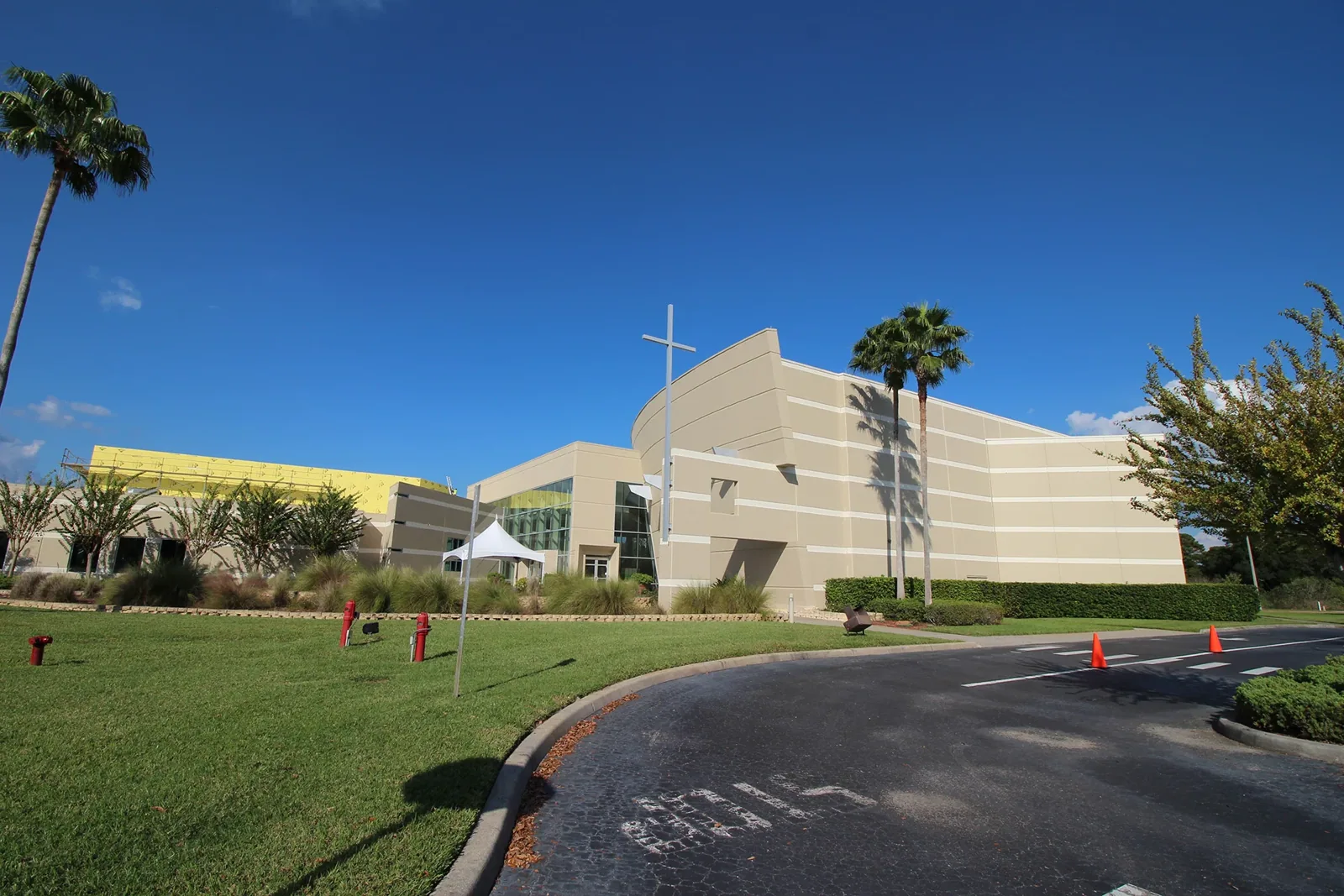
A large metal roof heats quickly, so the thermal movement between day and night is large, and fasteners back out and laps open over time. A wide roof with large doors takes monsoon outflow at the eaves and the ridge, and the gust that tears at a door-header closure is the one that finds a loose panel edge. The wet weeks come in August, September and December, and haboob dust has packed the gutters and low spots by then. We tighten fasteners, reseal laps and flashings, check door-header flashing and walk the roof after the first storm. The comparison with the earlier photo set identifies new damage, which helps a storm damage repair and a claim.
How do aviation tenants and landlords share responsibility?
A hangar can be owned by the airport, leased to an operator or held by a private landlord, and the lease decides who maintains the roof. We map the building into the areas each party controls and keep one file for the roof, so a landlord can see the structure and a tenant can see the area above its equipment. In the South Yuma airport and industrial area, a 290-acre Panattoni industrial site beside Highway 195 sits under five miles from both Interstate 8 and the airport, so the roof work around the field runs from hangars to logistics space, and one binder format serves both.
Where the lease is silent, the dated photographs settle most questions. A pre-existing stain, a known fastener failure or a prior patch is recorded on the day of the first walk, and later damage is measured against it. That is cheaper for everyone than arguing over a roof nobody photographed.
Questions About Aircraft Hangar Roofing
Can a hangar roof be repaired with aircraft inside?
Usually yes. The crew works over empty bays first, covers the interior below the work zone and checks for loose items before leaving each day, and the operator receives a daily note on which bays are affected.
How is airfield access arranged?
The airport operator sets the rules. We provide crew lists and equipment details early so badging and escorts are ready.
What if a hangar leaks during a storm?
Call at any hour, holidays included. The first visit traces where the water enters, closes it off and photographs what it reached, so the owner and the insurer each get the same set.
Is a metal retrofit worth it for a hangar?
It can be, since it avoids an open deck over aircraft. The file compares the retrofit with the cost of repeated repairs.
Does a drone survey work near an airport?
It needs airspace coordination first. Where flight is not allowed, a hands-on walk and a ground-based infrared moisture survey provide the same information about wet insulation and open seams.
What belongs in the aviation roof file?
The file holds the dated photo set, the panel and fastener condition, the penetration schedule, the door-header details, the warranty file and the cost line for each action, in a binder that a landlord, an operator and an insurer can read. Fire marshals and insurers ask about roof condition around suppression piping, so the file lists where piping is hung and where a roof repair would need the system shut off, with the owner informed before the work. Hangars on the military side of the field, treated as military hangars and maintenance facilities, follow federal roofing criteria and need a record of their own.
Send the hangar drawings and the lease split
Share the roof drawings, the lease responsibilities and the history of leaks, and we will return a dated scope and a capital line. Call to book a walk before the heat season narrows the window.
Call 555-555-5555 or email [email protected].