Storm Damage Roof Repair in Yuma, AZ
The 1992 monsoon at Yuma Proving Ground dropped six inches, more than a normal year brings, and the lesson for a building owner is that a desert roof can go from dry to flooded inside one afternoon. Storm damage in Yuma, AZ is rarely a slow story. Outflow winds, dust walls and a short burst of heavy rain land on membranes that have baked for months, and the weakest detail gives way first. A repair done in the right order restores the roof, limits the interior loss and leaves a file that an insurer or a lender can read. We work from the dated scope, not from a rushed patch that hides what happened.
Roof leaking now? Call 555-555-5555 for a site visit and estimate.
What happens in the first twenty-four hours?
The first visit has three jobs. Stop the water entering the building, protect what is wet, and photograph everything before it is moved. We tarp or temporarily seal open areas, clear drains and scuppers that dust and debris have plugged, and shut off or isolate any rooftop equipment whose curbs are compromised. The crew photographs each damaged area from several distances with a scale reference, then records where interior water appeared so the roof opening can be traced to the ceiling stain and not guessed at.
Temporary work is priced as temporary work. A tarp holding a wind-lifted edge through a second storm week is a different purchase from a permanent repair, and the owner should see both on the paper. If the building is occupied, we coordinate with the manager on which areas to clear and which equipment to protect while the roof is open.
Related Roofing Work
Other pages that cover parts of the same roof question.
Wind Damage Roof Repair
Roof Drains, Scuppers and Ponding Correction
Roof Insurance Claim Assistance
Fortuna Foothills
Senior Living Roofing
Emergency Roof Repair
How does monsoon wind actually hurt a roof?
Monsoon outflow near Yuma has been measured at about 70 mph at Yuma Proving Ground, and it hits a roof differently than sustained wind. A gust finds the perimeter first, where edge metal, coping and the first few feet of membrane carry the highest uplift, and it peels a sheet back from the edge if the attachment has aged. Gravel from an older built-up roof can become a projectile. Loose rooftop covers, light skylights and unsecured sheet metal travel across the roof and puncture the membrane in places far from where they started. Our wind damage repair starts at the perimeter and works inward, resecuring the edge before replacing any field membrane.
Haboob dust adds a second problem. Fine silt settles into every low place and drains clog quickly, so the next rain finds water with nowhere to go.
Why do drains decide how much rain does harm?
A small amount of rain becomes a large problem when the roof cannot shed it. Yuma averages about 3.3 inches a year, and many roofs here were never loaded with significant standing water, so a plugged drain or scupper can put the first real water load on a deck in months. Ponded water adds weight, finds soft spots in seams and works into any flashing already stretched by heat. Post-storm checks therefore begin at the drains, because clearing one early prevents damage that no patch would address later.
On the longer view, a storm that exposes ponding is information. If water sat for days after the sky cleared, the owner is looking at a slope or drain problem that deserves correction in the next capital cycle, not just a repair of the damage it caused.
How is the repair scope separated from the old wear?
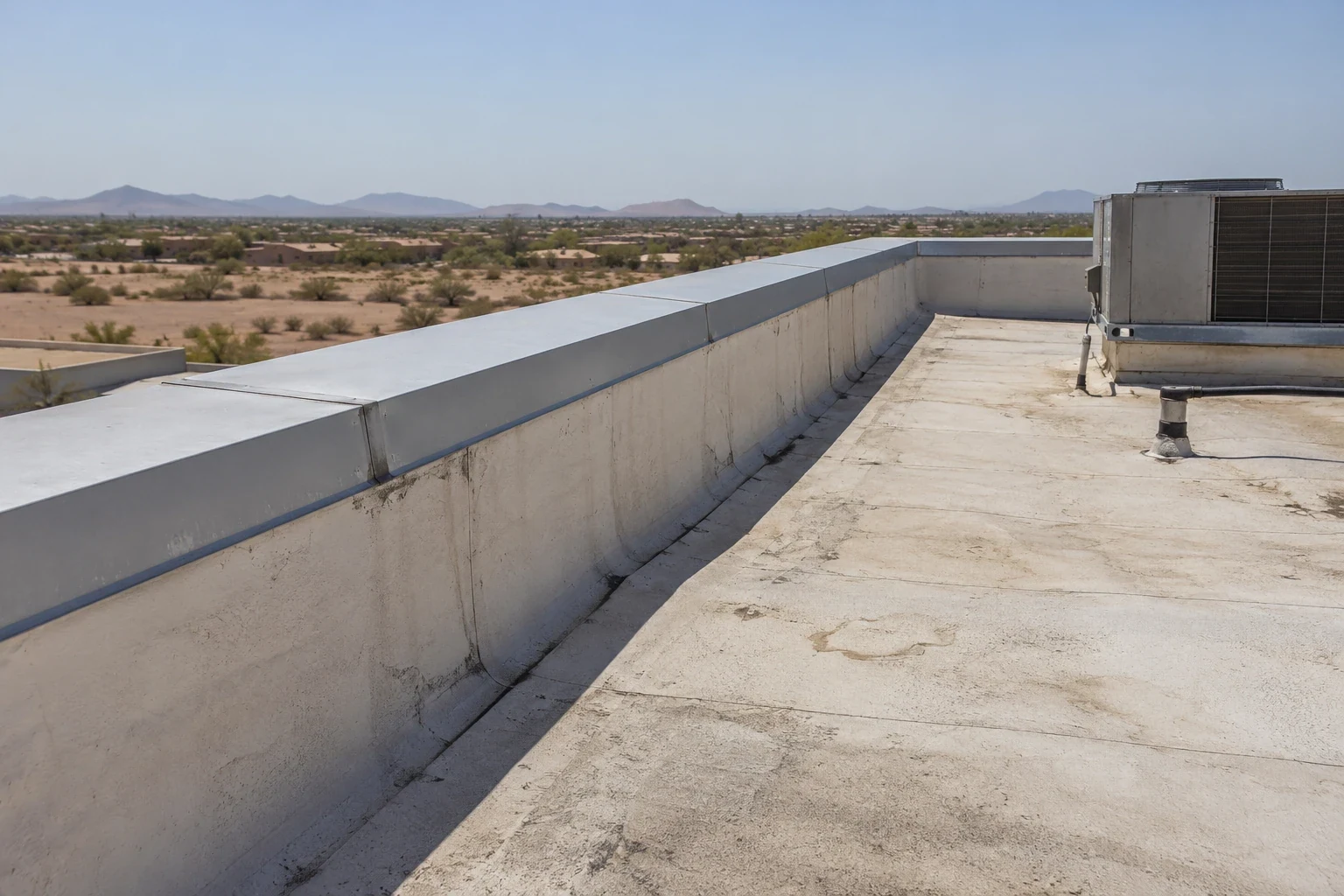
Insurers and owners both need to know which damage came from the storm and which was already there. We separate the two in the written scope. Storm items are the lifted edge, the punctured field, the torn flashing, the displaced equipment cover. Wear items are the oxidized sealant, the thinned coating, the open seam that had been growing for years. Photographs from earlier maintenance visits, where a program exists, show the roof's condition before the storm and shorten that argument considerably.
Where the damage is covered, the repair scope becomes the working basis of the submission, and the paperwork that follows is easier with claim assistance that keeps photographs, invoices and dates in one sequence. Where it is not covered, the same scope lets the owner decide which repairs to fund now and which to schedule against the capital line. Either way, the scope has numbered items, quantities and unit prices, so nothing is hidden in a lump sum and a second opinion can be compared line by line.
Which Yuma buildings take the worst of it?
Long retail frontage is exposed along every edge, and the shops around Yuma Palms and the I-8 corridor tend to have rooftop units, signage supports and parapets that give wind something to catch. Distribution and packing buildings tied to the produce and trucking trade tend to carry exhaust fans, dock canopies and large equipment covers, and a gust that lifts a light cover can open the membrane beneath it. A hospital such as Onvida Health has patient areas directly below its roofs, so a storm opening there is handled with interior protection and the facilities office before any permanent work starts.
In Fortuna Foothills, where 44.1 percent of residents are 65 or older and many are seasonal, retirement and medical properties raise the stakes on how fast a temporary seal goes on. Senior living communities need a response plan that accounts for residents who cannot simply be moved while the roof is open, so the temporary seal and the interior check come before anything else.
Questions About Storm Damage Roof Repair
How soon should we call after a monsoon storm?
Call the same day if water entered the building, and within a few days if the roof only looks disturbed. Early photographs strengthen a claim and keep interior damage smaller.
Can storm damage be repaired in summer heat?
Yes, with scheduling. Crews start early, products are chosen for hot surfaces, and some work waits for cooler hours. A temporary seal can bridge the gap.
Does a dust storm count as storm damage?
Dust itself rarely damages a membrane, but the clogged drains, scoured coatings and wind-borne debris it brings can. Document the clean-up and any damage that follows.
What proof should the manager keep?
Keep dated photos of the roof and the interior, the repair invoice, and the maintenance binder. Together they show what the roof looked like before and after the storm.
Will a repaired roof hold through the next storm week?
A properly secured edge and cleared drains improve the odds considerably, though no repair is immune to a severe event. A post-storm visit is the check that matters.
When does a temporary repair become permanent?
A temporary repair should have an end date. Within days of a storm, we price the permanent scope and agree on a schedule that fits the building and the weather outlook, keeping in mind that the next monsoon week can interrupt a membrane install as easily as the last one did. Where the first response was an after-hours call, the emergency roof repair photographs carry straight into the permanent scope, so nothing is re-measured. For small openings, a membrane puncture repair may be all that is needed, while a larger loss may call for replacing a full section and tying it into sound membrane with new seams.
The permanent repair also has to match what is there. A new patch heat-welded or adhered to an aged sheet needs a compatible material, a clean surface and a proper overlap, or the patch fails at its edge within a season. We record the product used, the weather on the day and the seam checks made, so the repair itself becomes part of the roof's history.
Send the storm photos and the roof plan
Send the roof plan, the photos you have and the date of the storm, and we will set a site visit, make the building safe and return a numbered repair scope that can go straight into a claim file.
Call 555-555-5555 or email [email protected].