
Johns Manville Roofing Systems in Yuma, AZ
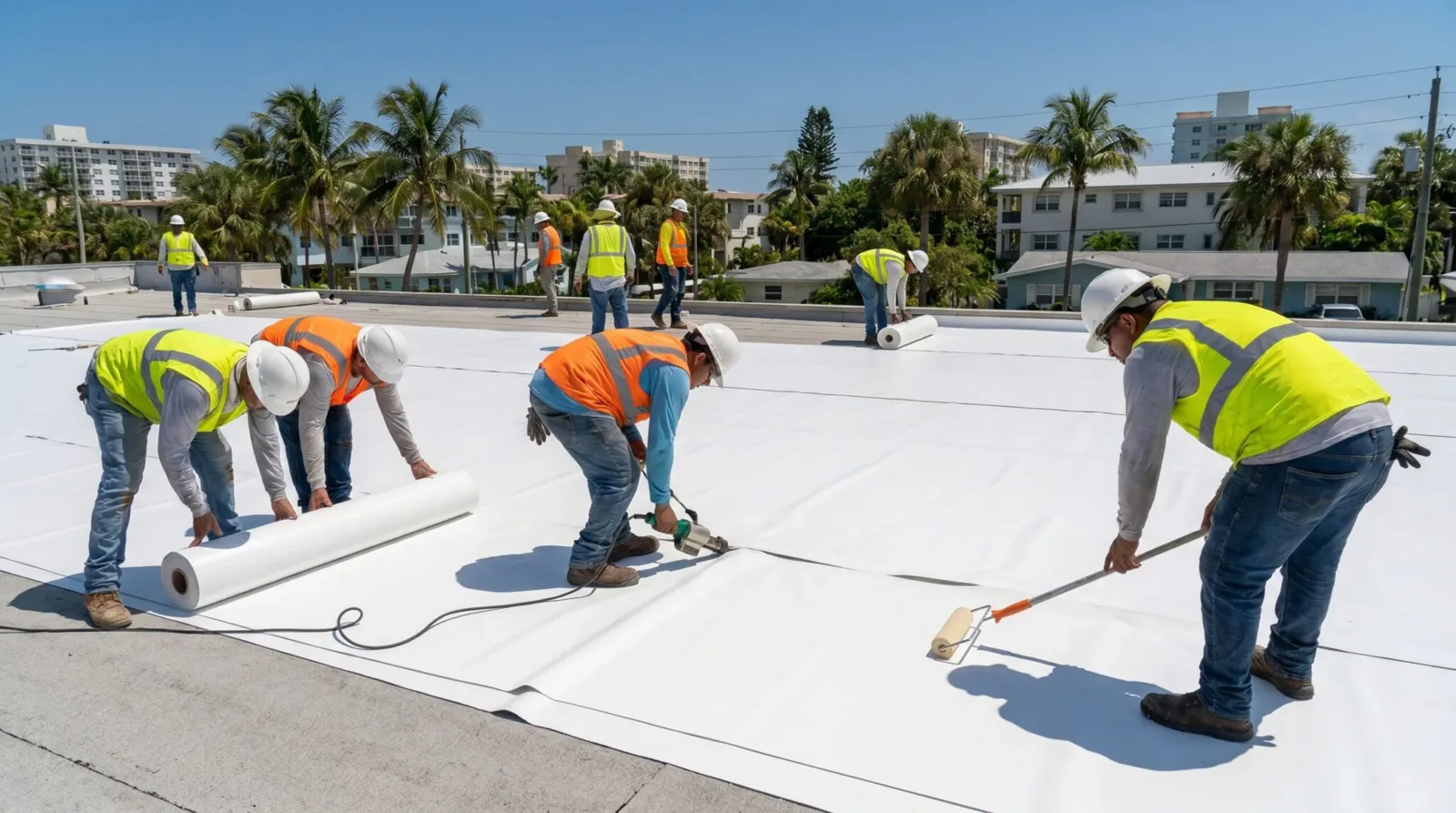
On a Johns Manville roof, the line an asset manager should read first is the insulation, because the board under the membrane sets both the energy cost of the building and the replacement cost of the roof. Johns Manville makes commercial roofing membranes, including single-ply and asphalt-based products, and also roof insulation and cover boards, which makes its systems a useful case for how a Yuma owner should think about the whole assembly rather than the top sheet alone. In Yuma, AZ, the insulation spends its life under sustained heat, with 100-degree weather on roughly 117 days of every year, and the way it is protected decides how long the roof earns its keep.
We install, repair and maintain these assemblies, and the scope we write itemizes membrane, board and attachment separately so each carries its own cost and date.
Roof leaking now? Call 555-555-5555 for a site visit and estimate.
Why does the insulation matter as much as the membrane?
Insulation board does three jobs under a membrane. It slows heat flow through the roof, it provides a firm substrate for the sheet and it takes the load of foot traffic and equipment service. If the board is crushed, wet or poorly attached, the membrane above it will show the damage as ridges, ponding and seam stress long before the board itself is visible.
A cover board adds a thin, dense layer between the insulation and the membrane, which spreads loads and resists puncture. On a roof with frequent service traffic, such as a hospital or a packing house with rooftop equipment, a cover board can protect the membrane for years. We record the board type and thickness in the roof file, and when a core cut shows wet or compressed board, the finding goes into the scope as a separate line with its own cost and its own date. On any roof with rooftop equipment, including retail roofs along the I-8 corridor near Yuma Palms, the pattern to look for is crushed board in the aisles where service crews walk, because the membrane over those aisles wears out before the rest of the field does.
Related Roofing Work
Other pages that cover parts of the same roof question.
Roof Insulation and Cover Board
South Yuma Airport and Industrial Area
Cold Storage Roofing
Infrared Roof Moisture Survey
Roof Condition Reports
GAF Commercial Roofing Systems
What does sustained heat do to board and sheet together?
In Yuma the assembly cycles daily. The surface can run far hotter than the air on a summer afternoon, then cool quickly after sunset, and cold plays a minor role beside the swing from a hot day to a cool night. The sheet expands and contracts over the board, and fasteners and adhesives carry that movement every day of the season.
That is why we log surface temperature at several points on each walk and photograph fastener rows and seams on a dated set. Over several seasons the log shows whether a section is running hotter than its neighbors, which often means the board below has lost thickness or the sheet has darkened. Findings like that move a section from the watch list to the replacement queue, with a cost and a year attached, and the owner sees the reason in the photographs rather than taking it on trust. In the airport and Highway 195 industrial area, the same log is kept for each roof, so a hot section stands out against its neighbors.
How does a cold storage or packing roof change the picture?
The county's winter vegetable season and the trucking corridor linking California, Arizona and Mexico support a stock of cold storage, produce packing and distribution buildings. A refrigerated building has a temperature difference between its interior and the roof deck, which drives moisture toward the cold side of the assembly. If vapor gets into the insulation, the board loses value and the membrane above it blisters or ponds.
On a cold storage roof, we look closely at penetrations, vapor control and seams, because a small opening admits moisture that a dry-climate roof elsewhere might never see. An infrared moisture survey maps the wet areas without cutting the roof, and it gives the owner a defensible boundary for a repair or a partial replacement. That boundary matters for cost, because tearing out wet board across a field is priced by area, and a map that shows only one quarter of the roof is wet cuts the replacement line by the same proportion.
How do we handle a repair on a roof of unknown make-up?
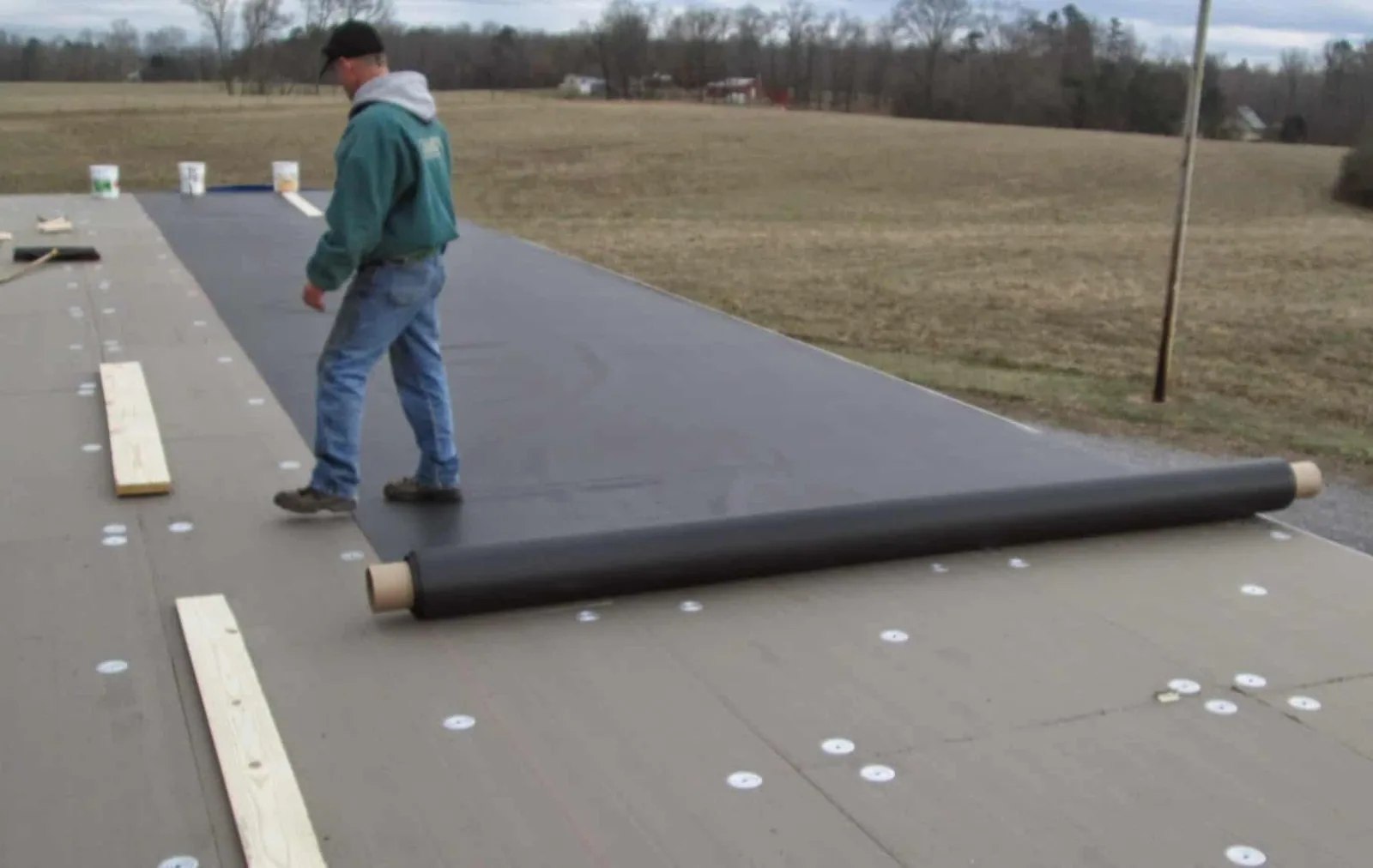
We begin with identification. A core sample shows membrane, board, adhesive and deck in cross-section, and the markings on the sheet or the board often name the maker. If the maker is Johns Manville, we match repair materials to the system. If it is not, we choose a compatible material and note why in the file.
A roof with wet board in one corner and sound board elsewhere splits into a repair area and a watch area, and the report prices each. That structure lets an owner act on the worst section now and set a dated review for the rest, which fits a reserve schedule better than a single replacement figure. The watch area gets a trigger, such as a wet reading at the next scan or a new soft spot underfoot, so the decision to wait is written down. The report also states what the repair does not fix and how many heat seasons it is expected to buy. Patching a membrane over saturated board buys a season or two, and the file says so, so the owner does not mistake a patch for a cure and under-reserve for the replacement that follows.
What goes into the file for a lender?
The assembly description comes first in the file: board type and thickness, attachment, membrane, deck and the location of the core cuts. After it come the dated photo sets, the surface temperature log, the repair history and the next review date. For owners with several sites, the files feed a roof condition report format that reads the same across buildings, so a board can see which roof is next without reading every page. Each entry ends with a recommended action, a cost range and a target budget year, and the entries are sorted so the roofs with the least remaining service sit at the top of the page.
When a portfolio mixes makers, the same fields apply to a GAF roof or a Holcim Elevate roof, and the comparison is a matter of reading the same columns. Warranty paperwork, where the owner holds it, sits behind the assembly page.
Questions About Johns Manville Roofing Systems
Does a thicker insulation board always lower cooling cost?
It helps, but the benefit depends on how the building is used and how much of its load is cooling. We record the board type and thickness, and the energy comparison belongs with the facility's utility data.
Can wet insulation be dried in place?
Rarely. Once board is saturated, it holds water and loses insulating value, and drying under a sealed membrane is slow and uncertain. We map the wet area and price removal and replacement.
Why add a cover board over the insulation?
It spreads load and resists puncture, which protects the membrane on roofs with service traffic. The added cost buys a longer service line for the sheet above.
Why use both an infrared survey and a core cut?
A survey scans the whole field without opening the roof, while cores confirm specific points in the assembly, and the two results are plotted on one roof plan. We use both, with the survey first so the cores go where they count.
When does wet insulation call for replacement instead of a patch?
When the moisture map shows the wet area spreading across several joints, or a core shows saturated board. Small, isolated wet zones can be cut out and replaced, while widespread wetness cannot be patched economically.
Send the assembly details and the last report
Send the roof plan, whatever you know about the insulation and membrane, and the budget year, and we will return a dated scope with a capital line.
Call 555-555-5555 or email [email protected].