
Spray Foam Roofing in Yuma, AZ
Foam roofing earns its place on the capital plan by combining two line items, insulation and waterproofing, into a single sprayed layer, and in Yuma, AZ that combination has a particular logic. A building that spends most of its year under sun and 100-degree air pays for cooling every month, and a roof that adds insulation value while it seals the deck can lower the load that the equipment carries. Spray polyurethane foam is applied as a liquid that expands into a continuous, adhered layer, then protected by an elastomeric coating that shields it from ultraviolet light. The system is only as good as its thickness, density and topcoat, so we record all three, and we price the roof in a way that lets an owner compare it with a membrane on a lifetime basis.
Roof leaking now? Call 555-555-5555 for a site visit and estimate.
What does foam do that a membrane does not?
A membrane lies on the roof, and a foam layer becomes part of it. Because the foam is sprayed, it fills the low spots and contours around curbs, pipes and parapets without seams, and it bonds to the substrate across the whole area. It also builds slope: where water ponds on a flat roof, additional foam can taper toward the drains. Its insulating value comes from closed cells in the foam, and its waterproofing from the continuous skin they form. The tradeoff is that foam alone is vulnerable to sunlight, so the protective coating carries the maintenance burden, and that coating is where the long-term cost sits. We state the recoat interval as a budget line, not a footnote.
Foam is also the system that most directly connects the roof to the energy bill, and the connection is worth measuring. Surface temperature readings before and after, and the cooling equipment's run time where the owner can share it, show whether the added insulation and reflectance are paying back. A cool roof installation built on foam and a reflective topcoat can be tracked this way. If the owner's interest is mostly in waterproofing, a coating over a sound existing membrane may be the better value, and we price a silicone coating beside the foam so the two answers can be compared.
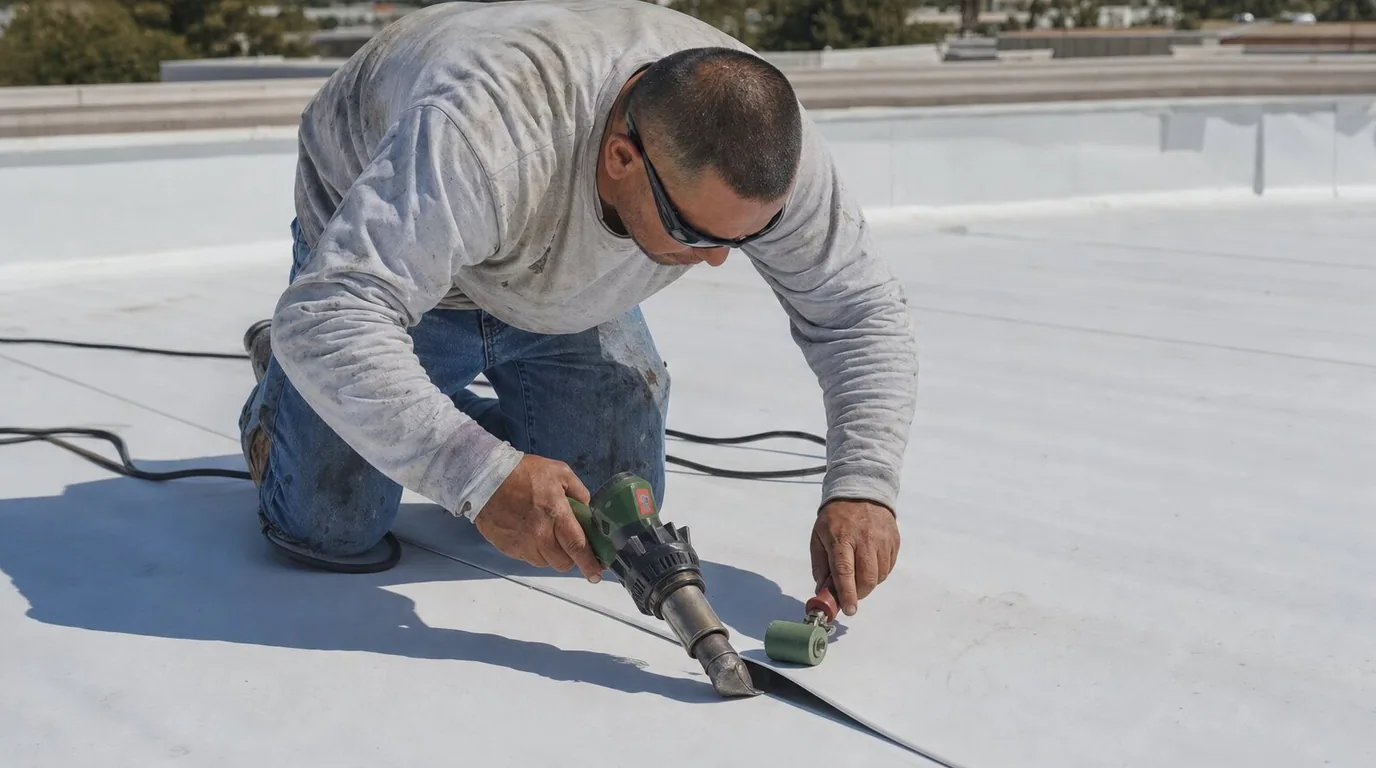
Related Roofing Work
Other pages that cover parts of the same roof question.
Cool Roof Installation
Silicone Roof Coatings
Silicone Roof Coatings
Acrylic Roof Coatings
Ponding Water Roof Repair
Downtown Yuma
How does the Yuma sun treat the topcoat?
Ultraviolet exposure is the dominant stress, with about 175 sunny days a year and afternoons past 100 degrees F more often than not from late spring to early fall, so the topcoat wears from the first season. Silicone and acrylic topcoats are the two common choices, and each has a different relationship to dust, ponding and recoat cost. We measure the film thickness when the coating is applied and again at inspections, and we photograph the surface on a dated set so that wear is documented. Granules or ceramic beads may be broadcast into the coating on traffic areas. A well-maintained topcoat protects the foam for decades, and a neglected one exposes the foam to damage, so the maintenance rhythm sits in the reserve schedule from the start. The first heavy rain after a long dry stretch also tells us something: ponded water that remains after a day shows where the foam surface sits low, and standing water shortens topcoat life, so we map those areas with the ponding record and add taper where the slope allows. Dust that settles into those low spots mixes with moisture and stains the coating, which lowers its reflectance until the roof is rinsed.
When can foam be sprayed in the desert?
Spray application depends on wind, surface temperature and humidity. Wind above a modest speed carries overspray onto vehicles, buildings and people, and Yuma's dust and monsoon outflow winds, which have reached about 70 mph, limit the number of workable days. We plan sprays for calm mornings, protect parked cars and neighboring roofs, and monitor wind at the roof, stopping when conditions change. The substrate must be dry and clean, which is rarely a problem in Yuma until a monsoon storm leaves a film of dust and moisture. The bid lists the weather holds we expect, and we divide the work into zones so a stop does not leave a section exposed overnight.
Which Yuma roofs gain the most from foam?
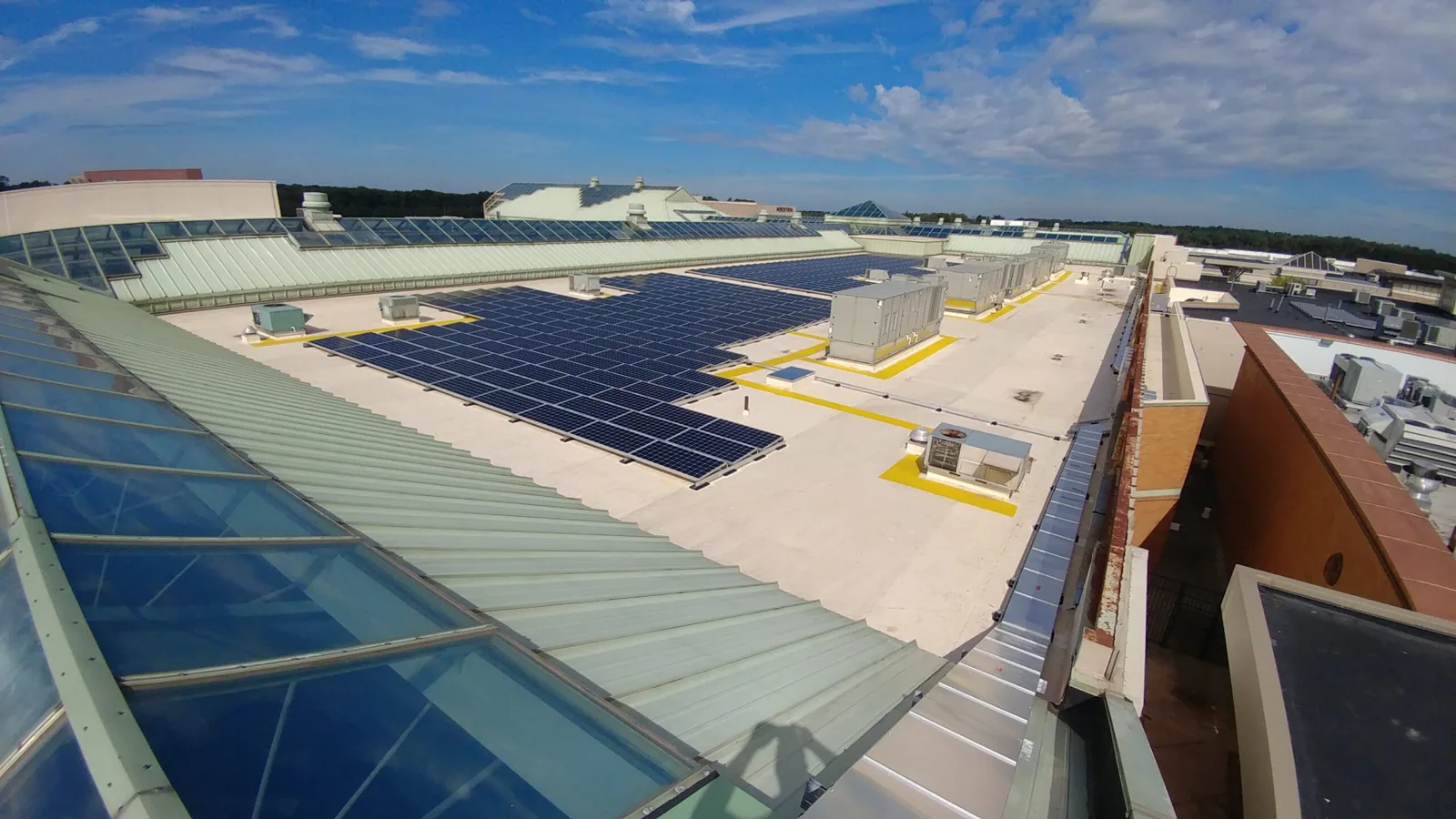
Older roofs with complex geometry and many penetrations, such as those in downtown Yuma near the Yuma Crossing historic district, may suit foam since it conforms to awkward shapes. Cold storage and produce packing buildings along Interstate 8 and U.S. Route 95 can benefit from the added insulation, though the vapor profile of a refrigerated building requires careful engineering, since foam placed incorrectly can trap moisture. Schools and offices that want lower cooling loads often compare foam with a new membrane and added insulation. We first run an infrared survey to find wet insulation in the existing roof, because spraying over a wet assembly seals the problem in. The answer for a roof near the airport, where tenants include air ambulance operators, can differ from the answer for a downtown office. A hospital such as the teaching campus at Onvida Health has the further question of fumes: the spray releases vapors while it cures, so air intakes must be sealed or the work scheduled with facilities staff, and a heavy rooftop equipment load anywhere means more penetrations to detail. Retail owners at Yuma Palms can look at the same system where units crowd a roof, since foam wraps around them without a field of cut seams.
What numbers go into the file?
A foam roof needs numbers: the thickness at test locations, the density, the coating film thickness and the dates of each pass. We record all of them, with photographs of the substrate, the foam, the coating and each detail, plus the drain and scupper tally and the warranty file. A maintenance program follows, with a topcoat check after each storm season and again in early spring, and a recoat when the film thickness readings reach the threshold set in the plan. For a lender or buyer, those readings show how much of the protective layer remains, which is the number that matters on a foam roof. The same file records every repair, including punctures patched with foam and recoated, so a later roof repair starts from the original specification and not from a guess.
Questions About Spray Foam Roofing
Can birds or foot traffic damage a foam roof?
Foam is softer than other systems, and sharp tools, birds and heavy traffic can puncture it. We add walkway pads on service routes, patch any damage with foam and recoat, and record the repair.
Is spray foam suitable over an old built-up roof?
It can be, if the old roof is dry and well attached. Moisture readings come first. Wet insulation is cut out and replaced, and loose gravel is removed or embedded before the foam goes on.
How thick does the foam need to be?
Thickness is set by the insulation goal, the slope needed for drainage, and what the existing roof allows. We specify it per area and measure it with test cuts and gauges, then record the readings.
What does a topcoat recoat involve?
The surface is washed, damaged spots are repaired, and a new coat is applied at the specified thickness. The work is faster and cheaper than replacing the foam, which is why timely recoating matters.
Does foam work near rooftop equipment?
Yes, the foam can be built up around curbs and supports to form flashing. We mark equipment locations on the plan, and service routes get protection so technicians do not damage the surface.
Send the cooling bills and the roof plan
Share the roof plan, the age of the existing roof and the cooling costs you want to reduce, and we will return a dated foam scope with the topcoat interval priced as its own line. Call to book a walk.
Call 555-555-5555 or email [email protected].