Fire and Smoke Damage Roof Repair in Yuma, AZ
A fire claim on a Yuma, AZ commercial roof has two clocks, and the owner has to keep both in view: the carrier's investigation schedule and the weather. In a market with about 3.3 inches of rain a year it is tempting to leave a burned roof open and wait for the paperwork, but August and September bring monsoon storms and December can deliver heavy rain, and a roof that is open when one arrives turns a fire loss into a water loss. The temporary dry-in has to go on fast, be priced as temporary and be photographed before anything is moved, because the permanent scope depends on what the fire actually did.
We separate the work into the order that protects the building first and the claim second, and we put a dated number against each step.
Roof leaking now? Call 555-555-5555 for a site visit and estimate.
What is the first day's work after a roof fire?
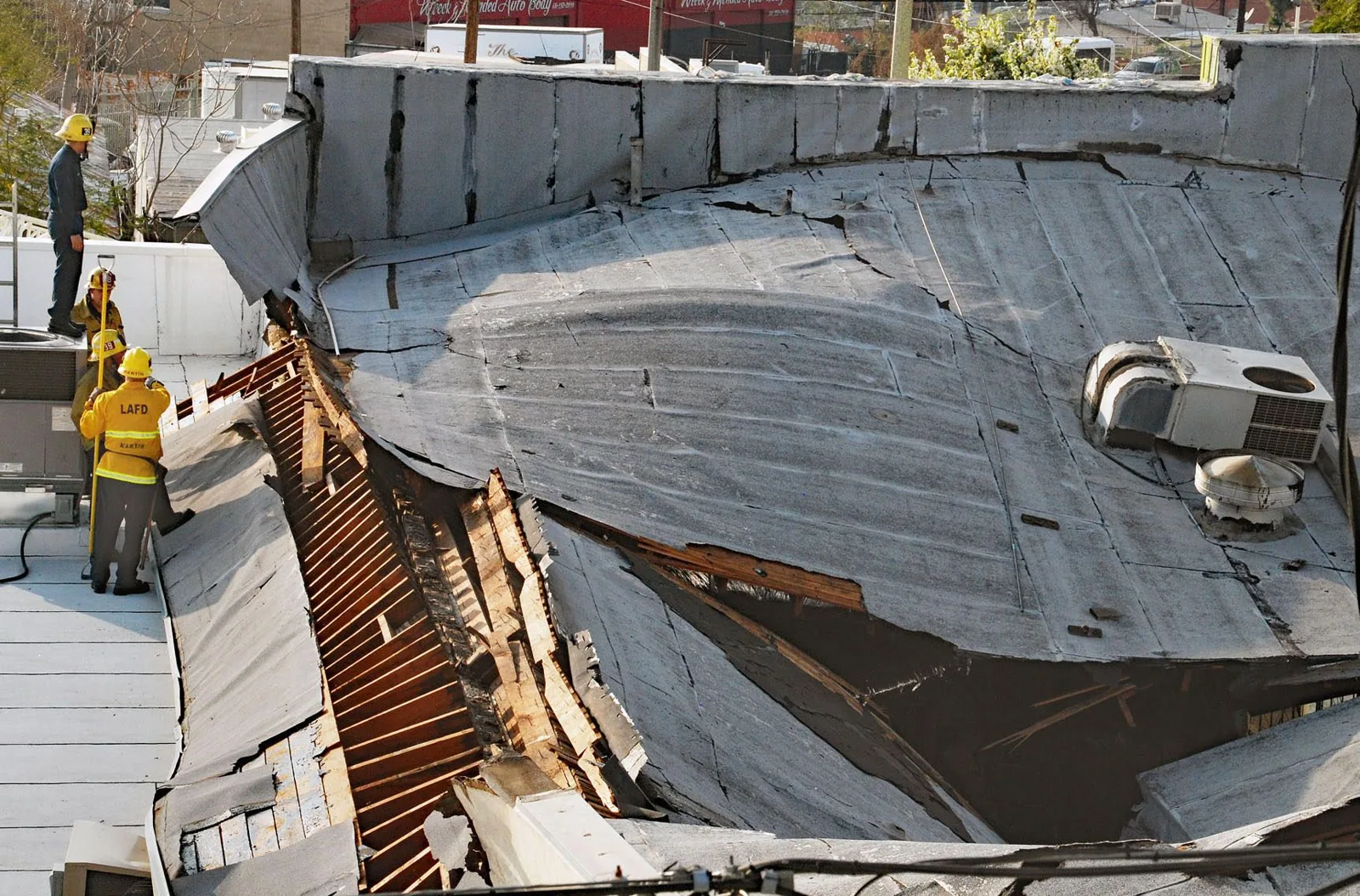
The first day has three jobs. Make the roof safe to walk or confirm that it is not, protect the interior from rain and suppression water still draining through the deck, and document everything before debris is cleared. A fire-damaged roof may carry hidden weaknesses: charred decking, softened insulation and damaged supports that look sound from above. We do not send a crew onto a roof until its condition is understood, and we use a drone for the first look when access is uncertain.
Temporary measures go on next. Tarps, sealed openings and diverted drains keep water out. These are priced as emergency roof repair, answered at any hour, with the expectation that they will hold for weeks and not years. The carrier sees them as mitigation, and the log we keep shows what was done and when.
Heat leaves a second record that a fire-damaged roof shares with every other Yuma roof. With 100-degree weather returning on roughly 117 days each year, an older membrane next to the burn area has aged in ways a carrier will separate from fire damage. We photograph both conditions and label them, because the part of the roof that was already worn from heat and UV exposure is an owner expense, and the part the fire changed belongs on the claim.
Related Roofing Work
Other pages that cover parts of the same roof question.
Emergency Roof Repair
Heat and UV Roof Damage Repair
Ponding Water Roof Repair
General Contractors
Restaurant Roofing
Cold Storage Roofing
How far does fire damage reach beyond the burn?
Farther than the visible char. Heat can soften and shrink membrane well outside the flame area, melt or deform insulation, warp metal decking and damage fasteners and flashing. Smoke leaves residue that can affect adhesion of any new material. Water from suppression soaks insulation and sits in the assembly long after the fire is out. Where drains are blocked by debris, suppression water also collects in basins on the deck, and the correction follows the same logic as ponding water repair.
We map the damage in zones: burned, heat-affected, smoke-affected and wet. An infrared moisture survey finds the wet zone, which often extends beyond the area the fire reached, and probes and cores confirm the findings. Fire often reaches equipment as well, and a rooftop unit that survived may still have a scorched curb or melted flashing beneath it. The mapped zones become line items in the scope, each with a quantity and a repair method. The question of whether the whole roof must be replaced is answered by the map: where heat-affected area is a small share of the roof, a partial replacement with proper tie-ins can be reasonable, and where it is large, replacement of the whole assembly may cost less than repeated patching.
When does a structural review come before roofing?
Any time the deck, joists or supports show heat distress. Steel loses strength when heated, wood chars and a charred member may look intact but carry less load. A roofing contractor does not decide the question, and we say so in the scope: we mark affected areas and recommend that an engineer review them before new insulation and membrane go on. The review may add days, so the schedule should allow for it.
If the engineer clears the structure, roofing proceeds. If repairs are needed, the carpenters or steel crew go first, and our work follows. Coordination with the general contractor keeps the sequence tight, since a fire rebuild typically involves interior trades who need the roof dry before they begin. We provide a dry-in date that depends on the engineer's release, and we update it when that release arrives. On a multi-building campus, a fire in one wing leaves neighboring roofs in service, and the plan protects their drains and equipment while the damaged section is open.
Wind that follows a fire can undo temporary work, so the plan includes a check after any storm. The edges of a patched area are where gusts attack first, so we re-secure them after any wind event.
Do restaurants, packing sheds and plants burn differently?
The ignition points differ, and the roof damage follows them. Kitchen exhaust fires start in the hood and duct and damage the roof around the exhaust fan, so a restaurant roof, whether freestanding or at a center like Yuma Palms, often shows damage concentrated in one area with heavy grease contamination around it. Produce packing and cold storage buildings, which a trucking hub like Yuma supports, may have insulated panels and foam that behave differently in fire and need careful assessment of what burned and what melted. Cold buildings also carry a vapor barrier that, once breached, lets moisture into the insulation, which is why the assessment of a cold storage roof adds moisture probing.
A fire in the airport and industrial area raises questions about neighboring buildings and access for fire apparatus, and beside the joint-use airfield that Yuma International Airport shares with Marine Corps Air Station Yuma, access is also set by airfield rules. The scope records which areas were opened or cut by firefighters, since those openings are part of the loss.
What does the carrier need from a roofer on a fire claim?
The carrier needs photographs taken before cleanup, a roof plan with the damage zones marked, a log of emergency work with times and materials, and a repair scope separated into temporary, permanent and betterment items. A new roof that exceeds the like-for-like repair may involve code upgrades or system changes, and the scope identifies each so the carrier can rule on each one.
Our insurance and restoration process keeps those lines apart. We also keep the file ready for the owner's lender, with the permanent scope, a schedule and a copy of the warranty on the new work. The claim documentation becomes part of the building's permanent roof file, and the next owner inherits a clear history of what burned, what was replaced and when.
Questions About Fire and Smoke Damage Roof Repair
Can a fire-damaged roof be tarped for months?
A tarp is a short-term measure and the wind and sun in Yuma wear it down quickly. We note an expected life for each temporary measure and inspect after any significant storm.
Does smoke damage require a roof replacement?
Not by itself. Smoke residue can be cleaned from many membranes, and replacement follows if heat has damaged the sheet or insulation. The damage map separates the two.
What if the fire department cut openings in the roof?
Those openings are part of the loss. We seal them temporarily, record their size and location and include their permanent repair in the scope.
How long before permanent work can begin?
The carrier's investigation, any structural review and material lead times set the date. We prepare the scope and order long-lead items early so work can start when the release arrives.
Who stores the evidence if cause is under investigation?
Investigators control the scene until released. We photograph what is permitted and do not remove material from areas the investigator wants preserved.
Send the incident date and the building address
Send the incident date, the building address and any carrier contact, and we will secure the roof, map the damage and return a dated scope that separates temporary from permanent work.
Call 555-555-5555 or email [email protected].