Carlisle SynTec Roofing Systems in Yuma, AZ
The first question on a Carlisle SynTec roof is how much of its service life remains, because the answer sets the reserve line an owner has to carry. Carlisle SynTec is a manufacturer of single-ply roof membranes, which means sheets of TPO, EPDM, PVC and similar polymers that are adhered, mechanically attached or ballasted over insulation, together with the flashings, adhesives and accessories that finish the details. In Yuma, AZ, a roof of this type gets little rain, about 3.3 inches in a year, and long stretches of 100-degree weather, so the membrane is judged on heat and expansion cycles, and the record we keep tracks both.
We install, repair and maintain single-ply systems from this maker and write every scope with dates, costs and the condition evidence behind them.
Roof leaking now? Call 555-555-5555 for a site visit and estimate.
Which single-ply sheets does this maker supply?
The sheet types matter because each ages differently under sun. A white TPO sheet reflects sunlight and is welded at the seams with hot air. An EPDM sheet is cured synthetic rubber that is typically black or white, with seams that are joined by tape or adhesive rather than welded. Each sheet can be fully adhered, mechanically fastened or ballasted, and the attachment method changes how the roof behaves in wind and how a repair is made.
On a first walk we identify the sheet, the attachment and the age, because a TPO field with welded seams and an EPDM field with taped seams fail in different places. TPO seams may open where the weld was thin. EPDM seams may creep where the tape has aged, and EPDM flashings may shrink back from a curb. A shopping center roof along Yuma Palms and the I-8 corridor can hold either sheet, and the repair has to match it, because a TPO weld will not bond to cured rubber. Mechanically attached sheets add a third variable, since the fastener plates and the batten bars along the seams carry the wind load, and a loose plate can lift the sheet in a monsoon gust long before a leak appears.
Related Roofing Work
Other pages that cover parts of the same roof question.
TPO Roofing
EPDM Roofing
Yuma Palms and the I-8 Retail Corridor
South Yuma Airport and Industrial Area
Seam Failure Repair
Infrared Roof Moisture Survey
How does Yuma heat age a single-ply membrane?
Heat works on a single-ply sheet slowly. A TPO surface can chalk and lose some of its reflectance, the seams carry the daily stretch and recovery of the sheet, and an EPDM sheet that runs hot can stiffen over time and pull at its flashings. Freeze-thaw is rare in Yuma, so that daily cycle is the movement that matters.
Our walk puts a thermometer on the surface at several points through the afternoon and a reflectance meter on any white sheet, then photographs the hottest seam runs from one fixed position. Over a few seasons those numbers show how fast the roof is aging, and an owner can pull a replacement forward or push it back on that evidence while a lender reading the binder sees a roof that was watched. For a reserve, the figure that counts is the year the next major line falls due, and the trend in the log supports that year: steady readings allow a confident schedule, while fast change brings a shorter interval between walks and a cost line in an earlier budget year.
When does the work window open for a single-ply project?
Single-ply installation is sensitive to temperature, and Yuma's long hot season narrows the practical window. Crews can work in the cooler months with fewer constraints, while summer work shifts to early morning starts and careful handling of adhesives and welds. The August and September monsoon adds a second hazard, because outflow winds, dust and a few inches of rain can arrive on an open roof.
The bid should carry an allowance for a monsoon-week hold, because a stopped crew costs money. We state the planned start, the dry-in date and the allowance for weather holds. We also note any quiet period set by the building's operations, such as a store's holiday season or a packing facility's harvest peak. On a project near the airport and Highway 195 industrial area, material delivery and crane access get their own line. Where the existing roof is being replaced, tear-off sequencing, temporary protection of the interior and disposal each carry cost, and the scope lists them one by one so the owner can compare bids on equal terms.
What does a seam or flashing repair involve?
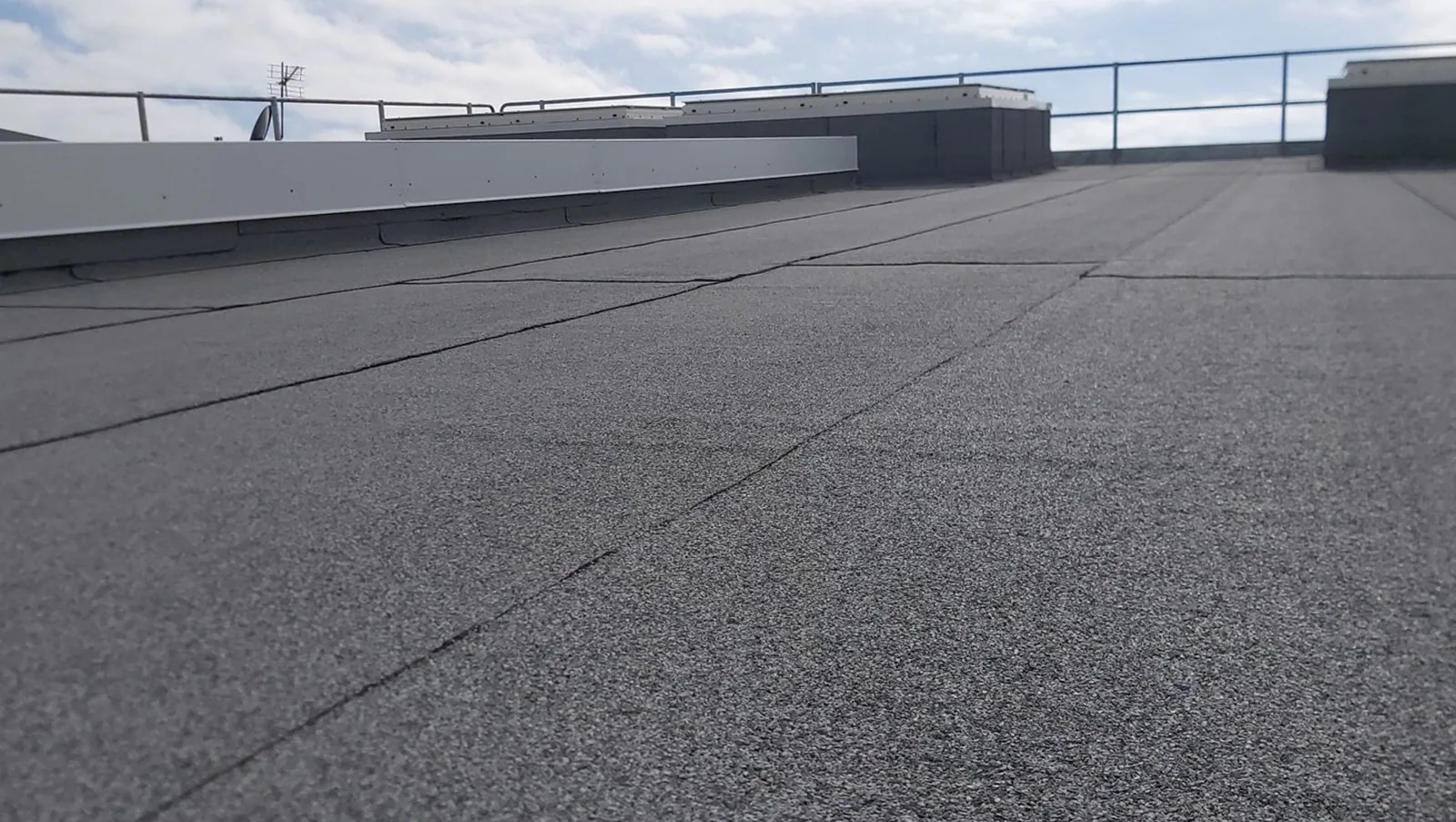
On a welded sheet a seam repair means cleaning, prepping and welding a cover strip or patch. On a taped or adhered sheet it means pulling out aged tape or adhesive and rebuilding the splice with compatible materials. Flashing work starts at the termination, where membrane meets a wall or a curb, and finishes with sealant and fasteners suited to the substrate. Adhesion is tried on a small area first, so the method suits the age of the sheet.
When many failures cluster in a small area, the cluster is the finding, because it often points to ponding, a slope problem or wet insulation. A seam failure that returns after repair signals a cause below the membrane, and a core cut with a moisture survey serves the owner better than another patch. A moisture survey maps wet insulation without cutting the roof and shows whether the problem is one corner or the whole field, which is the difference between a repair line and a replacement line in the capital plan.
What do we keep in the file for a lender or a board?
The file contains the membrane type, the attachment method, the repair history, dated photo sets and the surface temperature log. Any warranty paperwork the owner holds goes in too, because a manufacturer's terms can name who may repair the roof and with which materials. When the owner has several buildings, the files roll up into a roof inventory with a reserve schedule, which is the base for the capital planning process.
For owners comparing makers, the same file structure works for a Versico or Johns Manville roof, so a mixed portfolio reads consistently from one building to the next. A board or lender that opens three files side by side sees the same fields, the same photo conventions and the same rating scale, and can compare condition and remaining service without translating between formats.
Questions About Carlisle SynTec Roofing Systems
Is TPO or EPDM better for a Yuma roof?
White TPO usually gives higher reflectance and welded seams, while EPDM has a long record on simple roofs. We compare installed cost, expected service and repair path for the building in question.
Can a repair match an older sheet?
When the sheet type is identified and the surface can be cleaned to a bondable state, yes. A trial patch comes first, because a sheet that has weathered for years may need a different primer than a new one.
What does a surface temperature log show?
It shows how hard a roof is working. Several readings across the afternoon, compared year over year, indicate whether reflectivity is falling and whether seams on the hottest runs are under stress.
How long can a monsoon hold a roof job?
A storm week can stop work for days, since wet surfaces, wind and dust all rule out welding and adhesive work. The schedule carries an allowance for it.
How can an owner tell a TPO sheet from an EPDM sheet?
EPDM is cured rubber, usually black or white, with seams that are taped or adhered, while TPO is a thermoplastic sheet with welded seams. Where the markings have worn away, a small cut sample settles it.
Send the roof plan and the last report
Send the roof plan, the last inspection record and the year the next membrane line falls due, and we will return a dated scope that fits the cooler-month work window.
Call 555-555-5555 or email [email protected].