Soprema Roofing Systems in Yuma, AZ
The detail work on a Soprema roof is where an asset manager's money tends to go, because liquid-applied flashings and layered bitumen sheets are chosen for the awkward places on a roof: the curbs, the pipe clusters, the drains and the transitions that a plain sheet cannot cover neatly. Soprema is a roofing manufacturer whose systems include modified bitumen membranes, liquid-applied membranes and flashing resins, and insulation. In Yuma, AZ, where rain is scarce and sun is constant, those systems age by heat and ultraviolet exposure, and the record we keep must show surface condition at the details as well as in the field.
We install, repair and maintain these systems, and each scope shows the cost, the date and the evidence behind it.
Roof leaking now? Call 555-555-5555 for a site visit and estimate.
What is a layered bitumen roof made of?
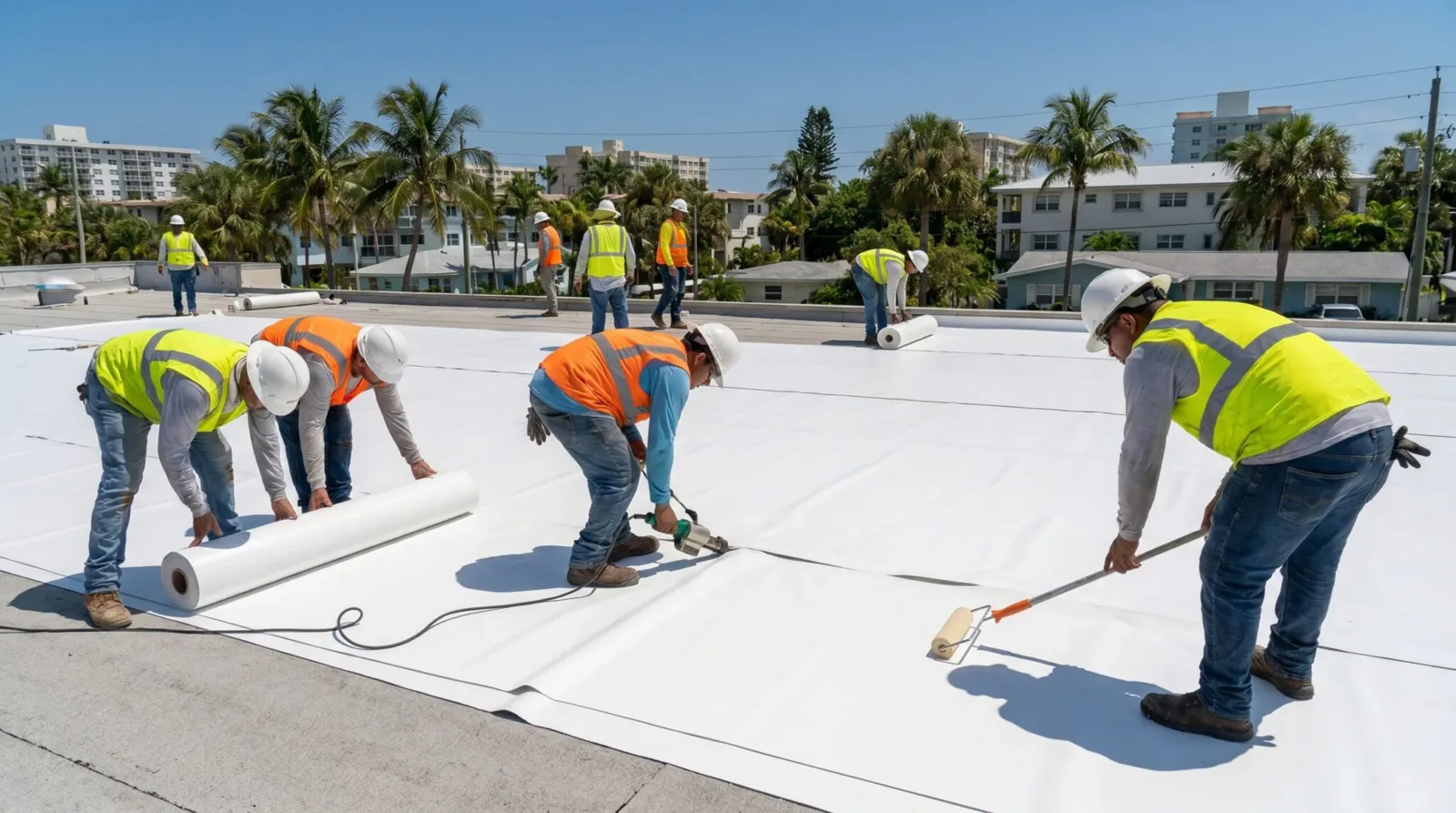
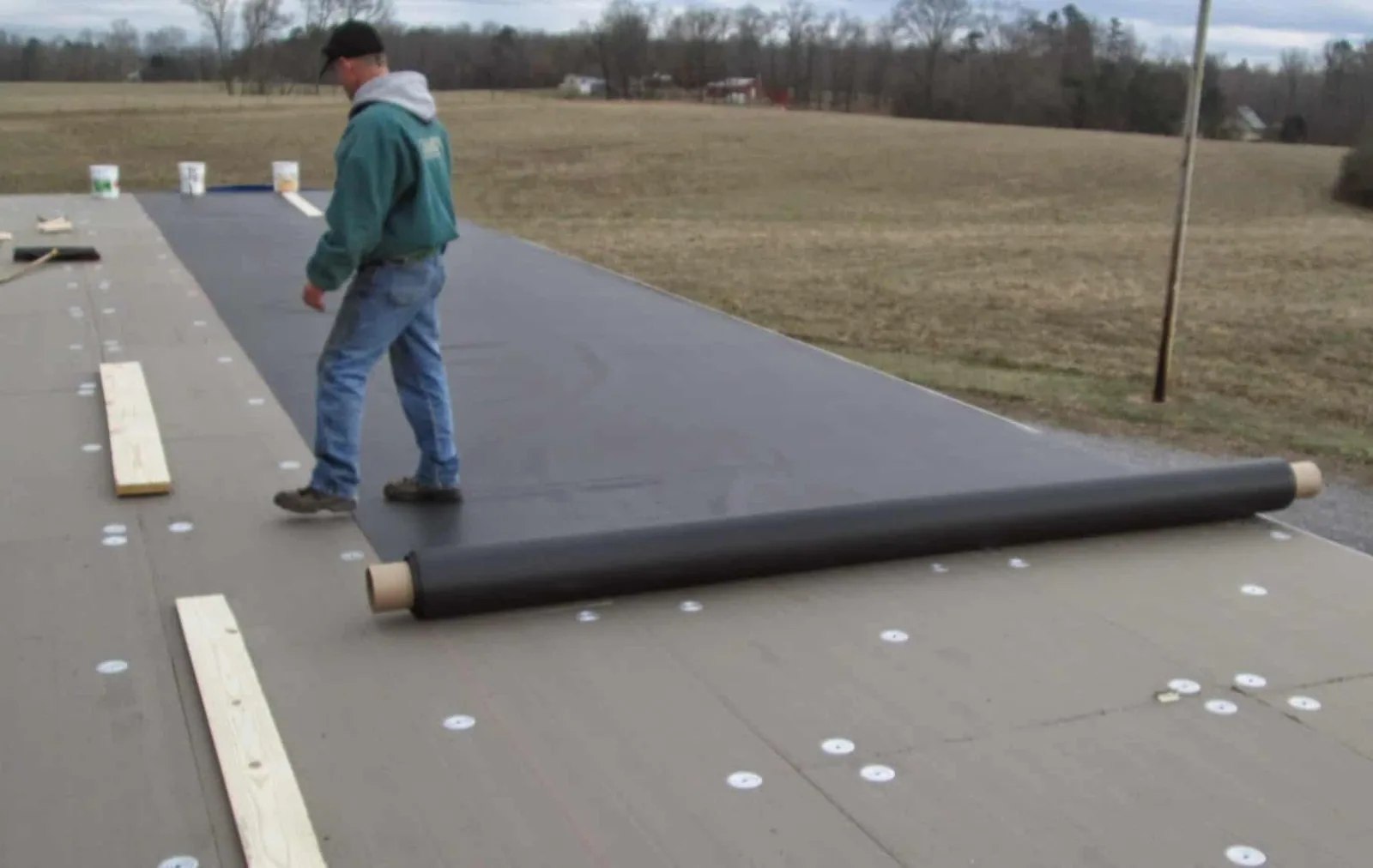
A modified bitumen roof is built from asphalt reinforced with polymer, delivered in rolls and applied in two or more plies over insulation or a base sheet. The top ply usually carries a granulated or coated surface that protects the asphalt from sunlight. Plies can be torch-applied, heat-welded, set in hot or cold adhesive or self-adhered, and each method has its own weather and fire-safety rules on site.
The multiple plies give a redundancy that a single sheet lacks, and the surface takes foot traffic better than many single-ply sheets. In Yuma, the weakness is the surface itself, since sustained sun and heat can dry the asphalt and loosen the granules over the years. We look for exposed reinforcement, cracked cap sheet and alligatoring in the field, and we photograph the laps and end seams, which are where a layered roof begins to open. On a retail roof at Yuma Palms, along the I-8 corridor, the laps along parapets and curbs are worth a slower walk than the open field, because they carry both the movement and the water.
Related Roofing Work
Other pages that cover parts of the same roof question.
Modified Bitumen Roofing
Skylight and Penetration Flashing
Downtown Yuma
Roof Coating Restoration
Hospital Roofing
Roof Capital Planning
Where does a liquid-applied flashing earn its cost?
A liquid-applied flashing resin is poured or troweled around a penetration and cures into a continuous boot. It suits the roof areas where a cut sheet would need many laps: clusters of pipes, curbs with irregular shapes, drain bodies, scuppers and old equipment supports. Reinforcing fabric is usually embedded in the resin for strength, and the finished flashing bonds to the substrate rather than relying on mechanical fasteners.
For an owner with a roof that is sound in the field but failing at the details, a liquid flashing retrofit can be the cheapest meaningful repair. We price it by item, locate each on the roof plan and photograph the substrate before and after. A penetration flashing line in the scope tells the owner how many details are in play and what each costs. If the substrate is wet or the old flashing is contaminated, we say so, since resin on a damp surface will not bond. Cure time matters too. A liquid flashing needs a dry window of hours, and the August and September monsoon can end that window abruptly, so we schedule resin work for the dry months and carry tarps and primers on the roof whenever the sky is uncertain. In downtown Yuma, a roof that has collected many seasons of patches is a candidate for a retrofit of this kind, and we map every old patch before deciding what to cut out.
What does Yuma heat do to asphalt-based surfaces?
Asphalt softens in sustained heat and hardens with age, and the surface can lose granules, craze and curl at the edges. Yuma passes 100 degrees on roughly 117 days a year, mostly April through October, and a roof surface can be much hotter than the air. Freezing matters little here; the daily cycle of heat and recovery is the movement that wears the asphalt.
We log surface temperature on each walk and photograph the cap sheet at the hottest runs. A light-colored coating over a sound cap sheet can lower surface temperature and slow the aging, which makes roof coating restoration a candidate for roofs with dry insulation and an intact surface. We confirm the condition with a moisture survey before a coating is priced, because a coating over wet board seals the problem in. The cost drivers for a coating are surface preparation, the number of coats and the film thickness applied, and we state each in the scope. Film thickness is measured and recorded, so the owner can later check that the coating on the roof matches the coating in the bid. A coating that arrives thinner than specified shows up in the numbers within the first season, and the record shows it.
What fits a hospital or clinic roof?
Yuma Regional Medical Center, now Onvida Health, is the largest hospital in the area. Health care buildings combine complex roofs, rooftop equipment and a no-interruption rule, and they favor roof systems that can be repaired in small areas without opening the whole roof. Layered sheets and liquid-applied details both allow that kind of spot repair, and the method chosen has to respect the facility's rules on noise, odor and open flame.
The first walk identifies the system and the work needed, and the scope plans around patient areas, air intakes and the facility's own rules. A hospital roof project often needs phased sections, temporary protection and a daily communication plan, all priced as separate lines. Noise, odor and fire-safety limits are written into the scope before the first day, along with the hours when crews may work near air intakes and the routes materials will travel. Where the facility has rules of its own, the scope follows them and the cost reflects them, since a limited shutdown window or a restricted work hour changes the crew size and the number of days. That includes the hours when equipment may be shut down, the rooms below the work and the people who must be told before the crew starts.
What records come with the roof?
The roof file opens with the assembly description and ply count if known, then holds surface condition, a dated photo library, surface temperature readings and the record of every repair. It notes which repairs used which materials and holds any warranty paperwork the owner has. The file supports the capital planning process, where roofs are ranked and funded by year.
If the portfolio also includes GAF or Johns Manville roofs, the same file structure applies, so the board reads one scale. Because detail work is where layered and liquid systems fail first, the file lists every penetration by location with the date it was last inspected and the condition found, and an owner looking at the first page sees which details are next in line along Highway 195 or anywhere else in the inventory.
Questions About Soprema Roofing Systems
Can liquid flashing be applied over an old flashing?
Sometimes, if the old material is clean, dry and compatible. We test a small area first, and if the substrate fails the test, the old flashing comes out.
Is torch application allowed everywhere?
Not always. Some buildings and owners restrict open flame, so we offer heat-welded, adhesive or self-adhered methods where they are required.
How can I tell if a cap sheet has aged out?
Look for bare reinforcement, widespread granule loss, cracking and open laps. We record each on the roof plan and photograph it.
Does a coating extend a layered roof?
It can, over a sound surface and dry insulation. A moisture survey and a core cut come before the coating is priced.
How does a liquid flashing compare in cost with rebuilding a sheet flashing?
It is priced by item, and on a roof that is sound in the field it is typically the smaller line, because only the detail is rebuilt and the field sheet stays in service.
Send the detail list and the roof plan
Send the roof plan and the list of penetrations and equipment, and we will return a dated scope with a capital line.
Call 555-555-5555 or email [email protected].