
Big-Box Retail Roofing in Yuma, AZ
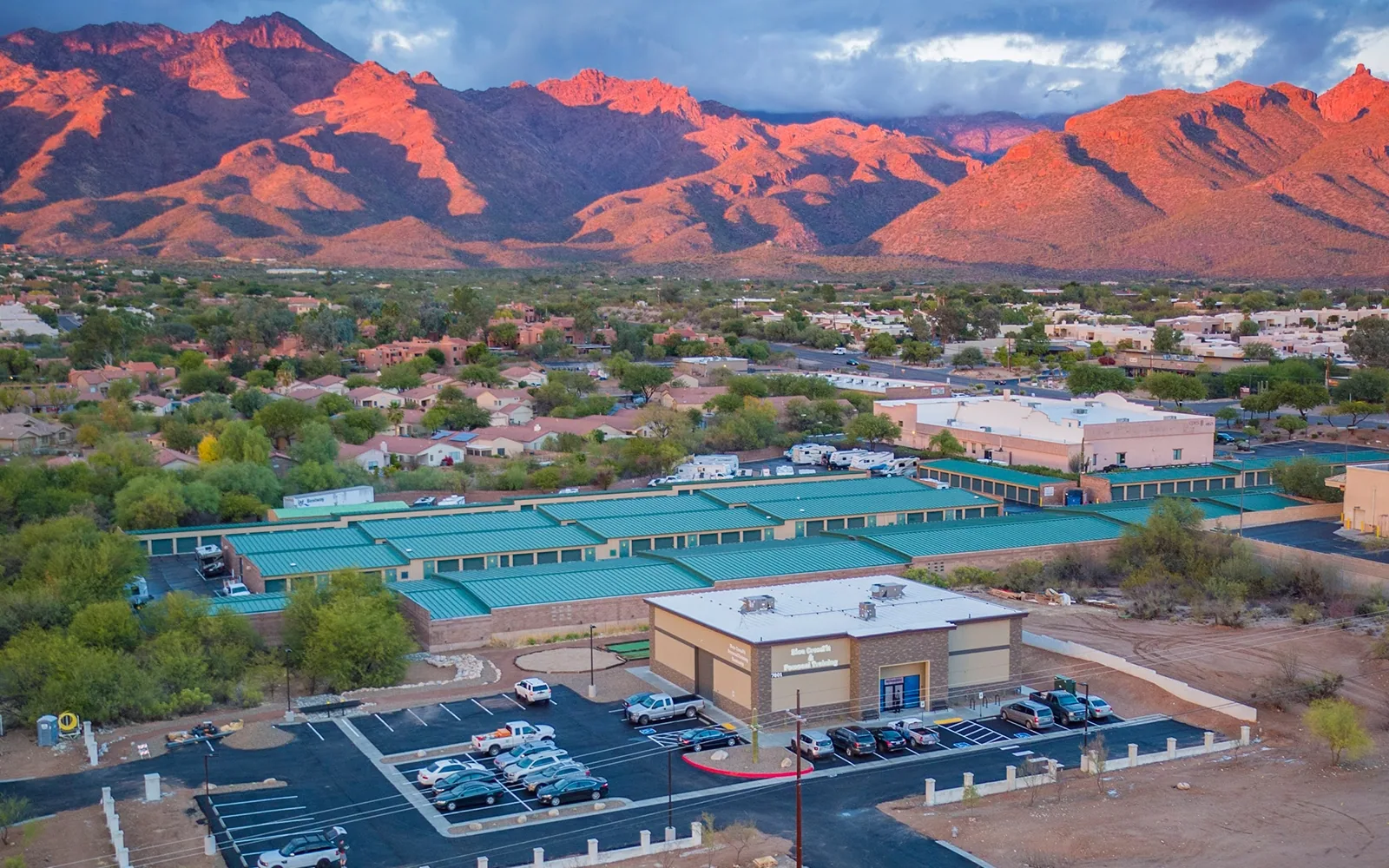
Retail real estate teams carry a big-box roof as a single large line, and the way to defend that line in Yuma, AZ is to show what the sun has done to the membrane and what it will cost if the work moves a year. The stores clustered around Yuma Palms, from Target and Sam's Club to Dillard's and JCPenney, sit in a climate where sun, not water, wears the membrane, so the damage is cumulative surface heat and the daily swing between hot afternoons and cooler nights. Our survey records reflectance and surface temperature, puts every seam and rooftop-unit curb on one dated photo set, and prices each defect so the capital line reflects measured condition.
Roof leaking now? Call 555-555-5555 for a site visit and estimate.
Why does a store with one wide roof field fail differently?
A wide, mostly unbroken membrane field moves as one piece when it heats and cools, and the stress collects at the places where the field is interrupted: the perimeter, the expansion joints, the curbs and the drains. Seams that were sound at installation open slowly under that daily movement, and a field with dozens of rooftop units has dozens of flashings that each have to follow the same motion. We trace the failures to those interruptions, mark them on a plan, and show the store operator that most of the roof is intact while a short list of details drives the repair bill. That reading changes the decision from replacing the whole roof to fixing the edges and curbs first.
It also changes the bid. A priced list of known details is easier for a finance team to approve than an open-ended estimate, and each detail can be tied to a photograph with a date, so the approval file shows exactly what was found and what was done about it. If a second look finds more, the list grows by line, not by a lump sum.
Related Roofing Work
Other pages that cover parts of the same roof question.
Roof Coating Restoration
Infrared Roof Moisture Survey
Occupied Building Reroofing
Wind Damage Roof Repair
TPO Roofing
San Luis
What does a repair-versus-replace line look like for a store?
We give the operator three numbers on one sheet: the cost of patching what is open today, the cost of fixing the causes so the same defects do not return, and the cost of replacement, with the year each makes sense. The sheet also notes what each choice does to the warranty file, because an unreported repair by another trade can complicate a claim years later, and a dated record of who worked on the roof, and what they changed, protects the owner when a manufacturer asks. A roof with sound insulation and a membrane that still welds can usually take a coating restoration, and the coating's film thickness is checked at set points on the roof and entered in the warranty file. A roof with wet insulation cannot be coated, which is why an infrared survey comes before any restoration quote. The deferred cost is the difference between those lines if the work is postponed, and it is the number a regional facilities director takes to an approval meeting.
How is work planned around trading hours and receiving?
Store hours, truck deliveries and the busiest weeks all set the schedule, and we build the plan with the store manager before the first crew arrives. Crane picks and material staging happen before opening, loading docks stay clear during delivery windows, and roof access is arranged so crews never cross the sales floor. Because Yuma surface temperatures rise quickly, early starts are standard, and the plan breaks the roof into bays that can be dried in by afternoon. Noise and dust control above the sales floor matter for stores with open ceilings, so we describe the sequence in plain language and put the days on the store calendar. Pallet staging, roof hatches and ladder routes are agreed with the manager in advance, and a safety lead is on the roof whenever material is moving over the dock apron. If an event such as a seasonal sale shifts the busiest days, the roof schedule moves with it, because a store loses more from blocked access during a busy week than it saves by finishing a day sooner. The sequence is the one used for occupied building reroofing wherever a business stays open.
What happens to a large roof in a monsoon outflow?
A large flat roof has a lot of perimeter and a lot of area for wind to work on, and monsoon outflow reaches the perimeter first. Dust from a haboob packs drains and scuppers, then a short heavy burst puts water on a roof that has been dry for months. We check edge securement, parapet flashing and the drain and scupper tally before the monsoon, then walk the roof after the first storm and compare it with the earlier photos. When the wind lifts an edge, the fix is a priced wind damage repair that lists the fasteners, the edge metal and the cost of each.
Which membranes suit big-box stores here?
White single-ply membranes are the usual choice for large stores in hot desert markets because they reflect sunlight and weld at the seams, and a TPO roof is common where grease and chemical exposure are low. Stores with kitchens, bakery exhaust or fryers near the roof edge may suit PVC around the exhaust. EPDM and modified bitumen are options where a tenant already has them and the repair is local. The point is to match the membrane to what exits the roof, which a rooftop-unit schedule tells us, not to apply one specification to every store. Insulation thickness, cover board and fastener pattern are chosen for the wind exposure of a wide open field, and for foot traffic around the units that service crews use every month. A roof that sees heavy service traffic gets walkway pads along those routes so that routine filter changes do not wear through the membrane. In San Luis, retail trade is one of the major sectors and Walmart is among the largest employers, so large-format stores matter there too.
Questions About Big-Box Retail Roofing
How quickly can a store roof be priced?
A walk, a look at the last repair invoices and a rooftop-unit schedule are enough for a first scope. Complex roofs add a few days for survey photographs.
Does reroofing stop a store from opening?
Not in the normal method. The roof comes off in bays, each bay is dried in before the shift ends, and the sales floor stays open under a protected zone.
What should a leak call include?
Give the store address, the aisle where water shows and how long it has run. We respond at any hour, holidays included, and stop the water at the entry point.
Can rooftop units be replaced during a reroof?
Yes, and it is often cheaper to do both together. Curbs are rebuilt, flashed into the new membrane and photographed before the new unit is set.
How long does a coating restoration last?
The life depends on the coating type, the film thickness and the surface beneath it. We record thickness readings so the expected interval is tied to measurement and not a guess.
How should a portfolio of stores be sequenced?
A retailer with more than one store in the area is better served by a program than by one-off calls. A multi-site roof program ranks the stores by condition and by consequence, so the roof over a high-volume store with a leak history comes ahead of one that is merely old. The file we keep for each store holds the same pages in the same order, which lets a regional manager compare roofs side by side. When a landlord owns the roof, the same file lets the tenant document its own rooftop equipment. Where a store sits inside a center, its roof is ranked the way a shopping center owner ranks bays, and a store with a food department adds the refrigeration loads found on a grocery store roof.
Send the store plan and the unit schedule
Share the roof plan, the rooftop-unit schedule and the last repair invoices, and we will return a dated scope and a capital line before the heat season closes the work window. Call to book the first roof walk.
Call 555-555-5555 or email [email protected].